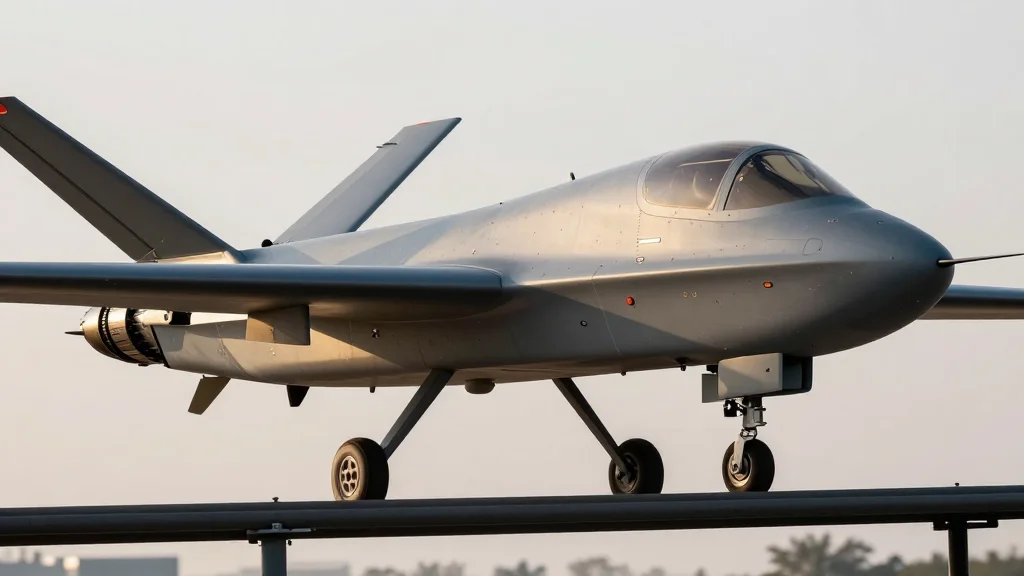
Ukraine Says Russia Is Using a New Jet-Powered Attack Drone in Response to Its Interceptors
Why It Matters
The shift to jet‑powered drones erodes the advantage of Ukraine’s low‑cost interceptor UAVs, forcing a costly escalation in air‑defense capabilities for both sides. It signals a rapid technology‑driven arms race that could reshape battlefield dynamics in the coming months.
Key Takeaways
- •Russia deployed Geran‑4 jet drone, speeds up to 310 mph
- •Ukraine's interceptor drones forced Russia to develop faster jet‑powered drones
- •Geran‑4 can strike 280 mi with high‑explosive warhead
- •Kyiv accelerating low‑cost interceptor missile production for jet drone threat
- •Jet‑powered drones reduce effectiveness of propeller‑driven counter‑UAVs
Pulse Analysis
The war in Ukraine has become a laboratory for unmanned aerial systems, with each side constantly iterating to outpace the other. Early in the conflict, Russia relied on propeller‑driven Shahed‑derived Geran‑2 drones, which were vulnerable to cheap, kinetic interceptor UAVs developed by Kyiv. As those interceptors proved lethal, Moscow turned to jet propulsion, unveiling the Geran‑3 last year and now the Geran‑4, a turbojet‑powered platform that can cruise at 500 km/h and operate from rail‑launch sites, dramatically raising the speed and altitude envelope of Russian attacks.
The Geran‑4’s specifications—310 mph top speed, 5,000 m operating altitude, and a 450 km range—make it a formidable threat to Ukrainian air defenses that were calibrated for slower, lower‑flying targets. Its high‑explosive payload can inflict severe damage on urban centers, and its jet engine reduces the reaction window for interceptor drones that rely on collision or proximity detonation. In response, Ukraine’s defense ministry is scaling production of low‑cost interceptor missiles and urging domestic manufacturers to develop faster UAV interceptors, aiming to restore a tactical edge before the winter surge in Russian drone and missile strikes.
Strategically, the emergence of jet‑powered drones underscores a broader cat‑and‑mouse dynamic that characterizes the conflict’s technology race. Each advancement forces the opponent to allocate resources toward countermeasures, stretching supply chains and defense budgets. For NATO allies and defense contractors, the Geran‑4 highlights a market demand for rapid‑response, high‑speed counter‑UAV solutions and affordable missile systems. As both sides continue to innovate, the battlefield will likely see an accelerated proliferation of hybrid drone‑missile platforms, reshaping air‑defense doctrines well beyond the Ukrainian theater.
Ukraine says Russia is using a new jet-powered attack drone in response to its interceptors
Comments
Want to join the conversation?
Loading comments...