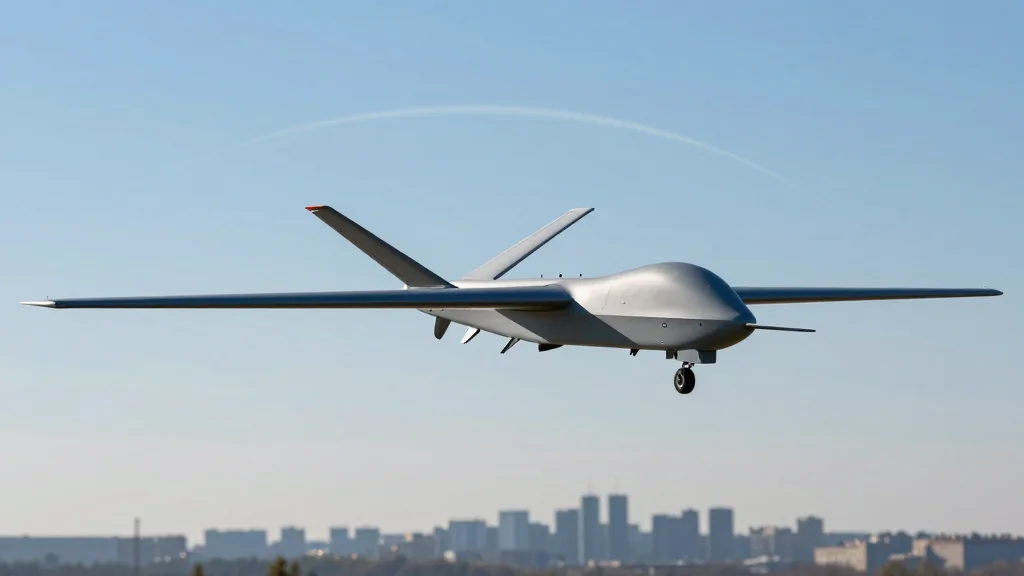
Ukraine’s Drone Campaign Deepens, Strikes 1,500 Km Inside Russia, Attacks Surge 400%

Why It Matters
The rapid expansion of Ukrainian drone capabilities reshapes the aerospace security calculus across Europe and beyond. By demonstrating that low‑cost, mass‑produced UAVs can strike targets thousands of kilometres from the front, Kyiv is redefining the range at which air‑defence systems must operate, compelling NATO members to reassess their own vulnerability to similar threats. The trend also accelerates the diffusion of drone technology to third‑party states, as evidenced by Ukraine’s emerging export deals with Saudi Arabia, Qatar, and the UAE, potentially lowering the barrier for other regional conflicts to adopt unmanned warfare. For the defence industry, the surge translates into a surge in demand for electronic‑warfare suites, autonomous navigation chips, and rapid‑manufacture drone frames. Companies that can scale production while integrating anti‑jamming and GPS‑denied capabilities stand to capture a sizable share of a market projected to exceed $55 billion in 2026. Conversely, traditional aerospace firms focused on manned platforms may see a shift in procurement priorities as governments allocate more budget to counter‑UAS solutions.
Key Takeaways
- •Medium‑range Ukrainian drone attacks have risen 400% since early 2024.
- •UAVs now reach up to 1,500 km inside Russian territory, hitting logistics hubs and industrial sites.
- •Ukraine plans to produce over 3 million low‑cost FPV drones in 2026, dwarfing U.S. output.
- •U.S. and Ukraine are drafting a drone‑defence pact to co‑manufacture UAVs and share technology.
- •Russia is accelerating deployment of SM‑6 and hypersonic PrSM systems to counter the drone threat.
Pulse Analysis
The Ukrainian drone surge is less a tactical surprise than a strategic inflection point for modern warfare. Historically, air power has been dominated by high‑cost, high‑performance platforms that require extensive logistics and training. Kyiv’s pivot to cheap, disposable UAVs flips that paradigm, leveraging quantity and autonomy to offset Russia’s numerical superiority in conventional aircraft. This democratization of air power erodes the traditional advantage held by states with deep aerospace industrial bases, forcing a re‑evaluation of deterrence models that rely on air‑superiority.
From a market perspective, the conflict is acting as a live testbed for next‑generation drone technologies. Companies that can deliver reliable GPS‑denied navigation, AI‑driven target identification, and swarming algorithms at scale will likely dominate post‑war procurement cycles. The U.S. involvement, through the Drone Dominance initiative and the proposed bilateral export framework, signals a willingness to embed Ukrainian innovations into Western supply chains, potentially accelerating the commercial rollout of these capabilities.
Strategically, the deep‑strike capability introduces a new layer of pressure on Moscow. Each successful hit inside Russian heartland not only degrades material assets but also imposes a political cost, as civilian leadership must justify the allocation of scarce air‑defence resources to protect domestic infrastructure. If Kyiv can sustain the current tempo, the cumulative effect may compel Russia to negotiate from a weaker position, or at the very least, to divert attention and resources away from the front lines, altering the broader dynamics of the war.
Ukraine’s Drone Campaign Deepens, Strikes 1,500 km Inside Russia, Attacks Surge 400%
Comments
Want to join the conversation?
Loading comments...