Why It Matters
The accelerated Atlas‑V cadence underscores ULA’s short‑term reliance on legacy hardware, while Amazon’s lagging Leo deployment threatens its broadband rollout and may reshape FCC policy on satellite constellations.
Key Takeaways
- •ULA accelerates Atlas‑V launches amid Vulcan delays
- •Amazon's Leo constellation at 270 satellites, far from 1,616 goal
- •FCC reviewing Amazon's request for launch schedule extension
- •Only eight Atlas‑V rockets remain, two earmarked for Leo missions
- •SpaceX maintains lead with 50 launches, outpacing all rivals combined
Pulse Analysis
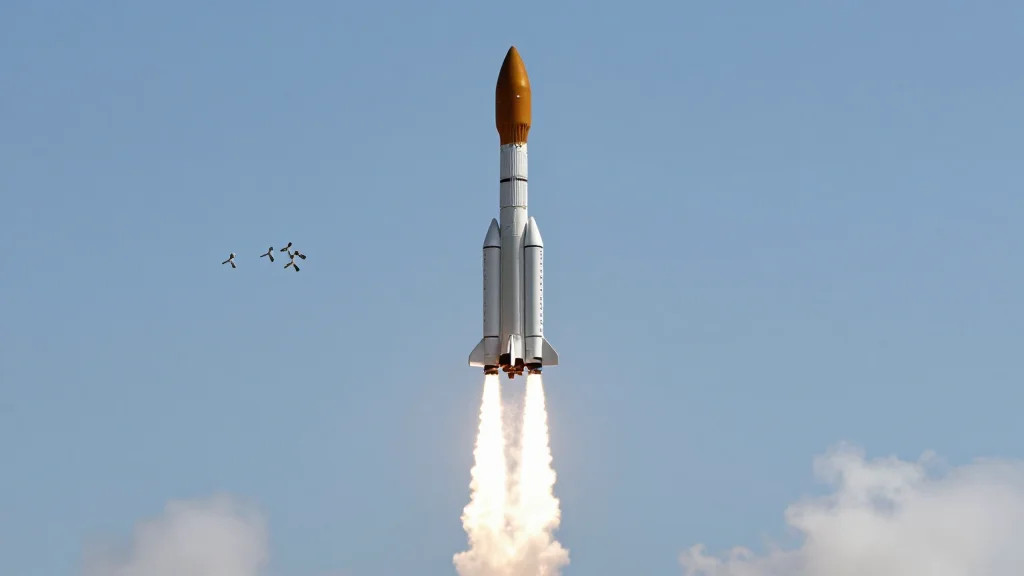
United Launch Alliance’s recent Atlas‑V mission highlights a pivotal moment for the company’s launch strategy. With the Vulcan rocket still grounded due to technical and supply‑chain setbacks, ULA is squeezing the last of its Atlas‑V inventory into service. The firm now has just eight rockets left, allocating two for Amazon’s Leo missions and the remainder for Boeing’s Starliner program. This accelerated cadence not only maximizes revenue from a legacy system but also pressures ULA to secure a smooth transition to Vulcan, which promises higher payload capacity and reusability.
Amazon’s broadband ambitions hinge on the rapid expansion of its Leo satellite network. At 270 operational units, the constellation is still a long way from the 1,616 satellites mandated by the Federal Communications Commission to meet its July deadline. The company’s request for a time extension reflects both manufacturing bottlenecks and launch slot constraints. An FCC‑approved extension could give Amazon breathing room, but it also raises concerns about spectrum congestion and the competitive dynamics of low‑Earth‑orbit broadband services, especially as rivals like OneWeb and Telesat accelerate their own deployments.
The broader launch market remains heavily skewed toward SpaceX, which logged 50 launches this year—more than the combined total of all other providers. ULA’s reliance on the aging Atlas‑V and the delayed Vulcan rollout place it at a strategic disadvantage, potentially eroding market share and pricing power. As satellite operators demand higher launch frequency and lower costs, ULA must demonstrate that its legacy rockets can still deliver reliability while fast‑tracking Vulcan certification. The outcome will shape the competitive landscape for commercial launch services through the late 2020s.
ULA launches 29 Leo satellites
Comments
Want to join the conversation?
Loading comments...