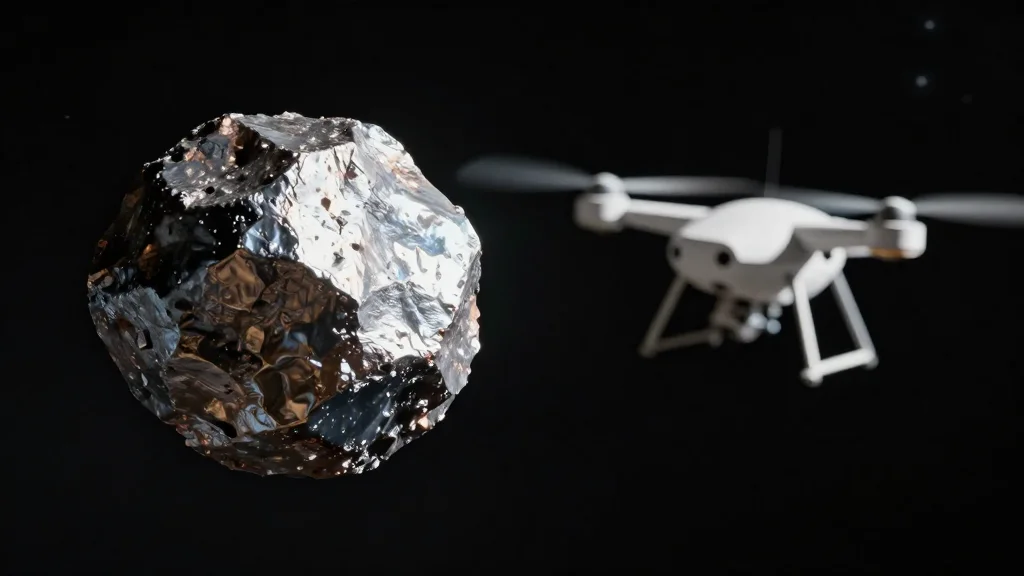
Ultra-Fast Asteroid Rotation Threatens Space-Mining Missions
Companies Mentioned
Why It Matters
Ultra‑fast rotation undermines the feasibility of surface mining, raising technical and investment risks for the emerging asteroid‑resource industry.
Key Takeaways
- •2022 OB 5 spins once every 92 seconds, an ultra‑fast rotator.
- •Centrifugal force exceeds asteroid’s gravity by ~100×, hindering landers.
- •Fast rotation appears common among small, low‑delta‑v near‑Earth asteroids.
- •Mining firms must develop magnetic or active anchoring to overcome spin.
Pulse Analysis
The promise of asteroid mining has long hinged on finding low‑energy targets that can be reached with modest launch budgets. Recent bankruptcies of Deep Space Industries and Planetary Resources highlighted how fragile the business model is when technical assumptions prove optimistic. The new HiPERCAM observations add another layer of complexity: many of the most accessible near‑Earth objects spin so rapidly that traditional landing techniques become untenable. This shift forces investors and engineers to reassess the risk profile of missions that rely solely on delta‑v calculations without thorough physical characterization.
From a physics standpoint, a 92‑second rotation period generates centrifugal acceleration that dwarfs the weak gravitational pull of a sub‑kilometer asteroid. Conventional harpoons, drills, or even adhesive pads would be ripped away, prompting a surge in research on magnetic anchoring, electro‑static adhesion, and active thruster‑based station‑keeping. Astroforge’s claim of a magnetic attachment system illustrates the direction the industry may take, but such technologies remain in early development and add cost and mass to spacecraft designs. The need to balance anchoring capability with payload constraints could reshape vehicle architectures and launch strategies.
Market implications are equally significant. Venture capital that once poured into speculative mining concepts now demands proof of concept that includes spin‑state analysis and mitigation plans. Companies may pivot toward orbiting extraction methods, such as remote material processing or tether‑based collection, which are less sensitive to surface gravity. Moreover, the broader scientific community’s identification of ultra‑fast rotators as a common trait among small NEAs suggests that future target catalogs will prioritize rotational data alongside composition and accessibility. In the short term, missions like Astroforge’s DeepSpace‑2 will serve as critical testbeds, determining whether the industry can overcome the spin barrier and unlock the multi‑trillion‑dollar value of off‑world resources.
Ultra-fast asteroid rotation threatens space-mining missions
Comments
Want to join the conversation?
Loading comments...