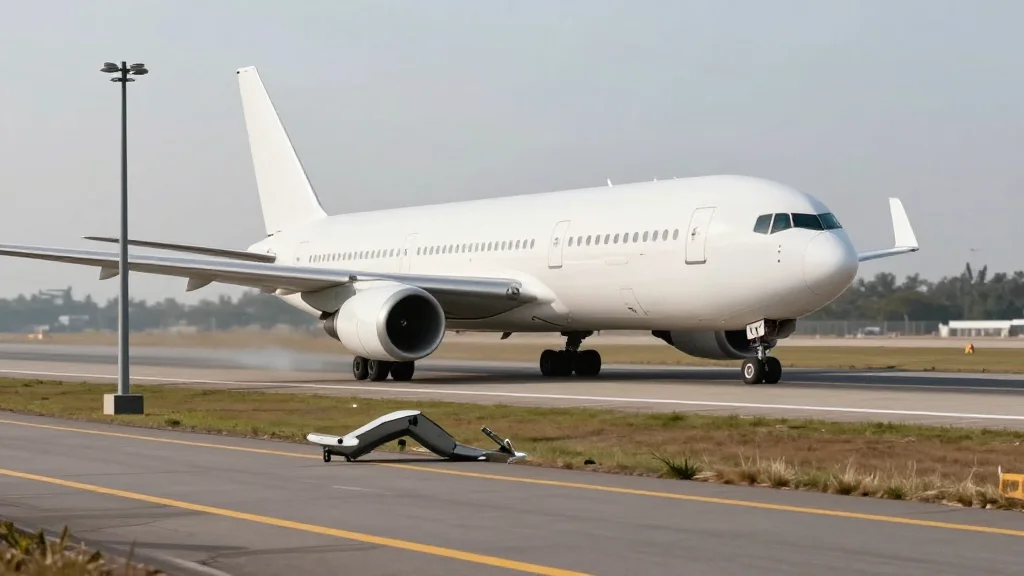
United Boeing 767 Strikes Light Pole on New Jersey Turnpike During Newark Landing

Companies Mentioned
Why It Matters
The light‑pole strike at Newark raises critical questions about the safety margins between major airports and adjacent roadways. As passenger volumes rebound post‑pandemic, any lapse in runway clearance can quickly erode public confidence and invite regulatory action. The FAA’s investigation will likely set precedents for how airports manage peripheral infrastructure, potentially prompting nationwide audits of similar light‑pole placements. For airlines, the incident serves as a reminder that even routine landings can expose vulnerabilities in operational protocols. United’s handling of the event—promptly grounding the aircraft for inspection and cooperating with authorities—will be measured against industry best practices and could influence future airline‑airport coordination standards.
Key Takeaways
- •United Airlines Flight 169, a Boeing 767 from Venice, struck a New Jersey Turnpike light pole while landing at Newark Liberty at ~2 p.m. EDT Sunday.
- •All 221 passengers and 10 crew members were unharmed; the aircraft landed safely and taxied to the gate.
- •The FAA has opened a full investigation, focusing on flight‑path data, crew statements, and runway‑adjacent infrastructure.
- •United’s maintenance team is inspecting the jet for structural damage; the airline has not issued a detailed public comment.
- •The incident adds pressure on the Port Authority to review and possibly relocate roadside fixtures near runway edges.
Pulse Analysis
The Newark light‑pole strike arrives at a moment when the aviation sector is under heightened safety scrutiny. The March LaGuardia crash, which claimed two pilots, has already spurred the FAA to tighten approach‑procedure oversight at congested East Coast airports. This incident, though non‑fatal, could accelerate that trend by exposing a less obvious hazard: the physical encroachment of roadway infrastructure on runway safety zones.
Historically, runway‑clearance standards have focused on obstacles within the protected airspace, but the proximity of the New Jersey Turnpike to Newark’s runways blurs that line. If the FAA’s final report cites the pole’s placement as a contributing factor, we may see a wave of retrofits across the nation’s busiest airports, similar to the post‑9/11 runway safety area expansions. Such changes would entail significant capital outlays for municipalities and airport authorities, potentially reshaping how airports negotiate land use with adjacent highways.
For United, the episode tests its crisis‑management playbook. The airline’s decision to keep the aircraft on the ground for a thorough inspection, rather than pushing it back into service, signals a risk‑averse posture that could preserve brand integrity. However, repeated incidents—whether minor or major—could compound public perception issues, especially as airlines compete for post‑pandemic travel demand. United may need to invest in enhanced pilot training for low‑visibility approaches and work closely with the FAA to refine standard operating procedures for airports with similar runway‑roadway configurations.
Overall, the incident underscores the interconnected nature of aviation safety, infrastructure planning, and regulatory oversight. The forthcoming FAA findings will likely influence not only Newark’s immediate corrective actions but also broader industry standards for runway‑adjacent obstacle management.
United Boeing 767 Strikes Light Pole on New Jersey Turnpike During Newark Landing
Comments
Want to join the conversation?
Loading comments...