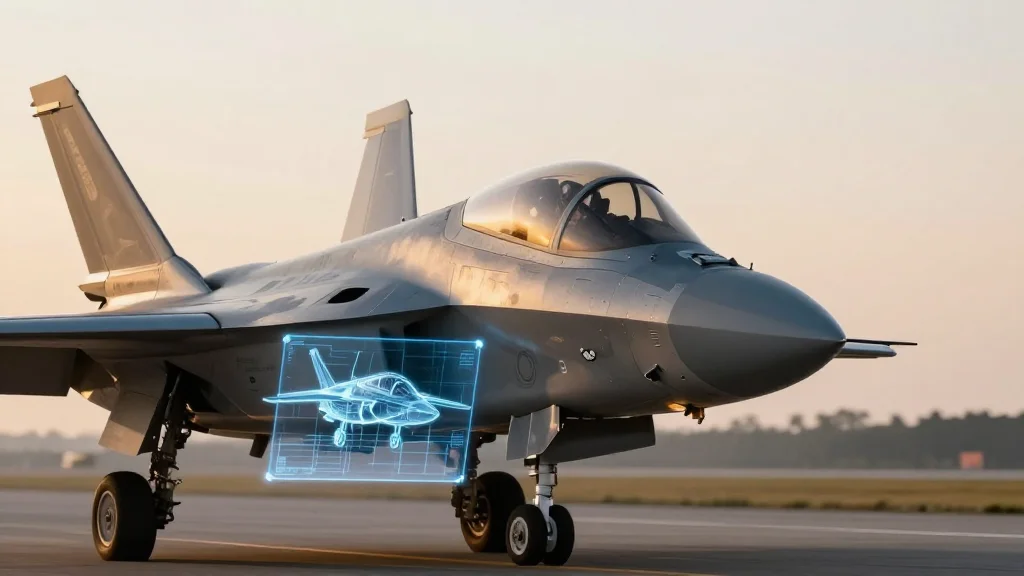
U.S. Air Force AI Flight Test Assistant Slashes Planning Time to Minutes

Companies Mentioned
Why It Matters
Accelerating flight‑test planning reshapes the defense aerospace acquisition cycle, a process historically plagued by lengthy bureaucratic steps. By compressing the paperwork phase, the Air Force can field new capabilities faster, preserving a technological edge in contested airspaces. The efficiency gains also free up engineering talent for higher‑value analysis, potentially improving overall system safety and performance. Beyond the military, the adoption of AI‑driven documentation tools signals a broader shift in aerospace engineering toward generative AI assistance. Commercial aircraft manufacturers and satellite providers are watching the Air Force’s experiment closely, as similar time‑to‑market pressures exist in the civilian sector. If AFTA proves reliable at scale, it could catalyze a wave of AI integration across the entire aerospace supply chain.
Key Takeaways
- •AFTA reduces flight‑test planning from ~48 hours to under 5 minutes.
- •Maj. Gen. Scott Cain highlighted speed as critical to warfighter capability.
- •AI generates first drafts of test plans, hazard assessments and evaluation frameworks.
- •Potential annual savings of millions in administrative labor for the Air Force.
- •Full rollout across all major test programs targeted for FY2028.
Pulse Analysis
The Air Force’s AI Flight Test Assistant marks a decisive move toward AI‑augmented engineering, echoing trends seen in commercial aviation where generative tools are already assisting design reviews and maintenance planning. Historically, flight‑test cycles have been a bottleneck, often dictating the overall schedule of new aircraft programs. By slashing the documentation phase, AFTA not only accelerates acquisition but also introduces a new risk‑management paradigm: AI can flag inconsistencies or omissions that human engineers might overlook, provided the outputs are rigorously vetted.
From a market perspective, the announcement could spur a competitive scramble among defense contractors to embed AI compatibility into their own development pipelines. Companies that can deliver data in formats readily ingestible by AFTA will likely enjoy preferential treatment, potentially reshaping supplier hierarchies. Moreover, the cost‑avoidance angle—reducing labor‑intensive paperwork—offers a compelling ROI narrative for budget‑constrained defense planners.
Looking ahead, the real test will be AFTA’s performance under operational stress. If the September UCAV demonstration validates the system’s accuracy and safety compliance, it could pave the way for broader AI adoption across other services, from the Navy’s ship‑testing programs to the Army’s ground‑vehicle trials. The ripple effect may extend to allied nations, many of which are already investing in AI‑enabled testing. In that scenario, the United States could set the standard for AI‑driven aerospace validation, reinforcing its leadership in both technology and doctrine.
U.S. Air Force AI Flight Test Assistant Slashes Planning Time to Minutes
Comments
Want to join the conversation?
Loading comments...