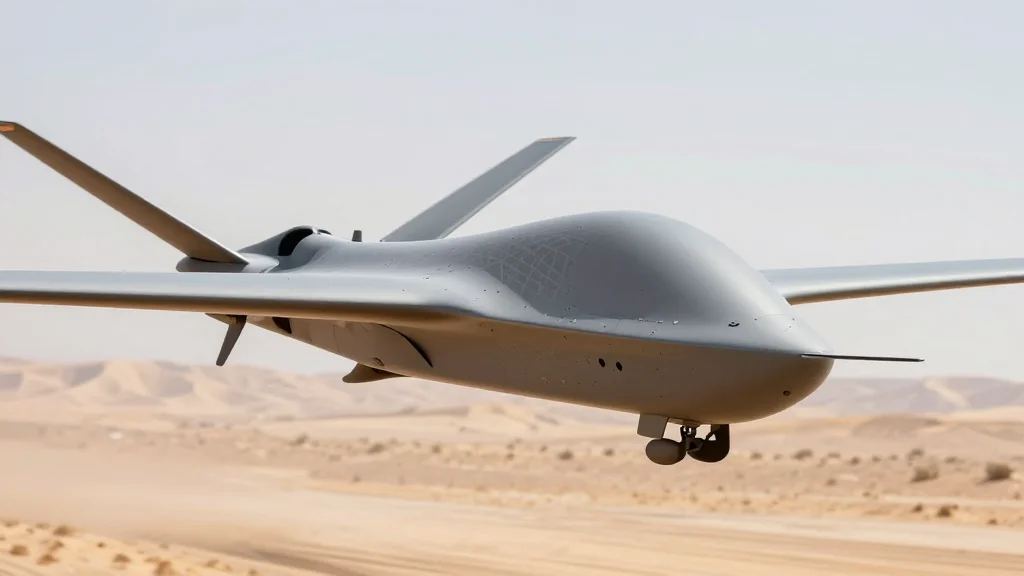
US Air Force Awards AEVEX $18.5 Million for Group 3 Autonomous Strike Aircraft

Companies Mentioned
Why It Matters
The contract underscores the accelerating adoption of autonomous strike platforms in U.S. defense strategy, a trend that could reshape how air power is projected in high‑risk environments. By relying on additive manufacturing, AEVEX demonstrates a path to lower-cost, faster‑to‑field systems, challenging traditional aerospace supply chains that depend on long lead‑times and high per‑unit expenses. If the Group 3 aircraft meet performance goals, the Air Force may accelerate its transition away from manned platforms for certain mission sets, prompting other services and allied nations to explore similar unmanned solutions. The deal also validates the commercial viability of recent defense‑focused IPOs, signaling that capital markets are willing to fund companies that can deliver cutting‑edge autonomous capabilities at scale.
Key Takeaways
- •U.S. Air Force awards AEVEX an $18.5 million contract for Group 3 autonomous aircraft.
- •Contract leverages AEVEX’s 100,000‑sq‑ft UxS manufacturing space and 150+ engineers.
- •Aircraft will be produced using 3D‑printing technology for rapid, scalable fielding.
- •AEVEX CEO Roger Wells highlighted the Air Force’s continued trust in the company.
- •The deal follows AEVEX’s recent IPO, which sold 16 million shares at $20 each.
Pulse Analysis
AEVEX’s contract marks a pivotal moment in the convergence of additive manufacturing and autonomous weapons. Historically, aerospace procurement has been dominated by legacy OEMs with deep supply‑chain relationships and multi‑year development cycles. By contrast, AEVEX’s model—centralized 3D‑printing, a distributed engineering team, and a focus on low‑cost, single‑use strike assets—mirrors the broader defense shift toward “agile” acquisition, where speed and flexibility outweigh traditional economies of scale.
The $18.5 million figure may appear modest, but it serves as a proof‑point for the Air Force’s willingness to experiment with new production paradigms. If the Group 3 platform demonstrates reliable performance, the service could issue larger, multi‑year contracts that would dramatically increase AEVEX’s revenue runway and potentially attract further private‑equity or government‑backed investment. Competitors are likely to respond with their own rapid‑prototype programs, intensifying a technology race that could accelerate innovation but also raise questions about testing rigor and operational safety.
Strategically, the OWA concept aligns with a doctrinal pivot toward “distributed lethality,” where numerous inexpensive, expendable assets saturate contested airspace, overwhelming adversary defenses. This approach reduces the risk to high‑value manned aircraft and pilots while delivering decisive effects. As the Air Force integrates these systems, it will need to address integration challenges—such as command‑and‑control bandwidth, data‑link security, and rules of engagement for autonomous weapons. The outcome of AEVEX’s contract will therefore influence not only procurement dollars but also the policy framework governing the next generation of autonomous warfare.
US Air Force awards AEVEX $18.5 million for Group 3 autonomous strike aircraft
Comments
Want to join the conversation?
Loading comments...