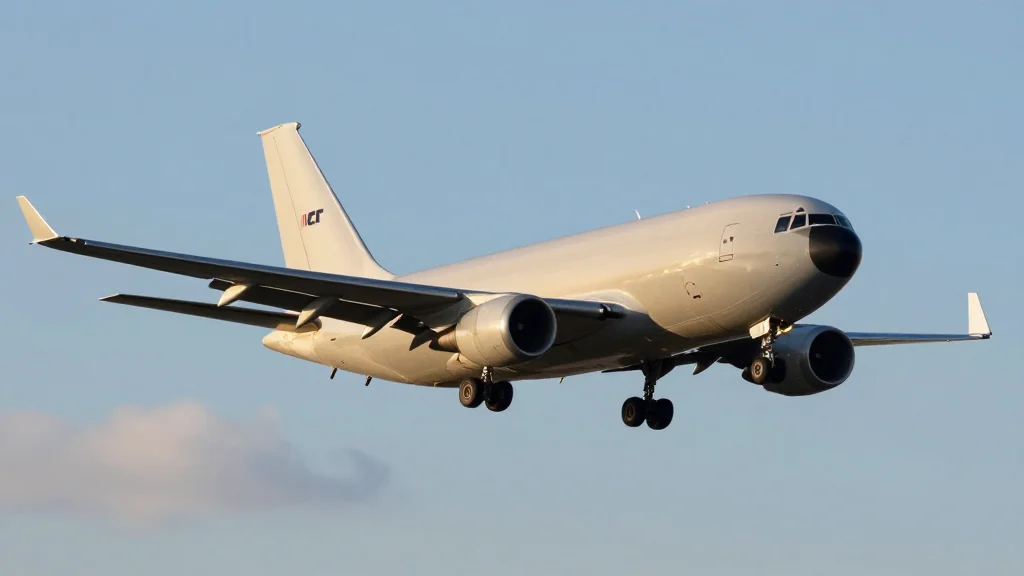
U.S. Air Force, Boeing Target 20% KC‑46 Readiness Boost by 2030

Companies Mentioned
Why It Matters
The KC‑46 Pegasus is the backbone of the United States' aerial refueling capability, a force multiplier that enables fighters, bombers and transport aircraft to operate across the globe. Raising its readiness by more than 20% will directly expand the range and endurance of U.S. air assets, tightening deterrence against near‑peer adversaries in the Indo‑Pacific and Europe. Moreover, the upgrade demonstrates a renewed focus on modernizing legacy platforms to meet contested‑environment requirements, a trend that will shape defense procurement and sustainment strategies for years to come. A more reliable tanker fleet also reduces the operational burden on the aging KC‑135 Stratotanker fleet, allowing the Air Force to retire older airframes sooner and reallocate resources toward emerging technologies such as unmanned refueling platforms and autonomous logistics. The program therefore serves as both a short‑term readiness boost and a long‑term catalyst for broader transformation within the U.S. defense aviation ecosystem.
Key Takeaways
- •U.S. Air Force and Boeing launch KC‑46 readiness upgrade targeting >20% availability increase by 2030.
- •Accelerated installation of Remote Vision System 2.0 to replace legacy cockpit displays.
- •Early‑production aircraft will receive structural and software retrofits for improved reliability.
- •New sustainment framework centralizes logistics and predictive maintenance across the fleet.
- •First 30 upgraded tankers slated for delivery by mid‑2026, supporting Indo‑Pacific and European operations.
Pulse Analysis
The KC‑46 upgrade marks a decisive shift from reactive fixes to a proactive, lifecycle‑focused sustainment model. Historically, the program has been mired in software bugs and delayed deliveries, eroding confidence among warfighters. By institutionalizing a unified logistics architecture, the Air Force is essentially treating the tanker fleet as a digital platform, where data‑driven maintenance can preempt failures and keep aircraft in the air longer. This mirrors trends in commercial aviation, where predictive analytics have cut downtime by double‑digit percentages.
From a competitive standpoint, the move also reinforces Boeing’s position as the primary supplier of U.S. strategic airlift and refueling assets. While rival firms such as Lockheed Martin and Northrop Grumman are eyeing future unmanned tanker concepts, the immediate need is to extract maximum capability from the existing KC‑46 inventory. Successful execution will give Boeing a stronger bargaining chip in upcoming defense budget cycles and could influence the shape of the next generation of aerial refuelers, potentially integrating autonomous refueling pods or hybrid‑electric propulsion.
Looking ahead, the upgrade’s impact will be measured not just in readiness percentages but in operational outcomes—how many sorties the upgraded tankers enable, the reduction in mission aborts due to fuel constraints, and the ability to sustain high‑tempo operations in contested airspaces. If the program delivers on its promise, it could set a benchmark for future platform modernizations, proving that legacy airframes can be revitalized to meet 21st‑century threat environments without the need for entirely new airframes.
U.S. Air Force, Boeing Target 20% KC‑46 Readiness Boost by 2030
Comments
Want to join the conversation?
Loading comments...