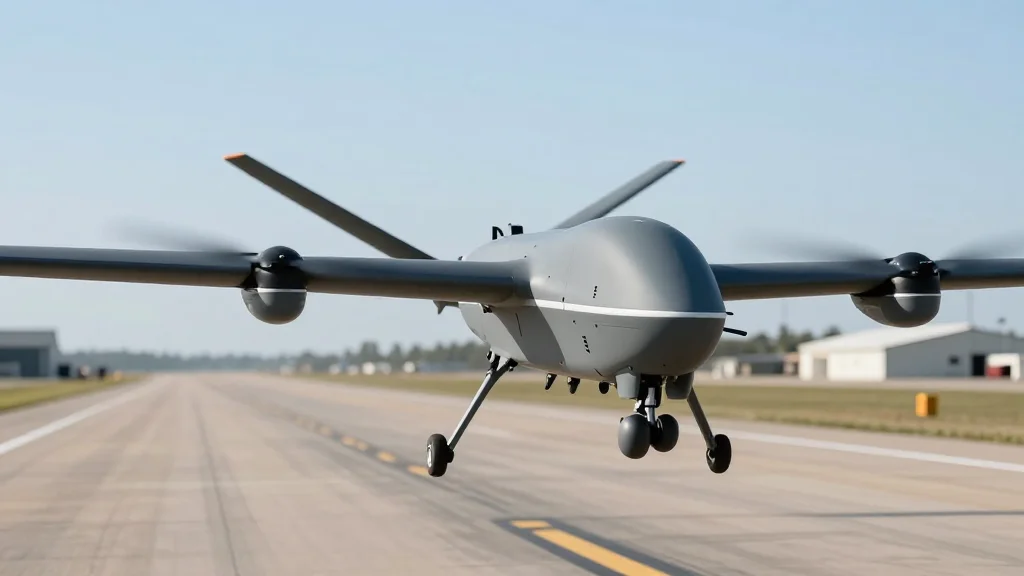
U.S. Air Force Can’t Stop Drones over Its Own Bases
Why It Matters
The admission exposes a critical vulnerability in protecting the United States’ nuclear deterrent infrastructure, prompting urgent congressional and budgetary scrutiny. Resolving the gap will shape future defense spending and the legal framework for domestic airspace security.
Key Takeaways
- •Barksdale base hosts nuclear bomber fleet, making drone incursions critical
- •Air Force admits current counter‑drone program is insufficient for future threats
- •Legal and policy limits hinder kinetic drone‑shootdown over U.S. soil
- •Development focuses on non‑kinetic options like jamming and directed energy
- •Congressional pressure may accelerate funding for new domestic counter‑drone systems
Pulse Analysis
The recent drone sighting over Barksdale Air Force Base has thrust counter‑drone capability into the spotlight for the U.S. military. As the home of the Eighth Air Force and the nation’s strategic bomber fleet, any unauthorized aerial intrusion poses a direct risk to intelligence, surveillance, and potential sabotage of nuclear assets. The Air Force’s acknowledgment that its current program of record cannot meet future threat scenarios underscores a broader challenge: adapting legacy air‑defense concepts to a proliferating market of inexpensive, consumer‑grade unmanned aircraft.
Legal constraints are a major hurdle for kinetic responses. Section 401 of the Counter‑Drone Act grants limited detection and mitigation powers on U.S. soil, but shooting down a drone over a domestic base raises liability, debris, and air‑traffic safety concerns. Consequently, senior leaders are exploring less kinetic alternatives—electronic jamming, directed‑energy weapons, and net‑capture systems—each with distinct cost, technical, and regulatory trade‑offs. The shift toward these technologies reflects a growing consensus that a layered, non‑lethal approach may be more politically palatable while still deterring hostile surveillance.
Congressional oversight is likely to intensify as the gap becomes a budgetary priority. Lawmakers, exemplified by Rep. Clay Higgins, are pressing the Air Force for clear cost estimates and timelines, signaling that future appropriations could be tied to demonstrable progress in domestic counter‑drone solutions. Accelerated investment could spur rapid prototyping and fielding of integrated detection‑to‑engagement systems, ultimately strengthening the security of America’s most sensitive air installations. The outcome will set a precedent for how the nation defends its critical infrastructure against a new class of low‑cost aerial threats.
U.S. Air Force can’t stop drones over its own bases
Comments
Want to join the conversation?
Loading comments...