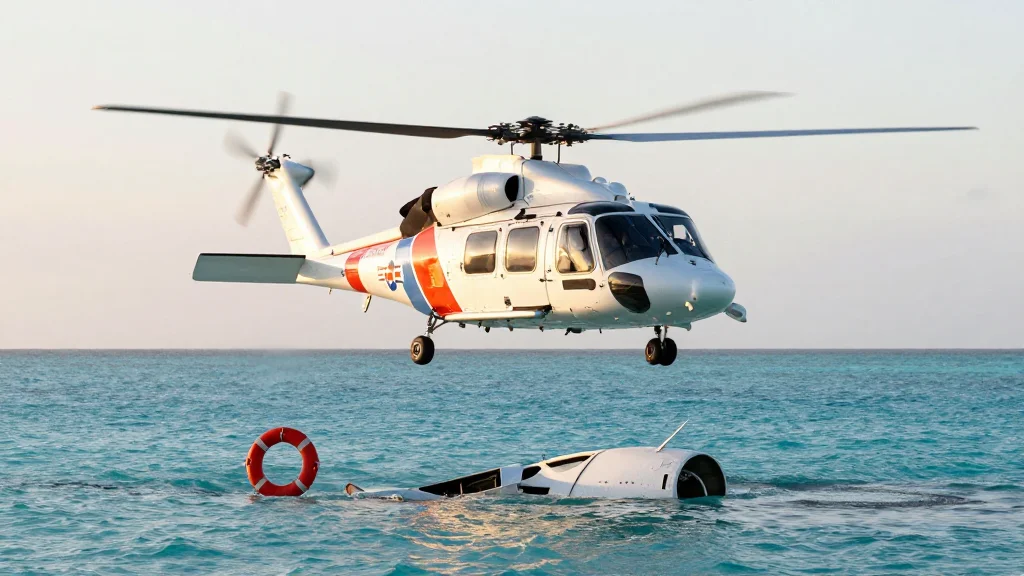
US Coast Guard Rescues 10 Passengers After Beechcraft Crash Off Florida

Why It Matters
The crash and subsequent rescue highlight the fragile safety net surrounding short‑haul private aviation in the Caribbean‑US corridor. With tourism and business travel heavily reliant on these routes, any disruption can have economic ripple effects across the region. Moreover, the incident tests the interoperability of multinational rescue frameworks, offering a real‑world case study for future policy refinements. A thorough investigation could lead to stricter maintenance standards for aging aircraft, mandatory installation of modern distress‑beacon technology, and enhanced pilot training for over‑water emergencies. These changes would improve overall aviation safety, reduce insurance costs, and bolster confidence among passengers and operators alike.
Key Takeaways
- •US Coast Guard rescued 10 passengers from a Beechcraft 300 King that crashed off Fort Pierce, Florida.
- •Three survivors sustained injuries; the aircraft was en route from Abaco to Grand Bahama.
- •The Bahamas AAIA opened an investigation into the loss of communication and crash cause.
- •Rescue involved coordination between US Coast Guard, Royal Bahamas Defence Force, and police.
- •Incident may prompt stricter maintenance oversight and adoption of satellite distress‑beacon systems.
Pulse Analysis
The Fort Pierce crash underscores a persistent vulnerability in the region’s private‑air segment: aging fleets operating over water with limited real‑time communication capabilities. While the Coast Guard’s swift action prevented loss of life, the event reveals a systemic risk that could be mitigated through technology upgrades. Satellite‑based ADS‑B and ELT devices, now standard on commercial jets, remain optional for many light aircraft, creating a blind spot for air traffic controllers and rescue teams.
Historically, the Caribbean has been a hotbed for aviation incidents due to its dispersed island geography and reliance on small, often older, aircraft. Insurance underwriters have responded by raising premiums for operators lacking modern avionics, a trend that could accelerate after this crash. Operators may face pressure to retrofit fleets with next‑generation communication suites, a move that would increase operating costs but also enhance safety and marketability.
From a regulatory perspective, the incident could catalyze tighter cross‑border oversight. The FAA and Bahamas Civil Aviation Authority have previously signed memoranda of understanding for data sharing, yet enforcement has been uneven. A joint investigation that yields concrete safety recommendations—such as mandatory periodic checks of radio equipment and mandatory flight‑data recorder installation for aircraft over 5,000 pounds—could set a new baseline for regional compliance. In the longer term, the episode may serve as a catalyst for a unified Caribbean‑US aviation safety framework, aligning standards, training, and emergency response protocols to better protect passengers and crew on these critical links.
US Coast Guard Rescues 10 Passengers After Beechcraft Crash Off Florida
Comments
Want to join the conversation?
Loading comments...