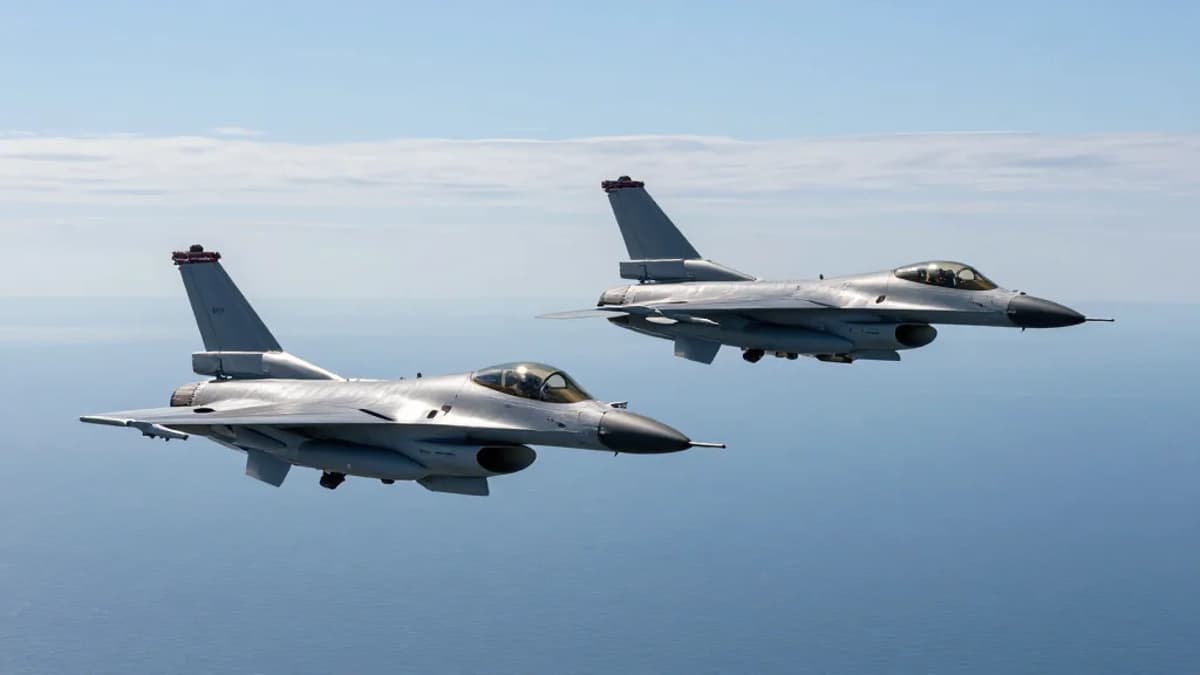
U.S. F-16s and Chinese Jets Engage in Rare Mid-Air Standoff
•February 21, 2026
0
Why It Matters
The standoff signals rising operational friction between the United States and China in a strategically vital region, potentially influencing diplomatic and security calculations across East Asia.
Key Takeaways
- •US F-16s conducted rare training near Korean airspace
- •Chinese jets scrambled, leading to brief standoff
- •Incident occurred over strategic Yellow Sea corridor
- •Highlights escalating US-China aerial encounters in East Asia
- •May prompt diplomatic protests and tighter rules of engagement
Pulse Analysis
The Yellow Sea has long been a flashpoint for great‑power competition, and the recent F‑16 sortie by U.S. Forces Korea illustrates Washington’s commitment to maintaining a visible deterrent posture. By flying near the Korean Peninsula’s air defense identification zone, the United States signals readiness to protect its allies while testing Chinese response times. Such exercises are rare, making the Chinese scramble a clear indicator of Beijing’s intent to contest any perceived encroachment in its near‑shore airspace.
Analysts view this encounter as part of a broader pattern of aerial close‑calls that have risen since 2022, driven by overlapping reconnaissance missions, missile defense drills, and freedom‑of‑navigation operations. The brief standoff, though non‑violent, raises the risk of miscalculation, especially given the speed and maneuverability of modern fighter jets. Military planners on both sides are likely reviewing engagement protocols to prevent accidental escalation, while regional partners monitor the situation for signs of shifting power dynamics.
For policymakers, the incident underscores the need for clear communication channels and confidence‑building measures between Washington and Beijing. Diplomatic notes, hotlines, and joint safety agreements could mitigate future confrontations in the densely trafficked airspace above the Yellow Sea. As the United States continues to reinforce its presence in the Indo‑Pacific, and China expands its air‑defense capabilities, such standoffs may become more frequent, compelling stakeholders to balance deterrence with stability.
U.S. F-16s and Chinese Jets Engage in Rare Mid-Air Standoff
0
Comments
Want to join the conversation?
Loading comments...