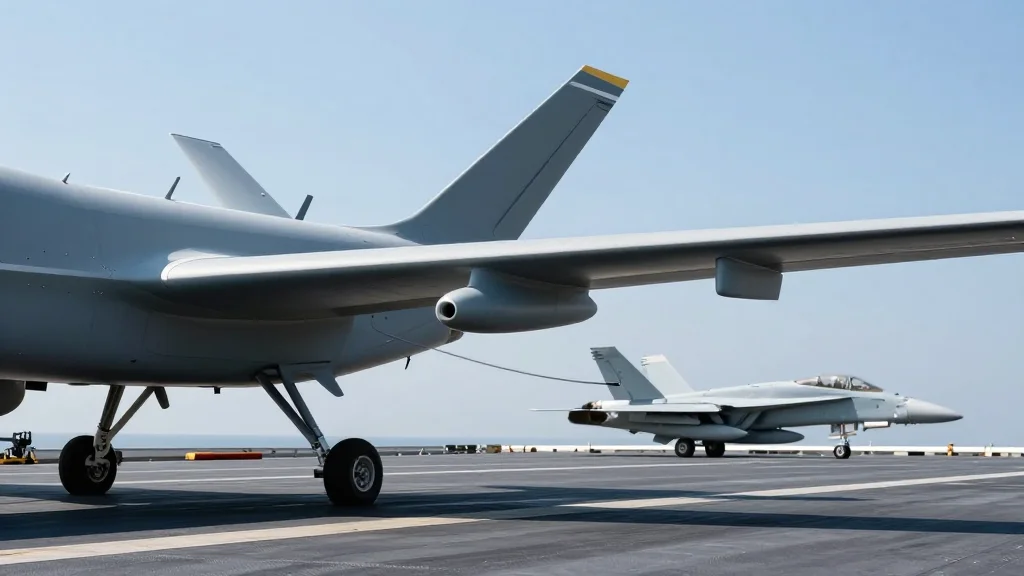
U.S. Navy and Boeing Complete First Flight of Production MQ-25A Stingray Drone

Companies Mentioned
Why It Matters
The MQ‑25A Stingray represents the first operational carrier‑based unmanned aerial refueling system, a capability that could double the combat radius of carrier‑based fighters and reshape naval strike doctrine. By offloading the tanker role to an autonomous platform, the Navy can allocate more Super Hornets to high‑value strike missions, enhancing fleet lethality while reducing crew exposure. The successful flight also validates the integration of complex autonomous software with carrier‑grade hardware, setting a precedent for future unmanned combat and support aircraft. Beyond the Navy, the program signals to the broader aerospace and defense market that large‑scale autonomous systems are moving from prototype to production. Suppliers such as Rolls‑Royce, which provides the AE 3007N engine, stand to benefit from increased demand for high‑efficiency propulsion in long‑endurance platforms. The $805 million contract and upcoming procurement requests will drive a supply chain focused on advanced avionics, autonomous control, and refueling technology, potentially spurring innovation across both military and commercial sectors.
Key Takeaways
- •First production MQ‑25A Stingray flight completed on April 25, 2026, lasting two hours.
- •Aircraft is the first of four EDM units under an $805 million contract with the U.S. Navy.
- •Stingray can carry 14,000‑16,000 lb of fuel and operate up to 500 nautical miles from the carrier.
- •Powered by a Rolls‑Royce AE 3007N engine and equipped with a Cobham aerial refueling pod.
- •Next steps include additional test flights at MidAmerica and carrier‑qualification trials at NAS Patuxent River.
Pulse Analysis
The MQ‑25A’s maiden flight is more than a milestone; it is a proof point that the Navy’s long‑standing ambition to embed unmanned systems on carriers is finally materializing. Historically, carrier aviation has been constrained by the need for manned tankers, which limit the number of strike aircraft that can be deployed and increase crew risk. By introducing an autonomous refueler, the Navy can effectively decouple fuel logistics from combat missions, allowing a higher proportion of its air wing to focus on offensive tasks. This shift mirrors a broader defense trend toward distributed, networked platforms that can operate with reduced human oversight.
From a market perspective, the successful flight is likely to buoy Boeing’s defense segment, which has faced headwinds from commercial jet slowdowns. The program’s visibility may also accelerate investment in autonomous flight control software, sensor fusion, and secure communications—areas where competitors such as Lockheed Martin and Northrop Grumman are actively seeking footholds. Moreover, the Rolls‑Royce AE 3007N engine’s performance in the MQ‑25A could open doors for similar high‑bypass, low‑fuel‑consumption engines in future unmanned ISR or strike platforms.
Looking ahead, the key risk remains the transition from flight‑test validation to carrier‑deck operations, a notoriously unforgiving environment. Any delay in achieving Milestone C—carrier qualification—could push the program’s entry into service beyond the Navy’s 2028 target, potentially prompting the service to consider alternative solutions. However, if the program stays on track, the MQ‑25A could become the cornerstone of a new generation of carrier air wings, where manned and unmanned assets operate seamlessly to project power across the globe.
U.S. Navy and Boeing Complete First Flight of Production MQ-25A Stingray Drone
Comments
Want to join the conversation?
Loading comments...