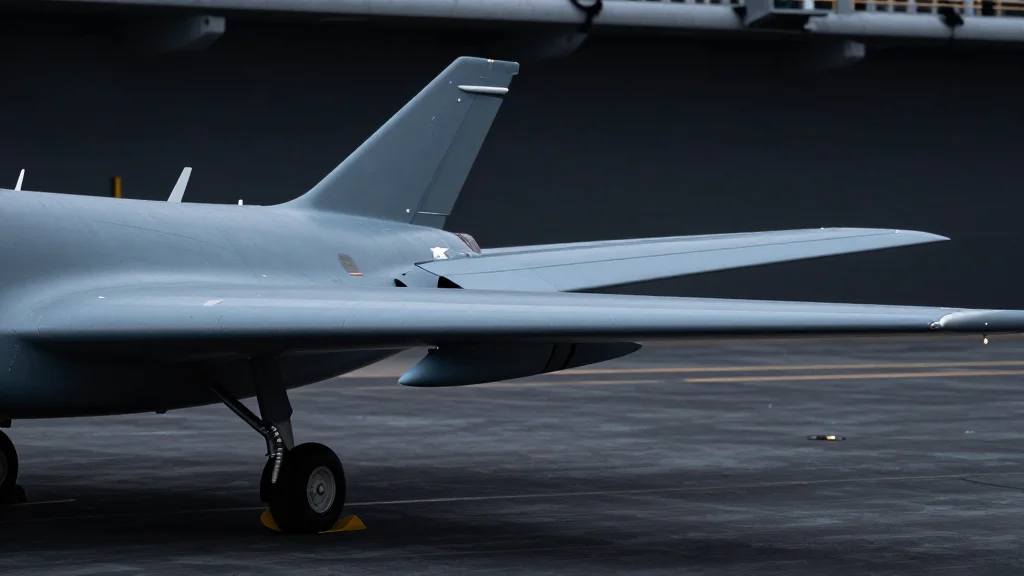
U.S. Navy Gives Boeing MQ-25A Stingray Low‑Rate Production Go‑Ahead

Companies Mentioned
Why It Matters
The clearance of the MQ‑25A for low‑rate production marks the first time a carrier‑based unmanned aerial vehicle is being fielded for a dedicated refueling role, fundamentally altering how the U.S. Navy projects power from sea. By extending the range of F/A‑18E/F Super Hornets and reducing reliance on manned tankers, the Stingray can increase sortie rates, lower operational costs, and free deck space for additional weapons or sensors. The program also serves as a testbed for broader unmanned‑manned integration, a capability that could shape future carrier air wing composition and influence allied navies' procurement strategies. Beyond tactical benefits, the LRIP award signals confidence in Boeing’s ability to deliver complex carrier‑compatible systems, reinforcing its position in the defense aerospace market. Successful deployment could open doors for follow‑on contracts in logistics, ISR, and electronic warfare, accelerating the Navy’s transition toward a more autonomous fleet.
Key Takeaways
- •U.S. Navy grants Milestone C approval for Boeing MQ‑25A Stingray, enabling low‑rate initial production.
- •LRIP Lot 1 contract for three aircraft expected this summer, with options for two additional lots (3 + 5 aircraft).
- •First operational test flight completed on 25 April 2026, confirming carrier‑deck launch and recovery.
- •MQ‑25A will refuel F/A‑18E/F Super Hornets, increasing carrier strike group endurance and sortie count.
- •Program overseen by PMA‑268, aiming to integrate unmanned refueling into mixed manned‑unmanned carrier operations.
Pulse Analysis
The MQ‑25A’s transition to production arrives at a pivotal moment for naval aviation. Historically, carrier air wings have relied on manned tankers like the KA‑27 to extend fighter range, a model that adds weight, crew requirements, and maintenance overhead. By substituting an unmanned platform, the Navy can achieve a higher lift‑to‑drag ratio and allocate more deck space to offensive payloads, directly enhancing combat power. This shift mirrors broader Department of Defense trends that prioritize autonomy to offset personnel constraints and budget pressures.
From a market perspective, Boeing’s win reinforces its dominance in carrier‑based platforms, a sector where competition is limited but high‑stakes. The company’s ability to deliver a carrier‑qualified UAV could translate into future contracts for unmanned ISR or electronic warfare pods, especially as the Navy explores the concept of “carrier‑based swarms.” Rivals such as Lockheed Martin and Northrop Grumman will likely accelerate their own unmanned initiatives to stay relevant.
Looking ahead, the real test will be operational integration. The MQ‑25A must prove it can reliably refuel fighters in the demanding carrier environment while coexisting with manned aircraft and emerging autonomous systems. If successful, the program could become a template for other services—potentially spawning land‑based or joint‑service unmanned tankers. Conversely, any shortfall in performance or cost overruns could stall the Navy’s unmanned carrier vision and prompt a reassessment of the broader unmanned‑manned strategy.
U.S. Navy Gives Boeing MQ-25A Stingray Low‑Rate Production Go‑Ahead
Comments
Want to join the conversation?
Loading comments...