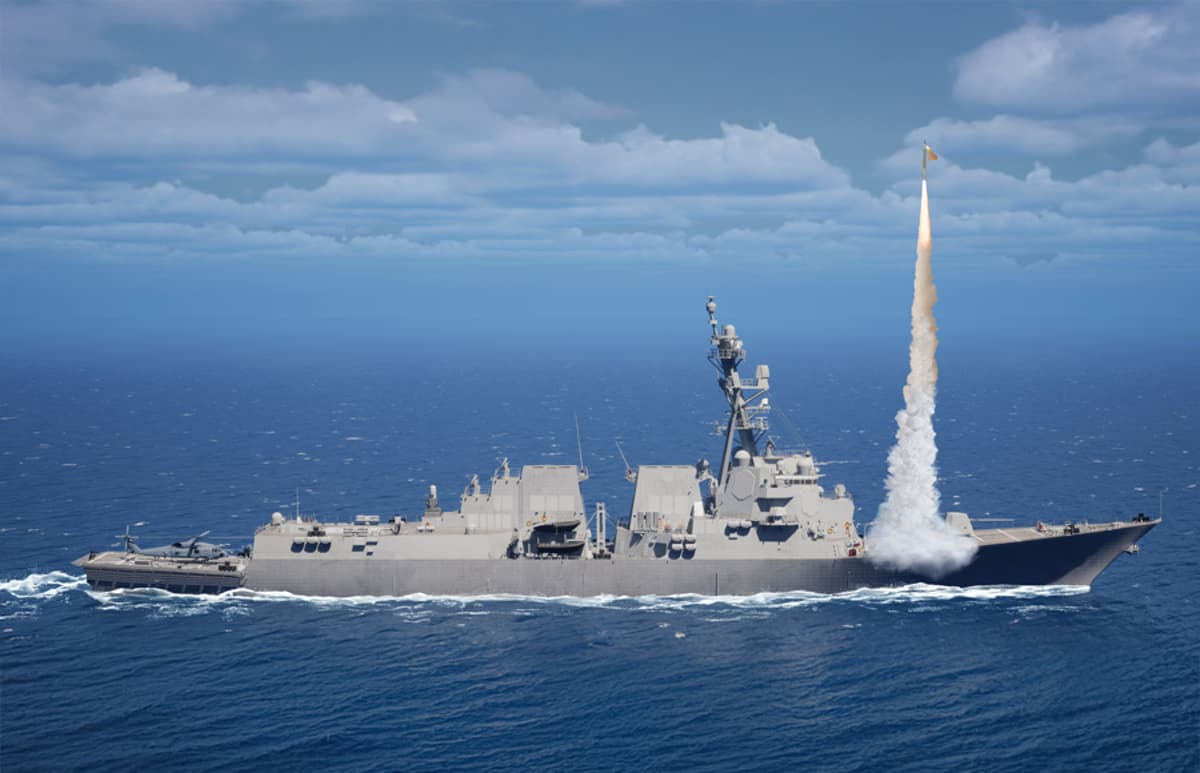
US Navy to Field PAC-3 MSE Interceptor on Aegis Warships for the First Time
Companies Mentioned
Why It Matters
Embedding the PAC‑3 MSE into Aegis gives the Navy a decisive kinetic edge against advanced missile threats, strengthening maritime security and supporting the broader Arsenal of Freedom initiative.
Key Takeaways
- •Lockheed wins multi‑million‑dollar contract for PAC‑3 MSE integration
- •PAC‑3 MSE to be fielded on Aegis ships by 2026
- •Hit‑to‑kill missile counters ballistic, cruise, hypersonic threats
- •Integration uses MK‑41 launchers, adds layered naval defense
Pulse Analysis
The Navy’s decision to integrate the PAC‑3 Missile Segment Enhancement (MSE) into its Aegis combat system reflects a broader shift toward kinetic, hit‑to‑kill solutions in missile defense. While the Army has long relied on the PAC‑3 family to protect ground forces, the MSE variant delivers substantially higher kinetic energy, enabling it to defeat not only traditional ballistic missiles but also emerging cruise and hypersonic threats. This capability aligns with the Department of Defense’s push for multi‑domain resilience, where a single interceptor can address a spectrum of threats across land, sea, and air.
Technical integration of the PAC‑3 MSE onto Aegis‑equipped vessels hinges on the MK‑41 vertical launch system, a proven platform that can accommodate the missile’s dimensions and launch requirements. Lockheed Martin’s internal investments and prior work under a framework agreement have accelerated development, allowing the Navy to field the system by 2026. By adding a kinetic layer to Aegis’s existing radar‑guided interceptors, the Navy gains a deeper, more flexible defensive envelope, enhancing protection for carrier strike groups and forward‑deployed assets in contested regions.
The move also carries strategic implications for allied cooperation and the U.S. defense industrial base. Sixteen partner nations already operate the PAC‑3 MSE, facilitating interoperability and joint training exercises. As the Arsenal of Freedom initiative expands, the Navy’s adoption signals a commitment to a unified, high‑performance missile defense architecture that can be scaled across services and allies. This integration not only bolsters deterrence against peer adversaries but also drives further innovation in missile technology, positioning the United States at the forefront of next‑generation maritime defense.
US Navy to field PAC-3 MSE interceptor on Aegis warships for the first time
Comments
Want to join the conversation?
Loading comments...