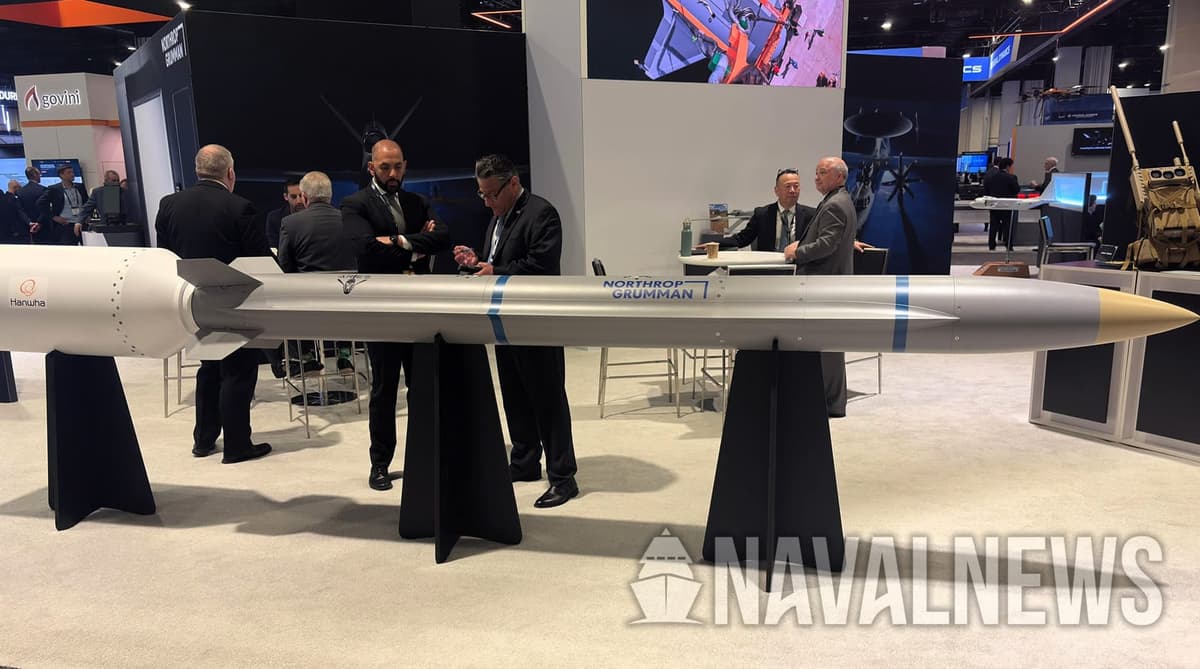
U.S. Navy’s New Anti-Radar Missile to Suffer ‘Strategic Pause’
Why It Matters
The pause threatens the Navy’s ability to counter advanced enemy air‑defenses and could ripple to partner nations that rely on the same capability, forcing a reassessment of future anti‑radar strike options.
Key Takeaways
- •FY 2027 funding drops to $24.3 M, 99% from prior-year advanced procurement
- •Designated FY 2027 funds for new missiles total only $20,000
- •Procurement resumes FY 2028 at 40 rounds, far below FY 2025‑26 levels
- •Loss of AARGM‑ER threatens F‑35C, Super Hornet anti‑radar capability
- •AESM program positioned as potential replacement with 300 rounds/year demand
Pulse Analysis
The AARGM‑ER, Northrop Grumman’s next‑generation anti‑radiation missile, was slated to replace the aging AGM‑88E and provide internal carriage for the F‑35. Development introduced a millimeter‑wave seeker, new control electronics and a slimmer airframe, but flight‑test anomalies pushed the initial operational capability from late 2024 to late 2026 and delayed full qualification to 2028. The FY 2027 budget reflects a strategic pause, allocating just $24.3 million—mostly carry‑over funds—and earmarking a paltry $20,000 for fresh production, signaling serious fiscal and technical headwinds.
For the Navy, the pause creates a capability gap for carrier‑based platforms such as the F‑35C, F/A‑18E/F Super Hornet and EA‑18G Growler, which rely on long‑range radar‑suppressing munitions to survive contested airspaces. Allied operators—including Finland, Australia, the Netherlands, Norway and Italy—also depend on U.S. procurement momentum to sustain their own AARGM‑ER stocks. Delayed deliveries could force these forces to retain older, less effective missiles or seek interim solutions, potentially weakening collective deterrence against sophisticated surface‑to‑air threat networks.
Industry analysts see the Advanced Emission Suppression Missile (AESM) and Northrop’s Stand‑In Attack Weapon (SiAW) as likely successors. AESM, announced earlier this year, targets a 300‑round‑per‑year production run and promises the longest‑range, stand‑off radar‑kill capability for the F‑35 and legacy fighters. SiAW, a derivative of the AARGM‑ER, may inherit some of the same technical challenges. The strategic pause thus reshapes the anti‑radar missile market, prompting contractors to accelerate alternative programs while the Navy evaluates cost‑effective pathways to maintain its electronic‑attack edge.
U.S. Navy’s New Anti-Radar Missile to Suffer ‘Strategic Pause’
Comments
Want to join the conversation?
Loading comments...