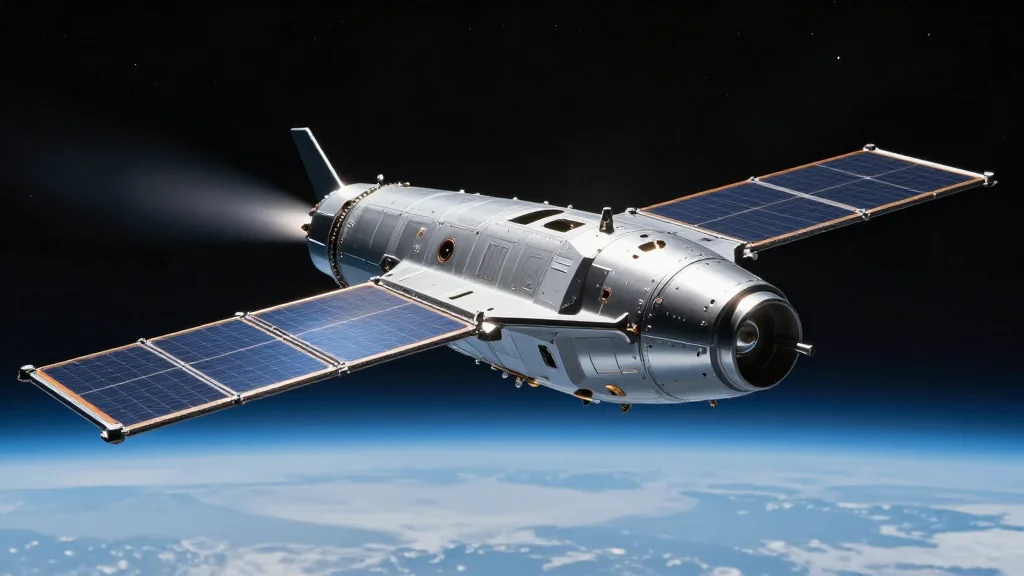
U.S. Space Force Awards SBI Contracts to Lockheed Martin and Firefly’s SciTec

Companies Mentioned
Why It Matters
The Space‑Based Interceptor contracts mark the first large‑scale investment in a space‑centric missile‑defense shield, shifting the traditional ground‑based paradigm toward a layered, orbital architecture. By integrating AI‑driven software with proven interceptor hardware, the program aims to close the detection‑to‑engagement gap for hypersonic and maneuverable threats, a capability that has eluded existing systems. Successful demonstration could redefine national security strategy, prompting allies to pursue similar capabilities and potentially sparking a new arms race in space. Moreover, the dual‑vendor approach—pairing Lockheed Martin’s legacy aerospace expertise with SciTec’s cutting‑edge AI solutions—signals a broader trend of hybrid partnerships in defense procurement. This model may accelerate technology maturation, reduce development risk, and spread cost across a diversified industrial base, setting a template for future high‑tech defense programs.
Key Takeaways
- •Lockheed Martin and SciTec each win contracts for the Space‑Based Interceptor (SBI) program.
- •The OTA effort totals up to $3.2 billion across 20 agreements to 12 companies.
- •Contracts aim to field an integrated Golden Dome missile‑defense layer by 2028.
- •Lockheed will adapt THAAD, PAC‑3 and Next Generation Interceptor tech for space.
- •SciTec will provide AI‑enabled tracking, data‑fusion and autonomous command software.
Pulse Analysis
The SBI awards represent a watershed moment for U.S. missile defense, moving the shield from a purely terrestrial construct to a hybrid space‑ground system. Historically, programs like THAAD and PAC‑3 have proven effective against ballistic threats, but they struggle against hypersonic weapons that can maneuver at high speeds and low altitudes. By placing interceptors in orbit, the Space Force hopes to engage threats earlier, leveraging the line‑of‑sight advantage of space‑based sensors. The integration of AI, as promised by SciTec, is crucial; it can process massive data streams in real time, enabling rapid decision cycles that are essential against near‑instantaneous hypersonic attacks.
From a market perspective, the $3.2 billion OTA pool is a clear signal that the Department of Defense is willing to bypass traditional procurement pathways to accelerate innovation. OTA contracts allow for more flexible terms, faster funding cycles and the inclusion of non‑traditional defense firms. This could reshape the competitive landscape, encouraging smaller, software‑centric companies to partner with legacy aerospace giants. The partnership between Lockheed and SciTec exemplifies this hybrid model, where hardware and software expertise converge to meet a common strategic objective.
Looking ahead, the program’s success will hinge on technical integration and cost control. The 2028 demonstration deadline is aggressive, especially given the need to certify space‑qualified interceptors and ensure survivability in a contested orbital environment. If the SBI achieves operational status, it could trigger a cascade of policy and procurement decisions, prompting NATO allies to seek similar capabilities and potentially prompting adversaries to develop counter‑measures. The stakes are high, and the next few years will reveal whether the United States can translate this ambitious vision into a functional, deterrent shield.
U.S. Space Force Awards SBI Contracts to Lockheed Martin and Firefly’s SciTec
Comments
Want to join the conversation?
Loading comments...