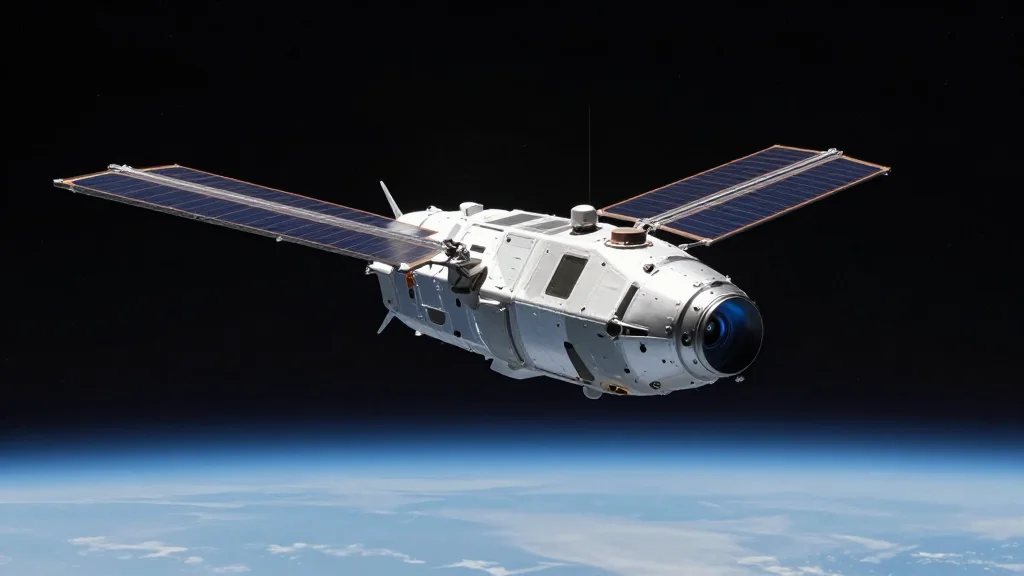
US Space Force Awards Up to $3.2 B to 12 Firms for Space‑Based Interceptor Prototypes

Companies Mentioned
Why It Matters
The SBI contract marks the largest single defense spend on a space‑based missile‑defense concept, reflecting a strategic pivot toward boost‑phase interception—a capability that could neutralize threats before they become hardened targets. By integrating commercial innovators alongside legacy defense contractors, the program may accelerate technology cycles and reduce costs, setting a precedent for future defense procurement. Moreover, a functional SBI constellation would fundamentally alter the calculus of adversary missile planning, potentially deterring aggressive launches and reshaping global strategic stability. Beyond the immediate defense benefits, the initiative could catalyze a new commercial market for low‑Earth‑orbit interceptor platforms, sensor miniaturization, and autonomous on‑orbit operations. Success could spur private‑sector investment, drive standards for space traffic management, and influence international norms around weaponization of space, making the SBI program a bellwether for the next generation of space security architecture.
Key Takeaways
- •US Space Force awarded up to $3.2 billion in OTA contracts to 12 firms for SBI prototypes.
- •20 OTA agreements cover companies from Lockheed Martin to Anduril and GITAI USA.
- •Program targets boost‑phase missile interception from a low‑Earth‑orbit satellite constellation.
- •Initial capability demonstration scheduled for 2028 under the Golden Dome initiative.
- •Contracts aim to blend traditional defense expertise with rapid‑prototype commercial innovation.
Pulse Analysis
The $3.2 billion SBI award is more than a procurement milestone; it signals a doctrinal shift in U.S. missile defense. Historically, the United States has relied on ground‑based THAAD and sea‑based Aegis systems that engage threats in mid‑course or terminal phases. By moving the intercept window to the boost phase, the Space Force is attempting to pre‑empt the most vulnerable stage of a missile’s flight, a concept that has long been theorized but never fielded at scale. The OTA mechanism, which sidesteps many of the Federal Acquisition Regulation constraints, allows the DoD to tap into the agility of Silicon Valley‑style firms, potentially compressing development timelines from a decade to a few years.
From a competitive standpoint, the inclusion of firms like Anduril—known for AI‑driven autonomous systems—and GITAI USA—a robotics specialist—suggests the SBI will lean heavily on advanced sensor fusion, machine‑learning target discrimination, and on‑orbit robotic servicing. This could create a new ecosystem of space‑based kinetic weapons, prompting both allies and rivals to reassess their own space‑defense postures. The program also raises strategic concerns: a functional SBI could be perceived as destabilizing, prompting adversaries to develop counter‑measures such as hypersonic glide vehicles designed to evade early detection.
Looking ahead, the 2028 prototype demo will be a litmus test for the viability of large‑scale, low‑Earth‑orbit interceptor constellations. Success could unlock follow‑on funding for production, potentially leading to a multi‑billion‑dollar operational fleet. Failure, however, could reinforce skepticism about space‑based kinetic defenses and shift resources back to traditional ground‑based systems. Either outcome will shape the next decade of U.S. defense strategy and the broader commercial space market.
US Space Force Awards Up to $3.2 B to 12 Firms for Space‑Based Interceptor Prototypes
Comments
Want to join the conversation?
Loading comments...