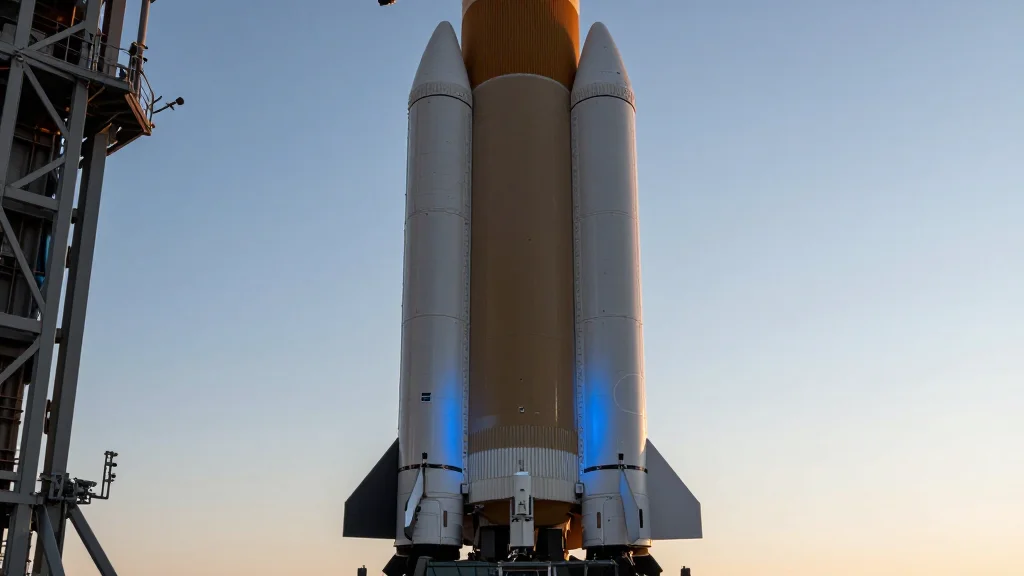
U.S. Space Force Considers Vulcan Launches Without Solid Boosters Amid Anomaly Probe

Companies Mentioned

Why It Matters
The Space Force’s consideration of Vulcan flights without solid boosters highlights a critical vulnerability in the United States’ national‑security launch ecosystem. By potentially shifting lower‑energy missions to booster‑free configurations, the service aims to preserve launch cadence without compromising payload delivery, but it also underscores the reliance on a single commercial provider when one vehicle is grounded. The episode could reshape future NSSL contract negotiations, prompting the Pentagon to embed greater flexibility and redundancy into its procurement strategy, which in turn may open market share for emerging launch firms like Blue Origin. A sustained reliance on SpaceX for near‑term launches could also affect competition dynamics, pricing, and innovation incentives across the commercial launch sector. If the Space Force formalizes booster‑free flight options, it may set a precedent for mission‑specific tailoring of launch configurations, influencing how both government and commercial customers approach launch planning and risk management.
Key Takeaways
- •Space Force is evaluating Vulcan launches without solid boosters after a Feb. 12 anomaly.
- •Lt. Gen. Philip Garrant said lower‑energy missions could proceed without boosters.
- •Vulcan can be configured with 0, 2, 4, or 6 boosters, offering flexibility for different payloads.
- •The anomaly forced a shift of several missions to SpaceX, collapsing the two‑provider model.
- •Phase 4 NSSL contracts later this decade will likely incorporate lessons from the Vulcan issue.
Pulse Analysis
The Space Force’s pivot to booster‑free Vulcan flights is a pragmatic response to an immediate operational bottleneck, but it also serves as a litmus test for the resilience of the U.S. launch architecture. Historically, the Department of Defense has relied on a duopoly—SpaceX and ULA—to mitigate single‑point failures. The current grounding of Vulcan, however, has exposed the fragility of that model, especially when the remaining provider must absorb a surge in demand. This could accelerate the Pentagon’s push for a third assured‑access provider, a strategic move that would re‑balance market power and potentially drive down launch costs through increased competition.
From a commercial perspective, ULA’s ability to re‑configure Vulcan without solid boosters could preserve its relevance for a subset of missions, but the trade‑off is reduced payload capacity and possibly higher per‑kilogram costs. SpaceX, already benefitting from the temporary monopoly, may leverage the situation to negotiate more favorable terms in future NSSL contracts. Meanwhile, Blue Origin’s New Glenn, still awaiting certification, stands to gain if the DoD formally embeds a three‑provider requirement into Phase 4. The outcome of the booster anomaly investigation will therefore have ripple effects beyond the immediate mission schedule, influencing procurement policy, vendor negotiations, and the broader competitive landscape of the aerospace launch market.
U.S. Space Force Considers Vulcan Launches Without Solid Boosters Amid Anomaly Probe
Comments
Want to join the conversation?
Loading comments...