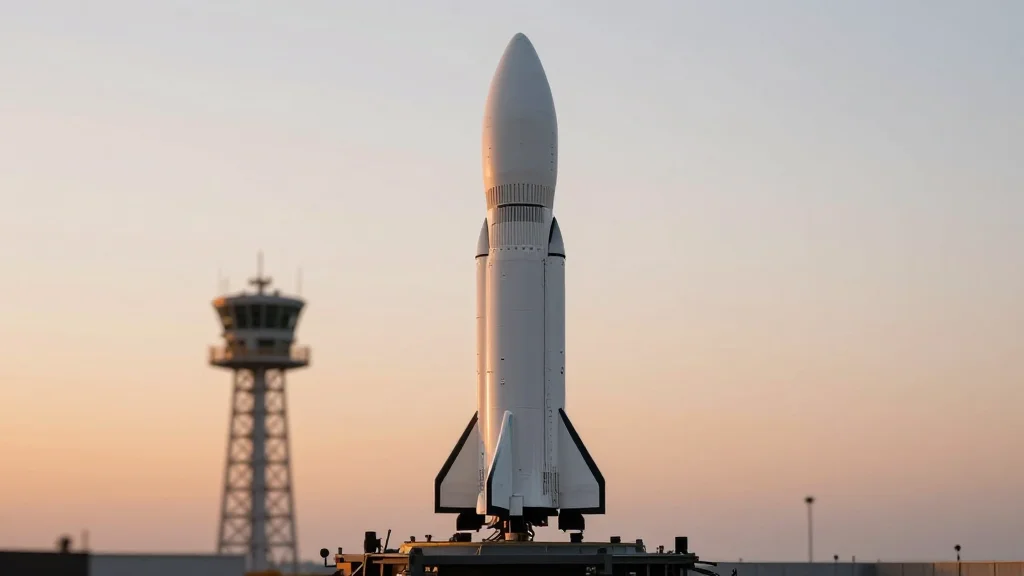
U.S. Space Force Sets Record with Five Different Rocket Launches in April

Companies Mentioned

Why It Matters
The record‑setting month demonstrates that the U.S. military can now leverage a commercial launch ecosystem to achieve a tempo once reserved for civilian agencies. Faster, more varied launch capability reduces the time needed to replace or augment critical satellite assets, enhancing national‑security resilience. Moreover, the demonstrated ability to coordinate multiple launch systems simultaneously signals to allies and adversaries alike that the United States maintains a robust, flexible space launch infrastructure. If the projected demand of hundreds of launches per year materializes, the Eastern Range could become the world’s busiest orbital gateway, reshaping global launch market dynamics. The Space Force’s modernization push may also spur further private‑sector investment in reusable and rapid‑turnaround launch technologies, accelerating the overall pace of innovation in the aerospace sector.
Key Takeaways
- •Space Launch Delta 45 supported five distinct launch vehicles in April, breaking a 60‑year record.
- •The previous record of four unique rockets was set in February 1965 and July 1966.
- •Col. Brian L. Chatman highlighted team dedication and partnership strength as key to the achievement.
- •Demand for launches is projected to reach hundreds per year by the mid‑2030s.
- •The Spaceport of the Future initiative will upgrade tracking, pads, and automation to sustain higher cadence.
Pulse Analysis
The April milestone is less a one‑off achievement than a symptom of a structural shift in how the United States approaches space power. Decades ago, the military relied on a handful of government‑run launch sites and expendable rockets that required months of preparation. Today, the convergence of reusable launch vehicles, commercial range services, and automated mission assurance has compressed that timeline dramatically. This compression not only lowers costs but also creates a strategic advantage: the ability to replace a degraded satellite constellation within weeks rather than years.
Historically, the Space Force’s launch capability lagged behind civilian agencies like NASA, which benefited from a broader commercial partnership base. The current record shows that the Eastern Range has caught up, leveraging the same reusable boosters that SpaceX and United Launch Alliance use for commercial payloads. As the range modernizes, it will likely become a preferred venue for both national‑security and commercial customers, potentially crowding out legacy providers that cannot match the speed and flexibility of the new system.
Looking ahead, the biggest question is whether the projected surge to “hundreds per year” can be sustained without compromising safety. The Space Force’s emphasis on automated monitoring and range‑control software suggests a path forward, but the integration of more diverse launch vehicles—some still in early development—will test the limits of current safety protocols. If the unit can maintain a high launch cadence while preserving safety, it will set a new benchmark for global launch operations and cement the United States’ leadership in both military and commercial space.
U.S. Space Force Sets Record with Five Different Rocket Launches in April
Comments
Want to join the conversation?
Loading comments...