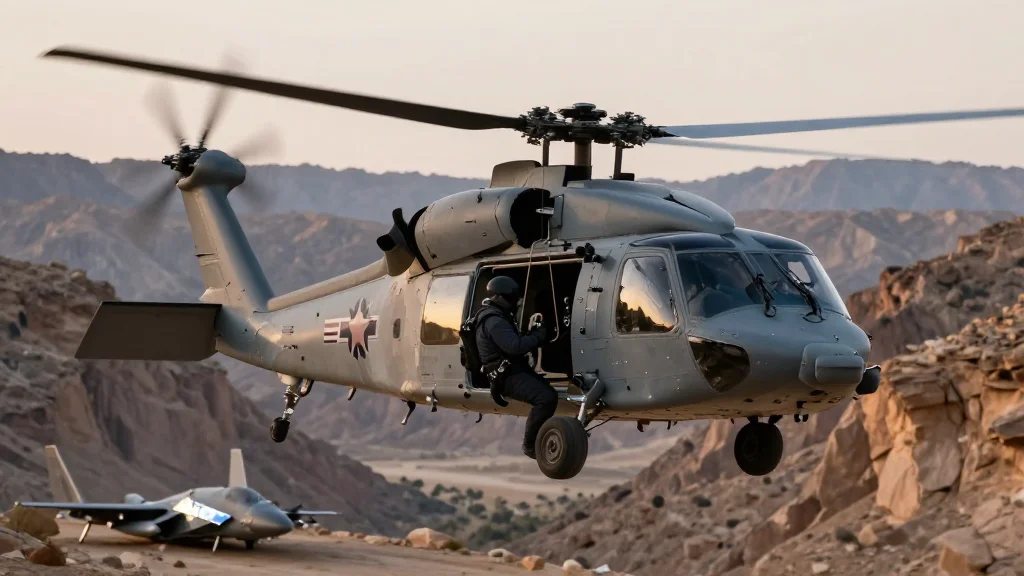
US Special Ops Rescue Second F-15E Crewman From Iran After Jet Shot Down

Why It Matters
The rescue of the F‑15E weapons systems officer highlights the intersection of aerospace technology, combat operations, and geopolitical risk. It showcases the U.S. Air Force’s reliance on advanced aircraft like the Strike Eagle and the critical role of specialized rescue units that can operate in contested airspace. The incident also reinforces the strategic importance of the Strait of Hormuz, where disruptions can reverberate through global oil markets, affecting aviation fuel prices and broader aerospace economics. Beyond immediate military implications, the operation may prompt reassessments of aircraft survivability, pilot ejection systems, and CSAR protocols across NATO and allied forces. As Iran continues to challenge U.S. air operations, aerospace manufacturers and defense contractors could see heightened demand for stealthier, longer‑range platforms and improved survivability kits, shaping procurement decisions for years to come.
Key Takeaways
- •U.S. Special Operations rescued the second crew member of a downed F‑15E on April 5, 2026.
- •The F‑15E was shot down by Iranian air defenses on April 3, marking the first U.S. aircraft loss over Iran in the current conflict.
- •Two rescue helicopters were hit by Iranian fire; no U.S. personnel were killed.
- •President Donald Trump confirmed the rescue on Truth Social, stating the airman "will be just fine."
- •The operation involved pararescuemen, air assets, and intelligence shared by Israel.
Pulse Analysis
The successful CSAR mission underscores a broader shift in modern air warfare: the need to integrate rapid personnel recovery into high‑intensity conflict scenarios. Historically, rescue operations were peripheral to strategic planning, but the Iran‑U.S. standoff illustrates how quickly a downed aircraft can become a diplomatic flashpoint. The U.S. demonstrated that even deep‑penetration rescue teams can operate under fire, preserving the political capital that comes with bringing service members home.
From an aerospace industry perspective, the incident may accelerate investment in next‑generation ejection seats, survivability kits, and autonomous rescue drones that can reduce risk to human rescuers. Companies like Lockheed Martin and Raytheon are already exploring AI‑driven beacon systems that can pinpoint downed aircrew in contested environments, a technology that could become a procurement priority for the Air Force.
Strategically, the rescue sends a clear signal to Tehran and other regional actors that the United States will not tolerate the capture of its personnel, potentially deterring future attempts at leverage through hostage‑taking. However, the willingness of Iran to fire on rescue helicopters also raises the specter of escalation. Policymakers will need to balance the imperative of protecting service members with the risk of widening the conflict, especially as oil markets remain sensitive to any disruption in the Strait of Hormuz. The episode thus serves as a case study in how aerospace capabilities, geopolitical stakes, and humanitarian imperatives intersect in real time.
US Special Ops Rescue Second F-15E Crewman from Iran After Jet Shot Down
Comments
Want to join the conversation?
Loading comments...