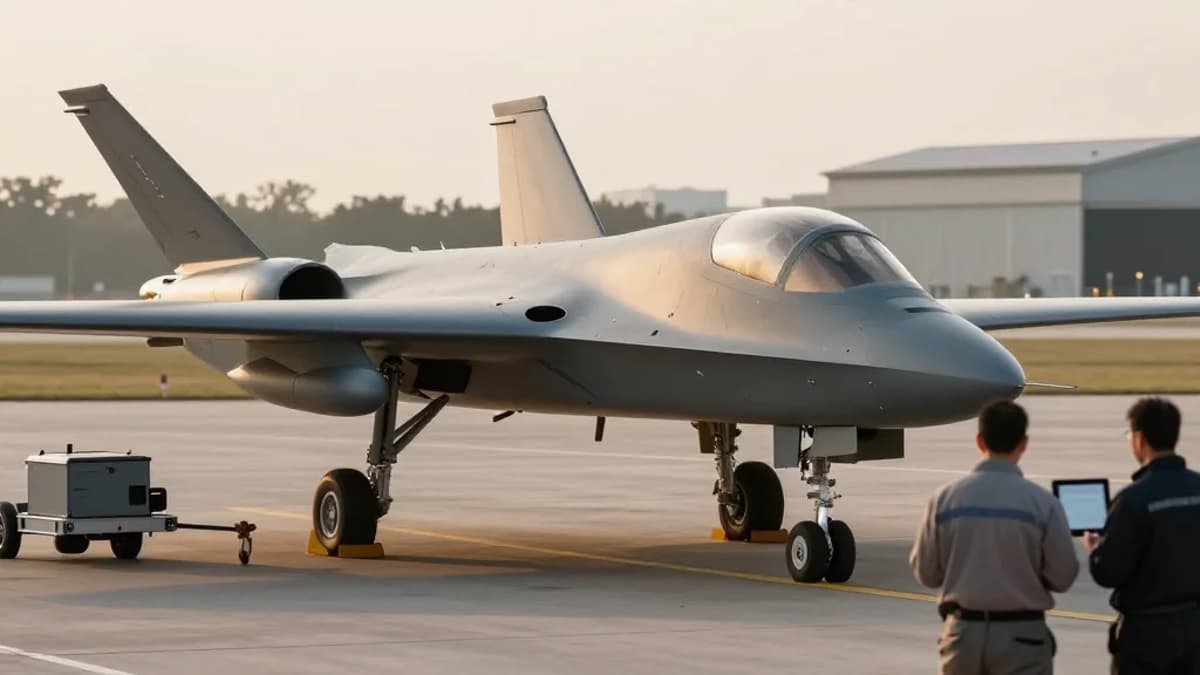
USAF Integrates Open-Architecture for Mission Autonomy on CCAs
Why It Matters
Open‑architecture accelerates capability delivery and cuts costs, giving the Air Force a faster path to field autonomous combat functions while inviting commercial partners into a standardized ecosystem.
Key Takeaways
- •Open-architecture enables plug‑and‑play mission software.
- •CCA platform supports AI-driven autonomous decision loops.
- •Integration reduces development cycles for future combat systems.
- •Modular design lowers lifecycle sustainment costs.
- •Industry partners gain faster access to Air Force testbeds.
Pulse Analysis
The Air Force’s shift to an open‑architecture model reflects a growing defense trend that prioritizes flexibility over monolithic designs. By decoupling hardware from software, the service can ingest new algorithms, sensor packages, and mission profiles without costly airframe modifications. This approach mirrors commercial aerospace practices where modular avionics have shortened certification timelines and fostered rapid innovation cycles.
Within the Collaborative Combat Aircraft program, open architecture underpins mission autonomy by providing a common data bus and standardized APIs for AI workloads. Autonomous navigation, real‑time sensor fusion, and adaptive targeting can now be deployed as software updates, enabling the aircraft to evolve its tactics in response to emerging threats. Early flight tests are focused on validating closed‑loop decision making, where onboard AI processes sensor inputs and executes maneuvers without pilot intervention, a capability that could redefine air superiority in contested environments.
For industry, the initiative opens a lucrative pathway to embed proprietary software into a high‑visibility platform. Defense contractors and commercial AI firms can prototype and field solutions on a government‑backed testbed, reducing entry barriers and sharing risk. Moreover, the modular sustainment model promises lower long‑term costs, as upgrades become incremental software patches rather than full system overhauls. As the DoD continues to embrace data‑centric warfare, the CCA’s open‑architecture framework may become a blueprint for next‑generation combat aircraft across services.
USAF Integrates Open-Architecture for Mission Autonomy on CCAs


Comments
Want to join the conversation?
Loading comments...