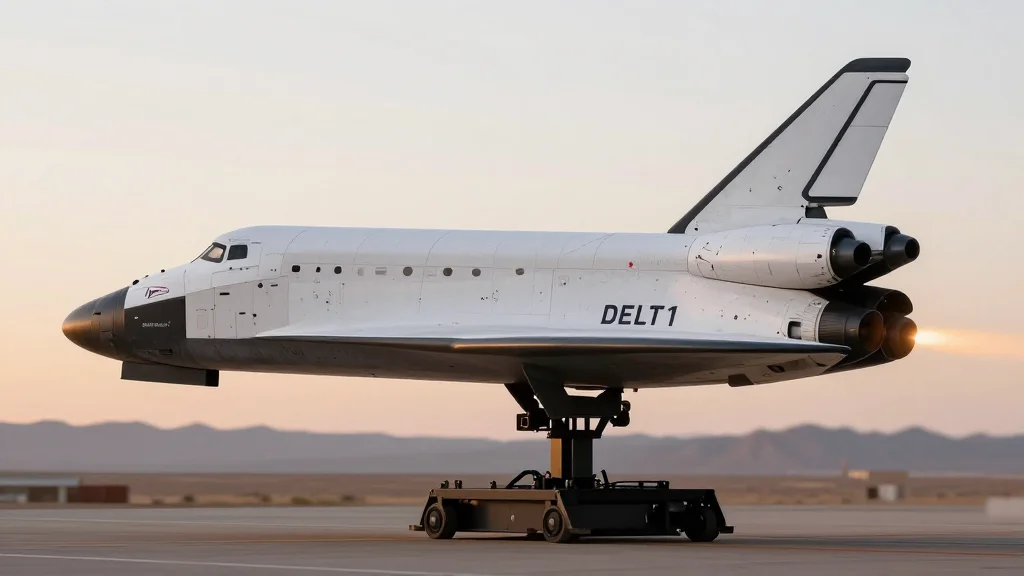
Virgin Galactic Starts Production Acceptance Tests on Delta‑Class Spaceplane

Companies Mentioned
Why It Matters
The initiation of production acceptance testing signals that Virgin Galactic is moving from prototype development to a repeatable manufacturing process, a shift that could lower costs and increase flight frequency for sub‑orbital tourism. By validating the Delta‑Class design through static and fatigue trials, the company aims to secure the regulatory approvals needed for commercial operations, directly impacting its revenue pipeline and the broader market’s confidence in private spaceflight viability. Moreover, the parallel construction of a second Delta‑Class vehicle demonstrates a commitment to scaling production, which could set a new industry benchmark for how sub‑orbital operators transition from one‑off flights to a fleet‑based model. This evolution may accelerate the maturation of the sub‑orbital tourism sector and influence competitive dynamics among emerging spaceflight providers.
Key Takeaways
- •Delta 1, the first Delta‑Class spaceplane, completed structural assembly in April at Mesa, Arizona
- •Virgin Galactic began static and fatigue acceptance tests, essential for certification
- •A second Delta‑Class vehicle is already under construction, indicating a move toward serial production
- •Tests aim to validate durability for repeatable sub‑orbital passenger flights
- •Successful trials will enable progression to flight‑level testing and commercial launch scheduling
Pulse Analysis
Virgin Galactic’s transition to a production‑standard spaceplane marks a strategic inflection point. Historically, the company relied on a low‑rate, custom‑built approach with its SpaceShipTwo fleet, which limited launch cadence and drove up per‑seat costs. The Delta‑Class platform, built around a repeatable airframe and modular systems, promises to break that bottleneck. By front‑loading rigorous static and fatigue testing, Virgin Galactic is not only de‑risking the design but also gathering a data set that can streamline future certification cycles, potentially shaving months off the time to market for each new vehicle.
From a market perspective, the ability to field a fleet of identical spaceplanes could reshape the economics of sub‑orbital tourism. Lower marginal costs and faster turnaround would enable Virgin Galactic to offer more frequent flights, expanding its addressable customer base beyond the ultra‑wealthy to include higher‑volume segments such as corporate experiences and scientific payloads. Competitors like Blue Origin and emerging entrants will need to match this production efficiency to stay relevant, potentially sparking a wave of investment in modular spacecraft manufacturing.
Looking ahead, the critical variable will be the test outcomes. If the Delta‑Class meets or exceeds durability targets, Virgin Galactic could accelerate its commercial rollout, attract new capital, and solidify its position as the leading provider of regular sub‑orbital flights. Conversely, any setbacks in the acceptance phase could delay certification, strain cash flow, and give rivals an opening to capture market share. The next few months will therefore be decisive for the company’s long‑term trajectory and for the broader commercial space tourism ecosystem.
Virgin Galactic Starts Production Acceptance Tests on Delta‑Class Spaceplane
Comments
Want to join the conversation?
Loading comments...