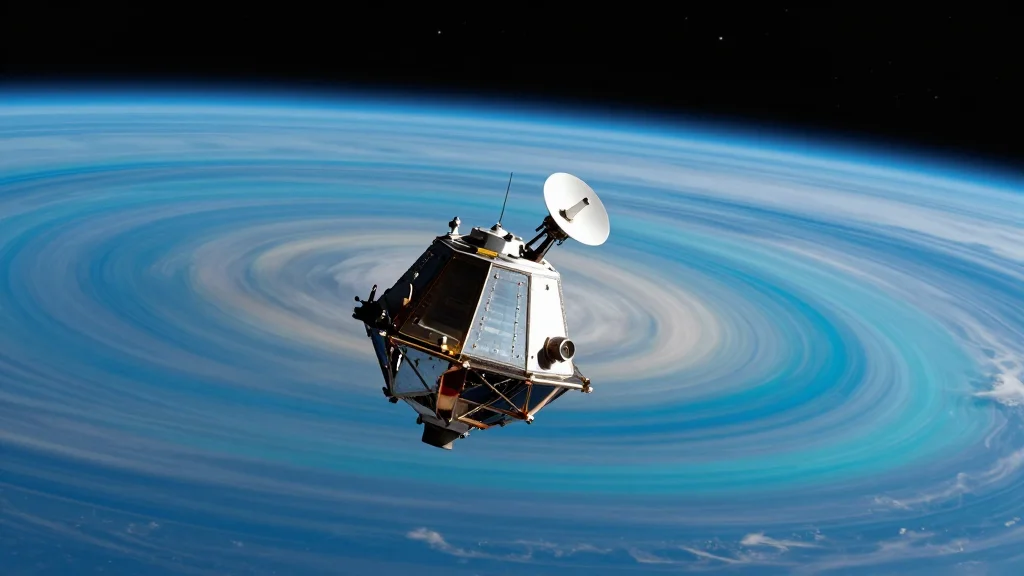
Voyager 2 Photographed Neptune in Light so Dim that some Exposures Lasted Seconds or Even Minutes, While the Spacecraft Was Racing Past the Planet. To Stop the Images Smearing, Engineers Programmed the Spacecraft Itself to Compensate for the Motion, Turning the Whole Probe Into Its Own Image-Stabilisation System.
Why It Matters
The solution showcases how innovative navigation and imaging can overcome extreme lighting and hardware constraints, guiding future deep‑space missions and highlighting the scientific value of a dedicated Neptune explorer.
Key Takeaways
- •Image motion compensation kept Neptune steady during multi‑minute exposures.
- •Thrusters fired in micro‑pulses to nudge spacecraft without blur.
- •Over 9,000 high‑resolution images of Neptune, rings, and Triton captured.
- •Technique first tested at Uranus in 1986, refined for Neptune.
- •Neptune flyby remains only close‑up dataset; future orbiter still unfunded.
Pulse Analysis
Voyager 2’s 1989 Neptune encounter marked the culmination of a 12‑year, interplanetary odyssey that began in 1977. At roughly 30 AU from the Sun, Neptune receives only about one‑thousandth of Earth’s sunlight, forcing the spacecraft’s narrow‑angle camera to use exposures up to several minutes long. Those long integrations would normally blur the image as the probe hurtled past at tens of thousands of kilometres per hour, a problem that traditional spacecraft pointing systems were not designed to solve.
Engineers answered the challenge with image motion compensation, a method that synchronizes the spacecraft’s attitude adjustments with the exposure timeline. By issuing a series of ultra‑short hydrazine thruster pulses, Voyager 2 nudged itself continuously, keeping the camera’s line of sight fixed on a single planetary feature. The approach, first trialed at Uranus in 1986, required meticulous pre‑flight calculations because round‑trip communication delays of several hours precluded real‑time corrections. The result was a smear‑free dataset that rivals modern instruments despite the probe’s 1970s‑era hardware.
The scientific payoff was immense: more than 9,000 images revealed Neptune’s Great Dark Spot, faint ring arcs, and a close‑up view of Triton’s geologically active surface. These pictures remain the definitive visual record of the outermost giant planet, informing atmospheric models and guiding proposals for a future Neptune orbiter. The mission’s ingenuity underscores how clever engineering can extend the life of legacy spacecraft and sets a benchmark for imaging strategies on upcoming deep‑space probes.
Voyager 2 photographed Neptune in light so dim that some exposures lasted seconds or even minutes, while the spacecraft was racing past the planet. To stop the images smearing, engineers programmed the spacecraft itself to compensate for the motion, turning the whole probe into its own image-stabilisation system.
Comments
Want to join the conversation?
Loading comments...