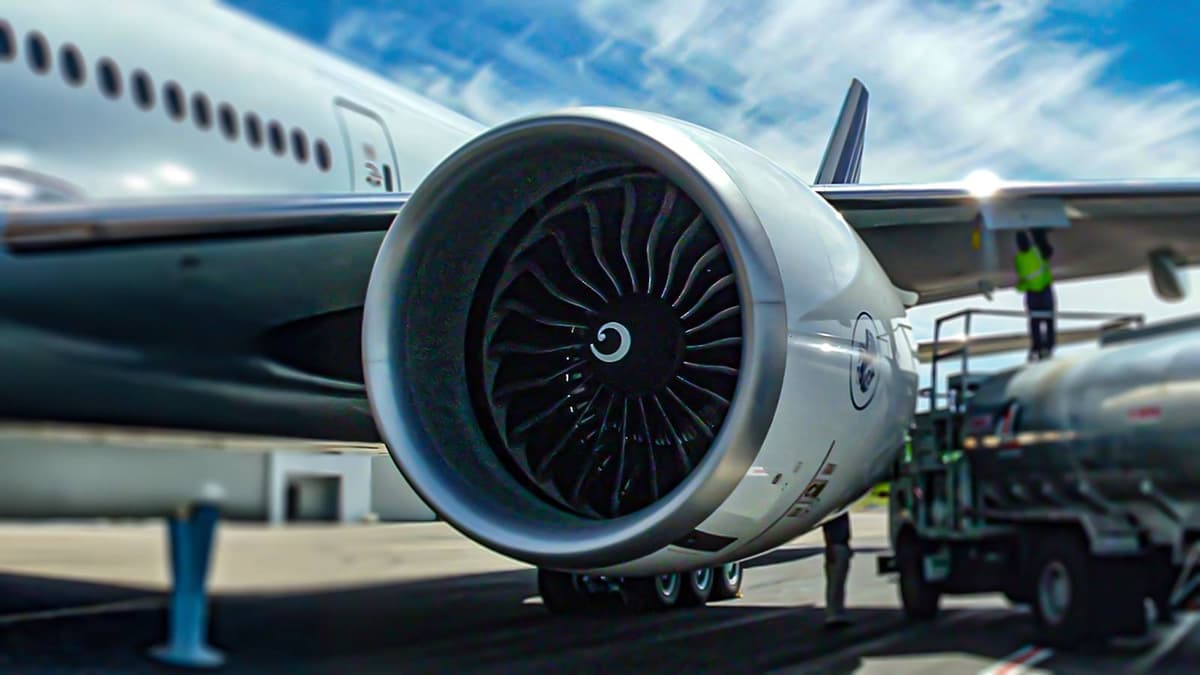
Why Does The Boeing 777-300ER Have An Exclusive Engine Even Though Other Variants Don’t?
•March 10, 2026
0
Why It Matters
The exclusive GE90‑115B gave Boeing a competitive edge in ultra‑long‑haul markets and accelerated the industry’s shift from four‑engine to twin‑engine wide‑bodies, reshaping airline economics.
Key Takeaways
- •GE90‑115B delivers 115,000 lb thrust, unmatched at launch
- •Exclusive engine cut Boeing's certification and integration costs
- •GE90 enabled ETOPS‑330, opening 99.7% of globe to twins
- •777‑300ER burns 20‑25% less fuel per seat than quadjets
- •GE9X builds on GE90, adding larger fan and composite blades
Pulse Analysis
The Boeing‑GE partnership was driven by a niche market: roughly 500 long‑range 777‑300ERs. For a limited order book, most engine manufacturers balked at the development risk, but GE saw an opportunity to showcase its high‑thrust capabilities. By committing to a single engine, Boeing streamlined structural design, reduced weight penalties, and avoided the costly dual‑engine certification programs that would have been required for competing powerplants. This exclusivity translated into lower development costs and a faster time‑to‑market, giving both companies a strategic advantage in the burgeoning ultra‑long‑haul segment.
Technically, the GE90‑115B’s 128‑inch fan and nine‑stage high‑pressure compressor delivered a thrust‑to‑weight ratio previously thought impossible for commercial jets. Its high bypass ratio slashed fuel burn, enabling the 777‑300ER to achieve ETOPS‑330 certification—allowing twin‑engine aircraft to operate over 99.7% of the globe’s surface. The engine’s reliability, demonstrated by a 5.5‑hour in‑flight shutdown test, reinforced confidence in twin‑jet operations and hastened the decline of quad‑jet programs such as the Airbus A340 and Boeing 747‑400 in the long‑haul market.
The GE90’s legacy lives on in the GE9X, which pushes the fan diameter to 134 inches and replaces 22 blades with 16 advanced composite blades, cutting weight and drag while improving fuel efficiency by roughly 10%. This evolution reflects a broader industry trend toward larger, more efficient fans and higher thrust margins to support next‑generation aircraft like the 777X and future ultra‑long‑range designs. As airlines prioritize operating cost reductions and environmental performance, the exclusive engine model pioneered by Boeing and GE remains a blueprint for aligning airframe and powerplant development.
Why Does The Boeing 777-300ER Have An Exclusive Engine Even Though Other Variants Don’t?
0
Comments
Want to join the conversation?
Loading comments...