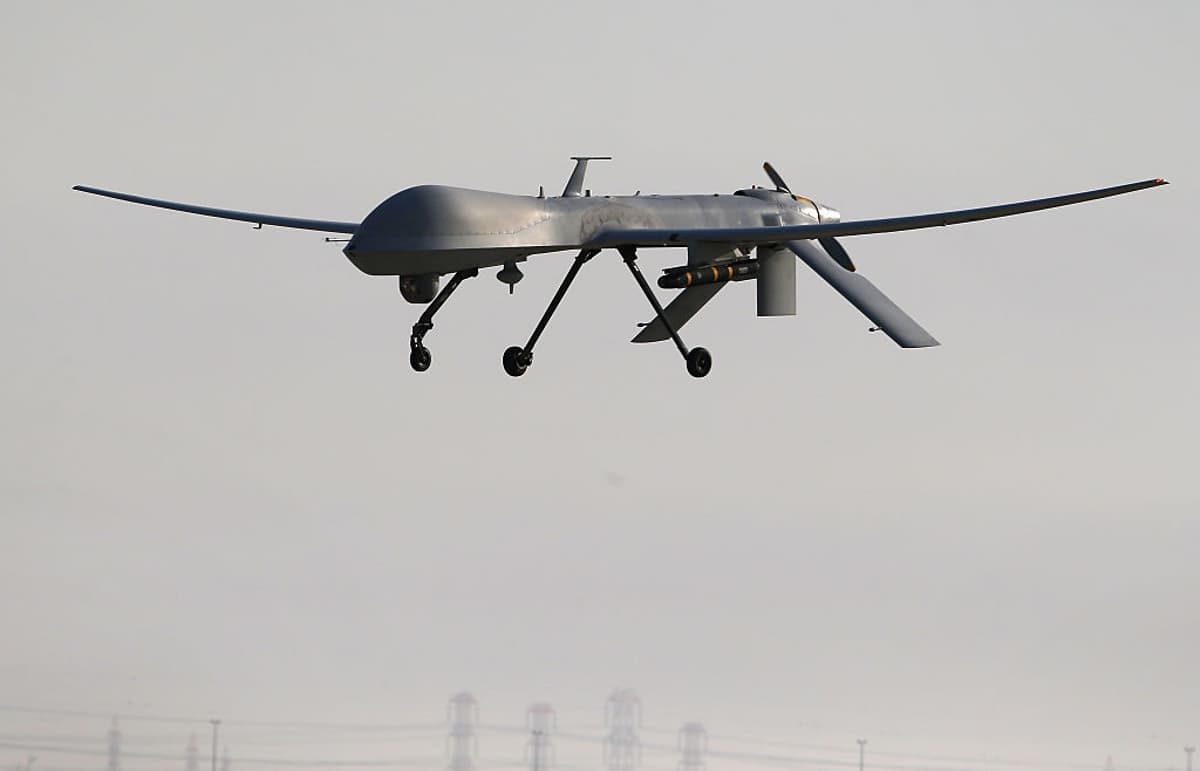
Why the Key to American Drone Dominance Lies with Blockchain
Companies Mentioned
Why It Matters
A blockchain‑based airspace trust system would eliminate foreign supply‑chain vulnerabilities and give the U.S. a strategic advantage in both national security and global drone markets.
Key Takeaways
- •DJI controls 70% of global commercial drone market.
- •US ban forces shift to domestic, open drone architecture.
- •Blockchain offers immutable, decentralized trust layer for airspace.
- •Open protocols can secure geofencing, authentication, and PNT data.
- •Adoption could boost US manufacturing and global drone standards.
Pulse Analysis
The surge in low‑cost commercial drones has outpaced regulatory frameworks, leaving critical infrastructure—airports, power plants, and public events—exposed to hostile incursions. While DJI’s dominance has historically offered economies of scale, it also embeds Chinese hardware, firmware, and cloud services into U.S. operations, granting Beijing indirect control over navigation and geofencing. The recent prohibition on foreign‑made drones creates a policy vacuum that demands a fundamentally new architecture, one that can guarantee provenance, authenticity, and compliance without relying on a single vendor’s closed ecosystem.
Blockchain technology uniquely satisfies these requirements. An immutable ledger can store geofence boundaries, Remote ID signatures, and GNSS correction data, making every transaction cryptographically verifiable and auditable. High‑throughput Layer‑1 chains such as Solana, Sui, Base, and Monad provide the transaction speed needed for real‑time airspace coordination while supporting tokenized incentives for private operators who maintain decentralized positioning, navigation, and timing (PNT) nodes. By replacing mutable firmware rules with tamper‑proof smart contracts, drones would consume on‑chain location data, dramatically reducing spoofing risks and enabling automated regulatory enforcement directly within flight‑control software.
Policy momentum aligns with technological readiness. The current administration has elevated blockchain to a strategic economic priority, granting federal agencies latitude to pilot distributed ledger standards. Coupled with the DJI ban, this creates a rare convergence of regulatory pressure and mature blockchain infrastructure. Implementing a blockchain‑secured drone stack would not only safeguard U.S. skies but also catalyze domestic manufacturing, exportable standards, and a competitive edge in the global drone market. The window for establishing a resilient, open‑source airspace trust layer is narrow, and seizing it could redefine American leadership in autonomous aerial systems.
Why the key to American drone dominance lies with blockchain
Comments
Want to join the conversation?
Loading comments...