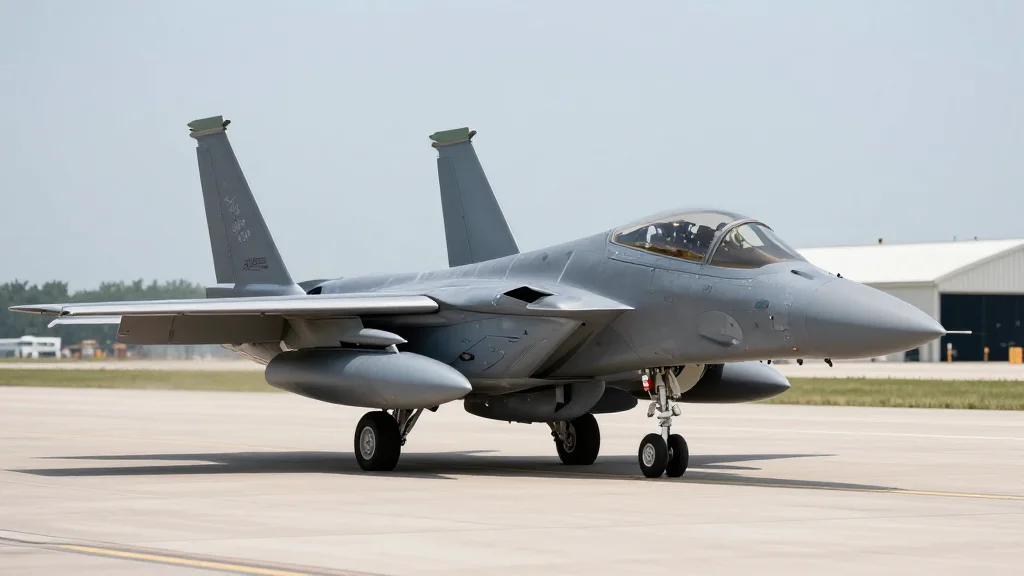
Why The US Air Force Is Scrapping 119 F-15E Strike Eagles But Keeping The Other 99
Companies Mentioned

Why It Matters
Retaining a smaller, upgraded F‑15E fleet preserves high‑payload capability while the expanded F‑15EX order ensures a modern, interoperable strike force for future high‑intensity conflicts.
Key Takeaways
- •USAF will retain 99 F‑15E jets with F100‑PW‑229 engines.
- •119 older F‑15Es with F100‑PW‑220 engines slated for retirement.
- •F‑15EX order increased to 267, costing $3 billion annually.
- •Upgraded F‑15Es will receive EPAWSS electronic‑warfare suite.
- •Both F‑15E and F‑15EX will serve as platforms for loyal‑wingman drones.
Pulse Analysis
The Air Force’s decision to trim its F‑15E fleet reflects a broader budget‑driven realignment as it prepares for the arrival of sixth‑generation platforms. By keeping only the 99 aircraft with the higher‑thrust F100‑PW‑229 engines, the service maintains a potent strike capability while shedding older airframes that would require costly life‑extension work. This selective retention also frees resources for the accelerated procurement of the F‑15EX Eagle II, whose order has been lifted from 129 to 267 units, a move that underscores the value of a modernized, high‑payload fighter in a contested air environment.
Beyond sheer numbers, the upgrade path for the remaining F‑15Es is a key differentiator. The EPAWSS electronic‑warfare suite transforms the legacy strike eagle into a digitally networked combat asset, offering advanced jamming, increased chaff and flare capacity, and seamless data sharing with next‑gen aircraft. Coupled with the AN/APG‑82 AESA radar and Legion Pod infrared sensor, the retrofitted F‑15Es can detect stealthy targets and coordinate with the F‑15EX, creating a unified 4.5‑generation strike force capable of carrying larger conventional and hypersonic payloads than stealth‑focused fighters.
Strategically, the upgraded F‑15 fleet is being positioned as a “mothership” for loyal‑wingman drones, a concept that will multiply firepower without exposing additional pilots to risk. By enabling each F‑15E or F‑15EX to control two to four unmanned combat aircraft, the Air Force can field a cost‑effective attritable layer that complements the high‑cost F‑35 and future B‑21 bomber. This integration of crewed and uncrewed platforms ensures that the legacy F‑15 remains a relevant, survivable component of the United States’ air dominance strategy well into the 2030s.
Why The US Air Force Is Scrapping 119 F-15E Strike Eagles But Keeping The Other 99
Comments
Want to join the conversation?
Loading comments...