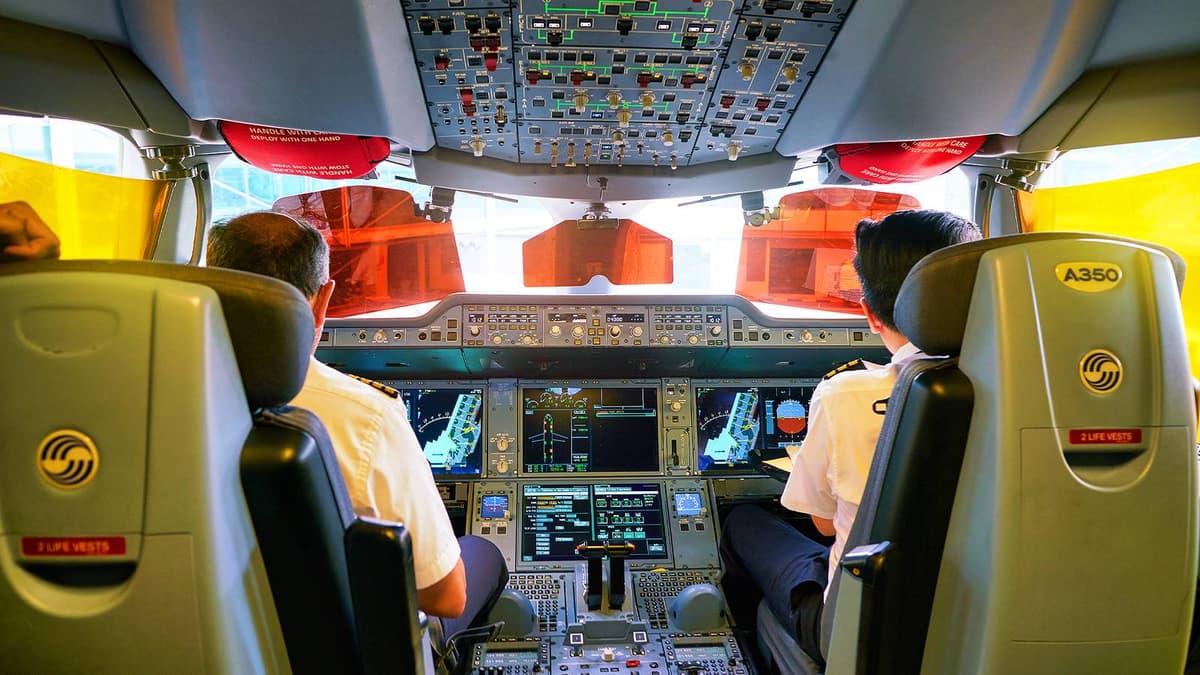
Why Ultra-Long-Haul Flights Still Need 4 Pilots In The Cockpit For Takeoff
Why It Matters
Four‑pilot crews safeguard safety and regulatory compliance on the longest routes, while enabling more efficient flight planning and protecting airline brand reputation.
Key Takeaways
- •FAA rule caps duty at 9 hrs; >17‑hr flights need four pilots
- •Two pilots rest in dedicated cabins, enabling full sleep cycles
- •Four‑crew setup enhances in‑flight decisions, optimizing fuel‑efficient routing
- •Qantas’ Project Sunrise will use an A350‑1000 ULR with four pilots
- •Multi‑crew reduces fatigue risk, protecting airline reputation and compliance
Pulse Analysis
The regulatory backbone for ultra‑long‑haul (ULH) operations is the FAA’s Part 117 rule, which caps crew duty at roughly nine hours. Because a single pilot cannot legally be on duty for the entire 17‑ to 18‑hour flight, airlines must employ a four‑person crew: two pilots operate the aircraft while the other two rest in purpose‑built cabins. These rest compartments, often located in the aircraft’s upper deck, provide flat‑bed sleeping quarters that align with natural circadian rhythms, ensuring that when duty time resumes, the crew is fully alert for take‑off, emergencies, and complex navigation tasks.
Beyond compliance, the four‑pilot model delivers tangible operational benefits. With two separate two‑pilot teams rotating mid‑flight, each crew can focus on real‑time decision‑making, such as adjusting flight levels to exploit favorable jet streams or recalculating routes for fuel efficiency. This dynamic approach is critical for routes like Qantas’ “Project Sunrise,” which will employ a specially configured A‑350‑1000 ULR carrying just 238 passengers. The aircraft’s cabin is stripped down to accommodate a quiet, ergonomically designed rest area, complete with blue‑wavelength lighting to aid wakefulness. Such configurations not only reduce fatigue but also enable crews to actively manage fuel burn, a key cost factor on 22‑hour journeys.
Industry-wide, the insistence on four pilots for the longest routes underscores a broader tension between automation and human oversight. While fly‑by‑wire and AI‑driven autopilot systems handle routine flight phases, the final safety net remains the human crew, especially during unexpected events. Airlines must balance the added crew cost against the risk mitigation and brand protection that a well‑rested, four‑person team provides. As regulators tighten fatigue‑risk management standards, we can expect more carriers to adopt similar crew configurations, reinforcing the principle that even in an era of advanced technology, the human element remains indispensable for safe, efficient, and profitable ultra‑long‑haul operations.
Why Ultra-Long-Haul Flights Still Need 4 Pilots In The Cockpit For Takeoff
Comments
Want to join the conversation?
Loading comments...