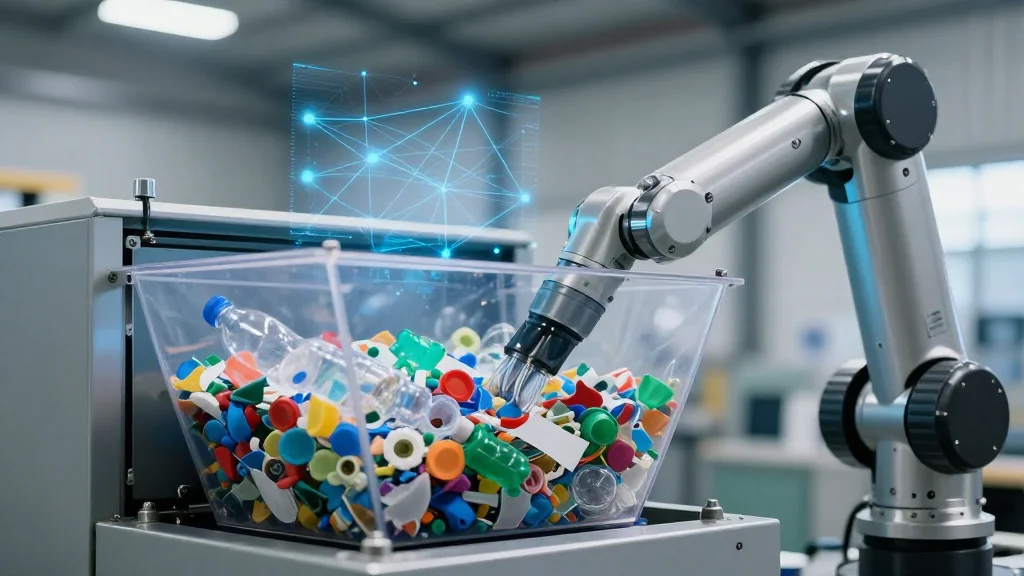
AI and Machine Learning Offer New Framework for Managing Urban Plastic Waste
Key Takeaways
- •AI fills data gaps, boosting model reliability for waste strategies
- •96.3% emission reduction achievable by 2060 under optimal scenario
- •Mechanical recycling yields $86/tonne profit and lower emissions
- •Cumulative benefits: 22.2 Mt CO₂‑eq cut, $27.7 bn economic gain
- •Policymakers urged to prioritize source reduction and recycling infrastructure
Pulse Analysis
Urban plastic waste has become a mounting environmental and fiscal challenge, especially as cities grapple with fragmented data on collection rates, material composition, and treatment pathways. The new AI‑enhanced framework, published in Engineering, tackles this problem by coupling machine‑learning validation with life‑cycle assessment, allowing planners to fill missing data points and propagate uncertainty transparently. By training an artificial neural network on field measurements and spectroscopic analyses, the system produces a robust baseline that can be adapted to diverse municipal contexts, making zero‑waste ambitions more attainable.
The model’s scenario analysis reveals striking climate and economic upside. Under the optimal composite pathway, annual greenhouse‑gas emissions drop by 96.3 % by 2060, translating to a cumulative avoidance of 22.2 million tonnes of CO₂‑equivalent. Mechanical recycling emerges as the most cost‑effective near‑term option, delivering an emission intensity of roughly 108 kg CO₂‑eq per tonne while generating about $86 in revenue per tonne of processed plastic. Over the full trajectory, the approach promises roughly $27.7 billion in net economic benefits, far outpacing the modest returns of chemical recycling.
For city officials, the framework offers a replicable decision‑support tool that can prioritize source‑reduction policies, guide infrastructure siting, and justify budget allocations. The authors caution against over‑reliance on high recycling rates alone, urging a balanced mix of material substitution and expanded mechanical recycling capacity. As more municipalities adopt AI‑driven analytics, the methodology could become a standard component of climate‑action plans, accelerating progress toward the United Nations’ Sustainable Development Goal 12 on responsible consumption and production.
AI and machine learning offer new framework for managing urban plastic waste
Comments
Want to join the conversation?