AI for Science and Autonomous Labs to Come Together at SciFM 26
Key Takeaways
- •DOE allocates $320 million to AI for science projects this year
- •SciFM 26 focuses on linking AI models with autonomous labs
- •Humanoid robots could replace humans in hazardous, high‑throughput experiments
- •Industry players like Lila Sciences showcase digital‑physical integration breakthroughs
- •Conference aims to address AI gaps in drug discovery and protein engineering
Pulse Analysis
The convergence of AI for science and autonomous laboratory systems is reaching a tipping point, as evidenced by the upcoming SciFM 26 conference. With the Department of Energy earmarking $320 million for AI‑driven research under its Genesis Mission, and the Trillion Parameter Consortium uniting national labs, universities, and industry, the funding landscape signals a strategic push toward AI‑enhanced experimentation. These investments aim to train scientific foundation models that can draft hypotheses, design experiments, and even interpret data, but the next frontier lies in translating those digital insights into physical actions.
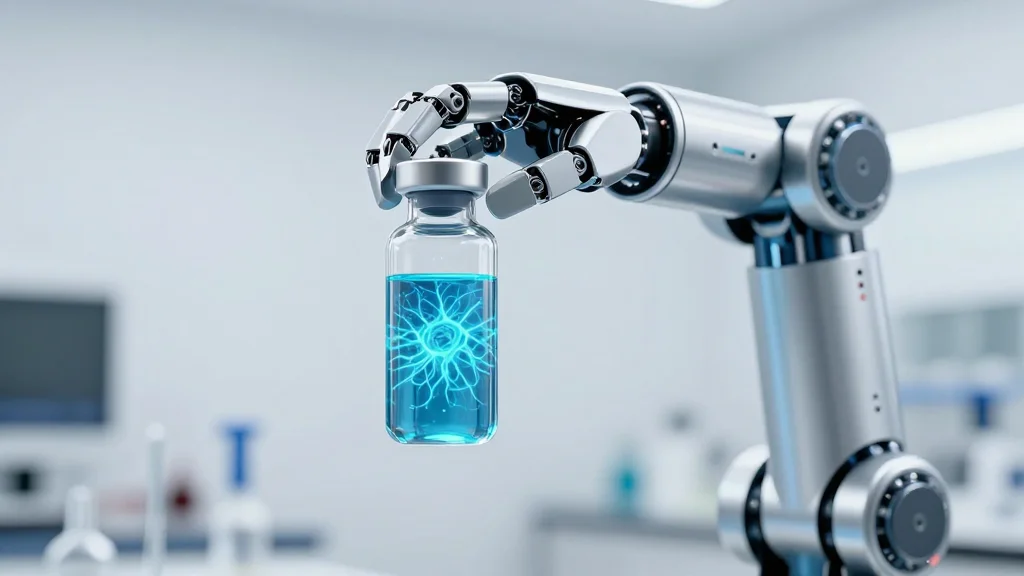
A central theme at SciFM 26 is the integration of advanced robotics and automation into the lab environment. Billions of dollars—estimated at $2‑3 billion—are flowing into humanoid and dexterous robot development, promising 24/7 operation, immunity to hazardous conditions, and the ability to reconfigure experimental setups on the fly. By embedding AI agents within these robotic platforms, researchers hope to eliminate traditional bottlenecks such as manual sample handling and lengthy instrument scheduling, thereby accelerating high‑throughput screening for drug discovery, protein engineering, and materials science.
Industry participants like Lila Sciences, Future House, and First Principles are already demonstrating practical use cases where AI‑generated designs are directly fed to automated workstations for rapid synthesis and testing. This hands‑on approach not only shortens the innovation cycle but also generates richer datasets for continual model improvement. As the conference convenes leading scientists, engineers, and investors, the dialogue will shape standards and collaborations that could redefine how scientific research is conducted, making autonomous discovery a mainstream capability across the R&D ecosystem.
AI for Science and Autonomous Labs to Come Together at SciFM 26
Comments
Want to join the conversation?