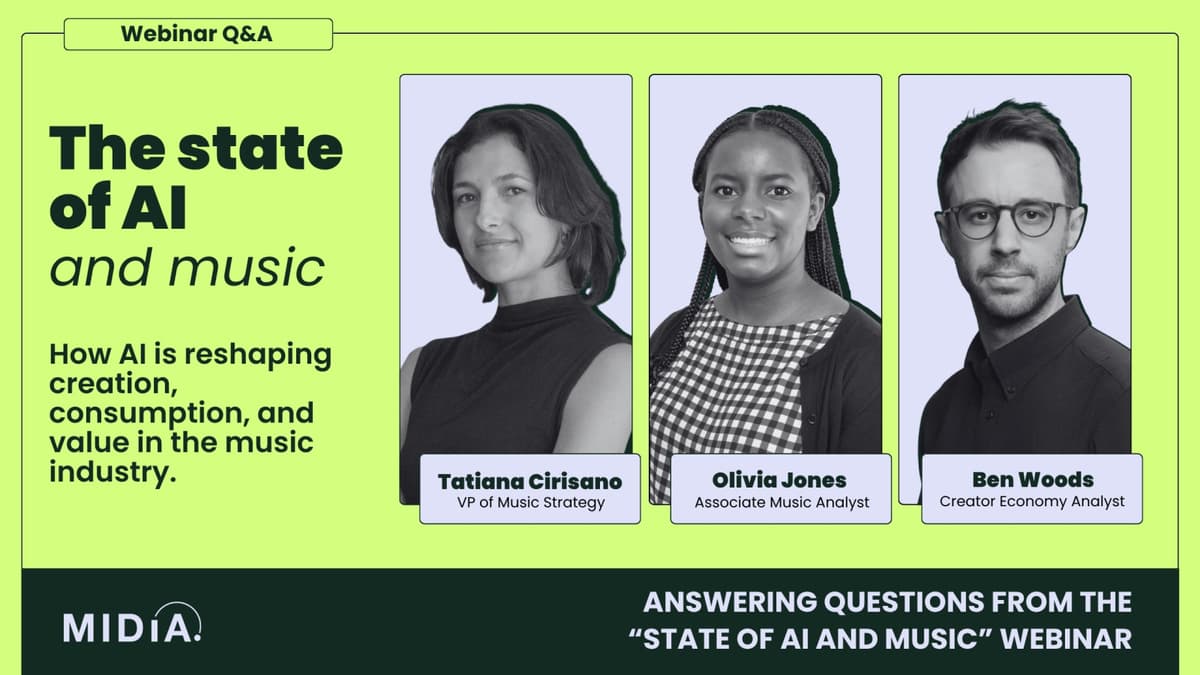
Answering Questions From MIDiA’s "The State of AI and Music" Webinar
Key Takeaways
- •Spotify and Deezer adding safeguards against AI‑generated “fake artists”.
- •Consumer creators distinct segment; AI music tool use <10% US/UK/CA/AU.
- •Brazil shows near‑50% weekly AI music usage versus 25% US.
- •AI‑driven fan creation expected to grow gradually; forecasts pending.
Pulse Analysis
The surge of AI‑generated tracks has forced streaming services to rethink recommendation engines. While Spotify and Deezer have begun deploying detection layers, the core challenge remains: ensuring listeners encounter genuine artists whose catalogues and narratives can sustain deeper fan engagement. By shifting the algorithmic focus from isolated songs to artist ecosystems, platforms can mitigate the risk of “fake artists” that merely fill background playlists and erode trust.
At the same time, the consumer‑creator archetype is emerging as a distinct slice of the creator economy. Despite the hype around generative AI tools, adoption remains modest—under 10% of users in major Western markets engage with AI music software on a monthly basis. This slow uptake reflects both limited awareness and the niche nature of AI‑assisted composition, yet it signals a nascent avenue for superfans to co‑create with their favorite musicians, potentially deepening loyalty and opening new revenue streams.
Cultural acceptance of AI in music varies sharply across regions. Data from MIDiA’s Q4 2025 survey shows Brazil’s weekly AI music usage nearing 50%, compared with roughly a quarter of U.S. respondents. Higher streaming penetration and lower barriers to mobile creation in Global South markets drive this enthusiasm, positioning these regions as early adopters and future growth engines for AI‑enabled music experiences. Stakeholders should monitor these trends to tailor product rollouts and partnership strategies accordingly.
Answering questions from MIDiA’s "The State of AI and Music" webinar
Comments
Want to join the conversation?