Anthropic/OpenAI May Be Spending More than $1000 for Every $100 You Pay Them
Key Takeaways
- •Claude Max $100/month plan hides $1,000+ API cost for full‑agent coding
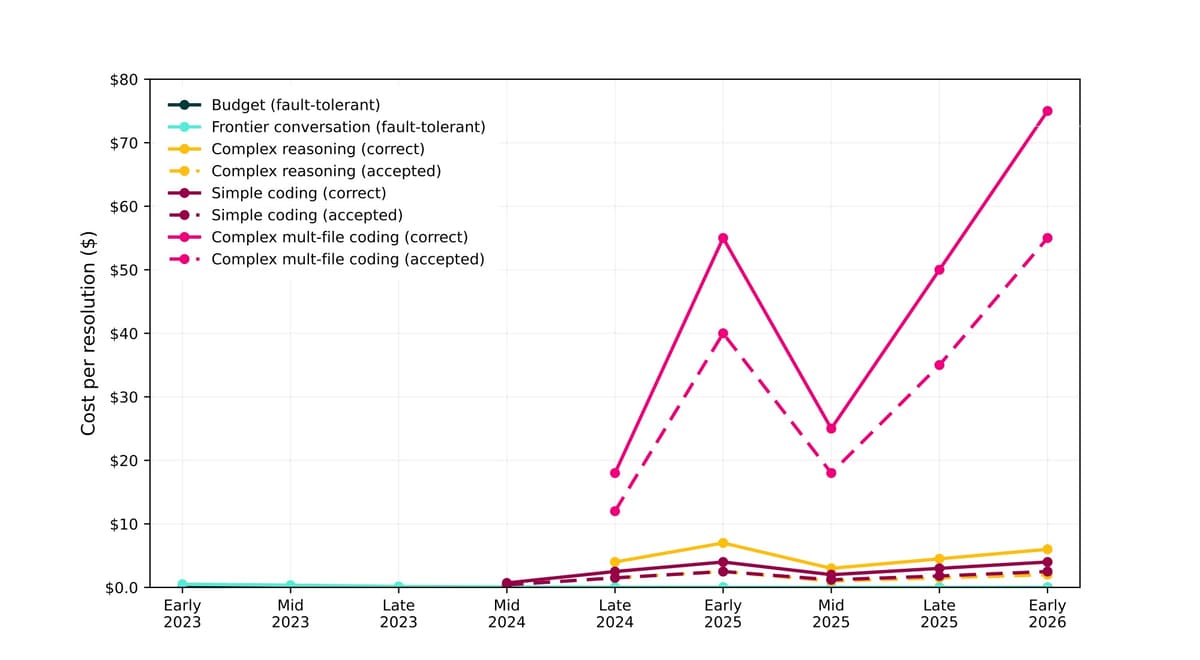
- •Single complex coding task can cost $65‑$75 at current API rates
- •Token use jumped from hundreds to millions per query via hidden recursion
- •Subsidized subscriptions currently reduce effective cost by ~2.5‑12×, unsustainable long‑term
- •Budget‑level LLM chats stay cheap, but serious coding becomes prohibitively expensive
Pulse Analysis
The promise of generative AI as a "killer app" for software development has driven enterprises to experiment with models like Anthropic's Claude Code. Early adopters enjoyed rapid prototype generation, but the economics have shifted dramatically as token pricing models reveal a hidden cost structure. While per‑token rates have fallen, the recursive reasoning and tool‑calling mechanisms now inflate usage to millions of tokens per task, turning what appears to be a cheap service into a multi‑hundred‑dollar expense for a single complex feature. This paradox underscores the importance of looking beyond headline subscription prices to the true cost per resolution.
Anthropic’s pricing strategy relies on heavily subsidized subscription tiers that mask the underlying API spend. A $100‑per‑month plan can effectively cover a few hundred thousand tokens, yet a full‑agent coding session can consume several million, translating to $1,000‑plus in API fees. Competitors such as OpenAI exhibit similar patterns, where "too cheap to meter" claims hold for low‑effort queries but break down for high‑effort, multi‑turn coding workflows. Enterprises must therefore model token consumption against expected output quality, factoring in hidden "thinking" tokens that are billed as output but are invisible to the user.
Looking ahead, sustainable adoption will likely hinge on hybrid approaches that combine LLM assistance with human oversight and caching strategies. Companies can limit costs by constraining model effort settings, employing smaller budget models for routine tasks, and reserving high‑effort models for critical, high‑value code generation. Additionally, emerging pricing models that charge per resolved task rather than per token could align incentives more closely with business outcomes. Until such mechanisms mature, the economic case for LLM‑driven development remains fragile, especially for organizations without deep pockets to absorb subsidy‑driven price volatility.
Anthropic/OpenAI may be spending more than $1000 for every $100 you pay them
Comments
Want to join the conversation?