Key Takeaways
- •Autonomous RVC achieved 90% success on static porcine eyes
- •Success dropped to 83% with simulated breathing motion
- •Two SHER robots controlled needle and spatula simultaneously
- •Three CNNs predicted needle direction, contact, puncture events
- •Deep learning workflow could reduce surgeon expertise requirement
Pulse Analysis
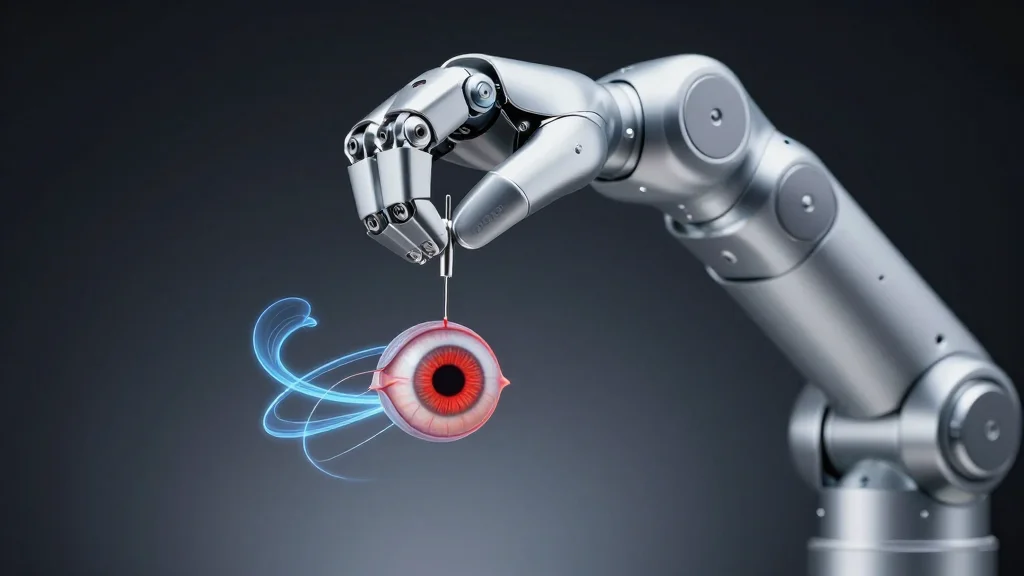
Retinal vein occlusion remains a leading cause of vision loss, and its treatment hinges on delicate cannulation of tiny retinal vessels. The new system leverages the Steady‑Hand Eye Robot platform, long praised for its tremor‑filtering capabilities, and augments it with three specialized convolutional neural networks. These models interpret real‑time microscope video and intra‑operative optical coherence tomography (iOCT) data to predict needle trajectory, detect tissue contact, and confirm puncture events, allowing the robot to execute the most technically demanding phases of the procedure with minimal human input.
Experimental validation on ex‑vivo porcine eyes demonstrated a 90% success rate under static conditions, a figure that only modestly fell to 83% when the eyes were subjected to sinusoidal motion mimicking patient breathing. This robustness stems from the system’s ability to continuously adjust needle positioning based on live visual feedback, effectively compensating for micro‑movements that would challenge even seasoned surgeons. The dual‑robot configuration—one arm holding the needle, the other a stabilizing spatula—provides a stable platform that further enhances precision and reduces the risk of collateral tissue damage.
If translated to the clinic, autonomous RVC could reshape ophthalmic surgery by standardizing outcomes and expanding access to high‑quality care. Hospitals could deploy the technology without requiring a cadre of ultra‑specialized retinal surgeons, potentially lowering procedural costs and shortening training pipelines. Moreover, the integration of deep‑learning analytics opens avenues for continuous improvement through data‑driven refinements, positioning the system as a cornerstone for future AI‑assisted microsurgical interventions. Regulatory pathways will focus on safety validation, but the demonstrated success rates suggest a viable route toward commercialization within the next few years.
Article intro - JHU Eye Robot
Comments
Want to join the conversation?