Key Takeaways
- •First vision-based skill assessment challenge for open surgery launched
- •Benchmark dataset includes classification, OSATS, and keypoint tracking tasks
- •Deep learning video models beat traditional tracking methods
- •Multi-year challenge promotes standardized evaluation of surgical skill AI
- •2025 adds keypoint tracking task for fine-grained skill assessment
Pulse Analysis
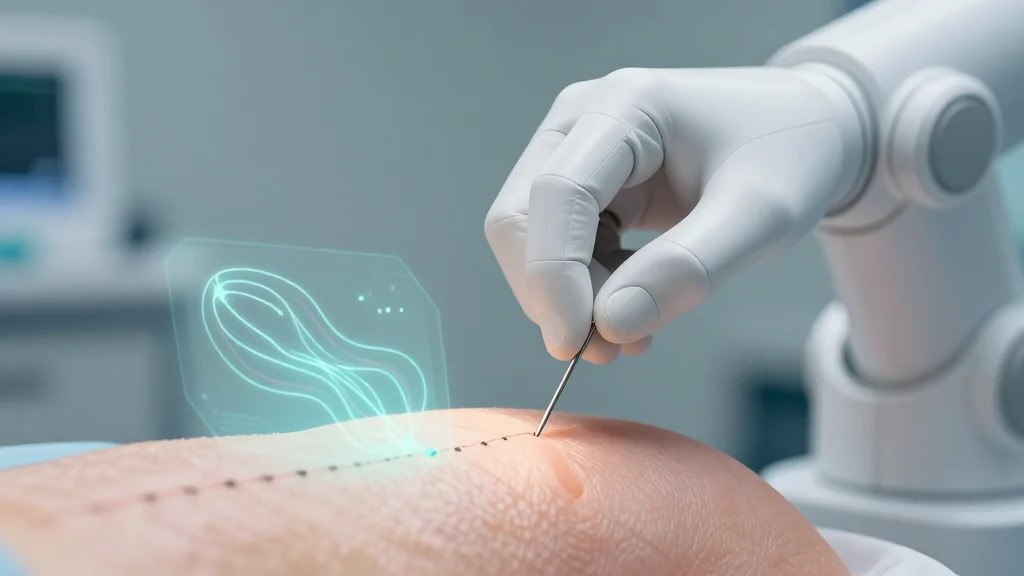
The Medical Image Computing and Computer‑Assisted Intervention (MICCAI) conference has unveiled the Open Suturing Skills Vision‑Based Assessment Challenge for 2024‑2025, marking the first large‑scale competition that evaluates open‑surgery proficiency using computer vision. Organizers released a curated dataset of high‑resolution video recordings, annotated with surgical outcomes, OSATS scores, and keypoint locations on instruments and tissue. By framing skill assessment as classification, OSATS prediction, and a newly introduced keypoint‑tracking task, the challenge sets a common benchmark that researchers worldwide can use to compare algorithms under identical conditions. The initiative also aligns with recent regulatory interest in AI‑assisted competency metrics.
Early results show deep‑learning video models—particularly transformer‑based architectures—outperform traditional tracking‑centric pipelines on all three tasks. These models capture temporal dynamics and subtle hand‑eye coordination cues that handcrafted features miss, leading to higher accuracy in classifying novice versus expert suturing and in predicting OSATS ratings. The benchmark also reveals gaps: tracking‑only methods still lag in fine‑grained keypoint localization, underscoring the need for hybrid approaches that blend robust pose estimation with learned representations. Future work may explore multimodal fusion of video and force data to further boost performance.
The challenge’s multi‑year design encourages continuous improvement and longitudinal studies of AI‑driven surgical education. Hospitals and simulation centers can eventually adopt the validated models to provide objective, real‑time feedback to trainees, reducing reliance on scarce expert assessors. Moreover, the 2025 keypoint‑tracking addition opens avenues for automated error detection and workflow optimization, potentially lowering operative complications. As the medical AI community converges on this shared dataset, standards for safety, reproducibility, and regulatory acceptance are likely to mature, accelerating the translation of vision‑based skill assessment into clinical practice. Early pilot deployments suggest measurable improvements in trainee confidence and procedural efficiency.
Article intro - MICCAI endoscopic imaging challenge
Comments
Want to join the conversation?