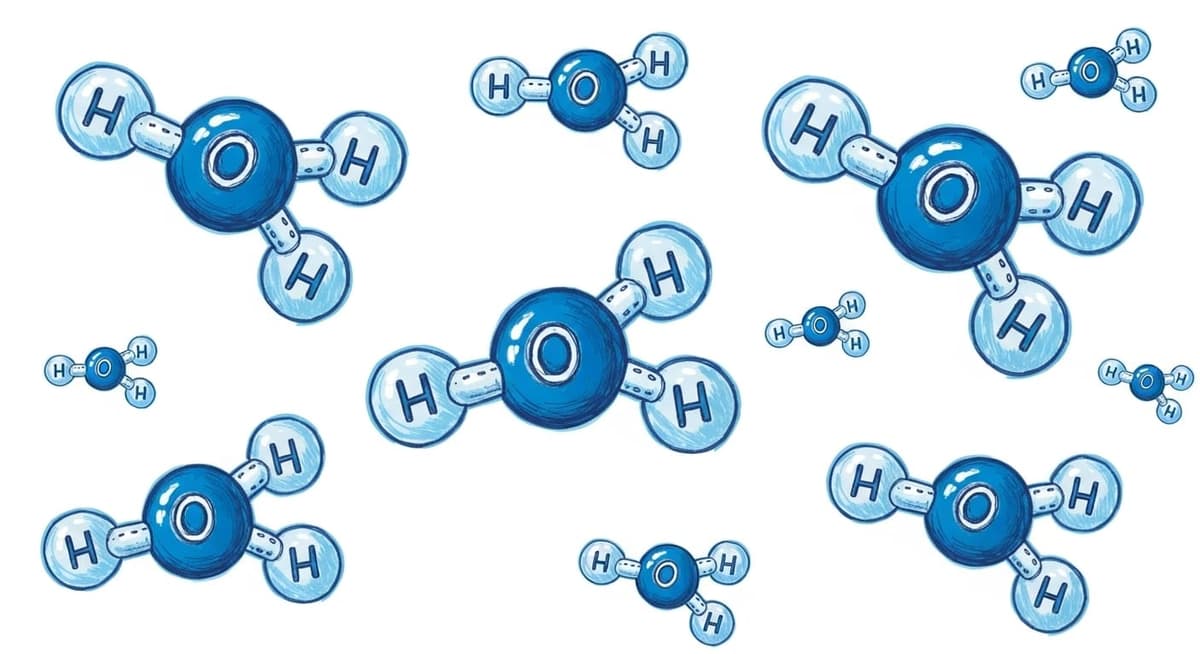
Berkeley Lab Develops Quantum-Machine Learning Model for Electron Behavior in Water
•January 21, 2026
0
Why It Matters
Accurate, cost‑effective simulations of liquid‑phase electron chemistry will speed discovery in energy and catalytic technologies.
Key Takeaways
- •Hybrid quantum‑ML model captures excess electron dynamics.
- •Reaction rates with hydronium match experimental data.
- •Computational cost dramatically lower than pure quantum methods.
- •NERSC resources make large‑scale liquid simulations feasible.
- •Enables deeper study of electron‑driven energy processes.
Pulse Analysis
Understanding how free, or “excess,” electrons move in water has long been a bottleneck for chemists and materials scientists. Traditional ab‑initio methods demand prohibitive computational resources, limiting studies to small systems or short timescales. The new hybrid approach sidesteps these constraints by delegating the electron’s quantum description to high‑fidelity calculations while delegating the bulk solvent to a machine‑learning‑derived potential. This division of labor preserves the essential physics of electron transfer while delivering orders‑of‑magnitude speed‑ups, making realistic liquid‑phase simulations tractable for the first time.
The model’s credibility rests on rigorous validation against experimental observables. Simulations of excess‑electron reactions with hydronium ions reproduced temperature‑dependent rate constants and reaction energetics within experimental uncertainty, a feat rarely achieved for such rare events. Enhanced sampling techniques ensured that low‑probability pathways were captured, while the machine‑learning force field, trained on a curated set of quantum calculations, maintained fidelity across diverse molecular configurations. Leveraging NERSC’s petascale infrastructure, the researchers executed thousands of nanosecond‑scale trajectories, a scale previously impossible for pure quantum dynamics.
Beyond methodological elegance, the hybrid framework opens practical avenues in energy conversion and catalysis. Electron‑driven processes such as radiolysis, photocatalytic water splitting, and redox reactions in batteries can now be probed with unprecedented detail, informing the design of more efficient catalysts and materials. As high‑performance computing resources continue to expand, the integration of quantum mechanics and machine learning is poised to become a standard toolkit for tackling complex chemical phenomena in liquids, accelerating innovation across chemistry, biology, and environmental science.
Berkeley Lab Develops Quantum-Machine Learning Model for Electron Behavior in Water
0
Comments
Want to join the conversation?
Loading comments...