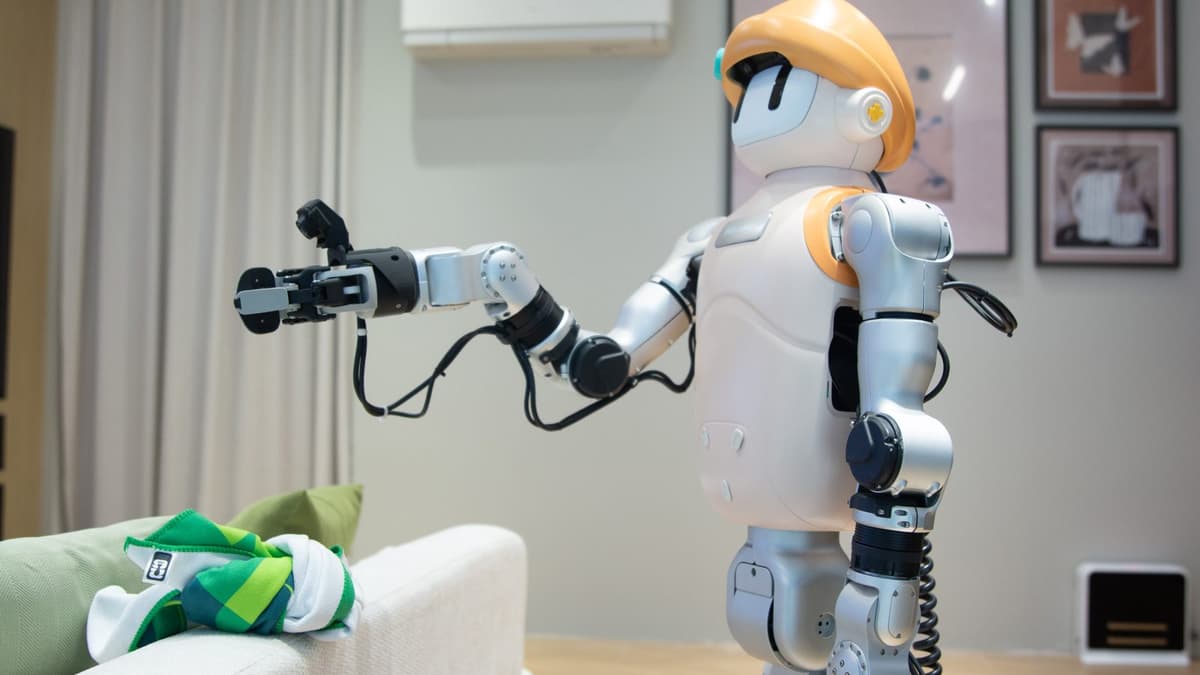
China Is Training a Robot Future — One Folded Shirt at a Time
Key Takeaways
- •JD.com aims to collect 10 million training hours in two years
- •Residents earn $3 per hour filming chores for data‑collection neighborhoods
- •Chinese firms leverage low labor costs to amass egocentric robot data
- •U.S. companies outsource data collection abroad, limiting domestic dataset size
- •Analysts say data advantage may offset U.S. lead in AI talent
Pulse Analysis
Robotics development has long been hampered by a shortage of high‑quality training data that captures both visual cues and fine‑grained motion. While early efforts relied on costly teleoperation in controlled labs, the industry now recognizes that real‑world variability is essential for generalizable robot intelligence. China’s approach—using a vast, low‑cost labor pool to record everyday tasks—directly addresses this gap, creating massive egocentric datasets that blend hand movements, object interactions, and household environments.
JD.com’s "data collection neighborhood" exemplifies the scale of this initiative. By recruiting residents, factory workers, and even stay‑at‑home parents to wear head‑mounted cameras, the company plans to amass 10 million hours of footage within two years, involving up to 100,000 employees and half a million external contributors. At roughly $3 per hour, participants gain supplemental income while fueling a national robotics ecosystem. This model contrasts sharply with U.S. firms, which often outsource data gathering to developing nations, limiting the richness of domestic datasets and adding logistical complexity.
The strategic implications are profound. A robust, locally sourced data pipeline could accelerate the deployment of service robots tailored to Chinese homes and factories, narrowing the hardware gap with U.S. AI leaders. However, the efficacy of sheer data volume remains unproven; critics note that scaling teleoperation data does not guarantee robots that can navigate arbitrary environments. Nonetheless, the initiative creates new jobs amid rising unemployment and positions China as a potential data powerhouse in the next wave of embodied AI, prompting global competitors to reassess their data‑collection strategies.
China is training a robot future — one folded shirt at a time
Comments
Want to join the conversation?