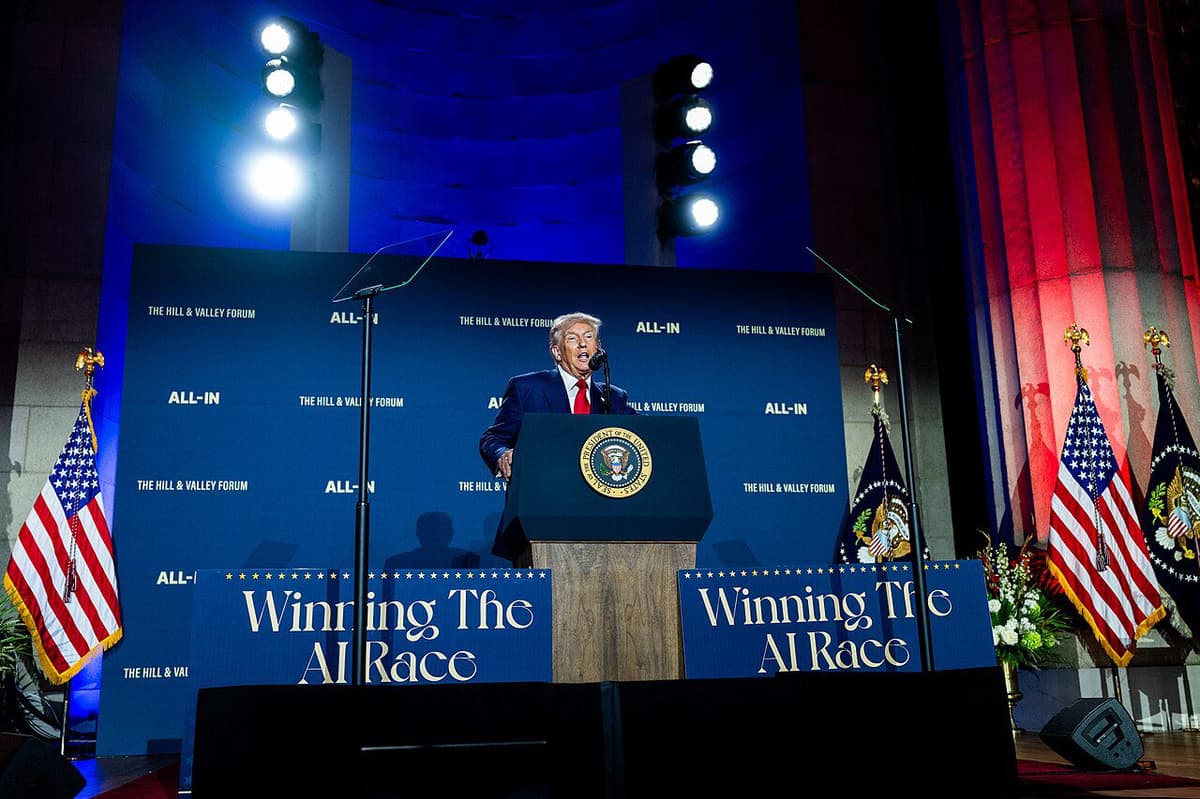
Deep Dive: Why the US and China Are Leading the AI Race
Key Takeaways
- •Government investment and military integration drive AI leadership.
- •Private sector dynamism not essential for national AI dominance.
- •US-China performance gap fell from 9% to under 2% (2024‑2025).
- •Semiconductor dependence is a vulnerability, not decisive factor.
- •Other nations must pair spending with defense AI integration.
Pulse Analysis
The Brazilian‑published paper applies Qualitative Comparative Analysis to isolate the conditions that propel a nation to the AI "technological frontier." By coding regulatory policy, government investment, private‑sector vigor, military integration, and semiconductor reliance as binary variables, the authors demonstrate that only government spending and defense‑related AI use consistently appear in successful configurations. This methodological rigor offers a fresh lens that cuts through the Silicon Valley‑centric mythos dominating U.S. policy debates, positioning state power as the primary engine of rapid AI advancement.
For policymakers, the implications are stark. While the United States continues to champion a free‑market innovation model, the study suggests that without sustained, large‑scale public funding and explicit defense integration, private firms like Google or OpenAI cannot sustain a decisive lead. Conversely, China’s top‑down approach—embodied in its New Generation AI Development Plan and Military‑Civil Fusion—has allowed it to close the performance gap despite export restrictions on advanced chips. The research also reframes the semiconductor narrative: both superpowers remain vulnerable to supply chain shocks, yet chip access alone does not dictate AI leadership, prompting a reevaluation of the CHIPS Act’s strategic emphasis.
Looking beyond the duopoly, emerging AI contenders such as the European Union, Japan, and India must internalize the study’s core lesson: a hybrid model that blends robust public investment with targeted military applications is likely essential to compete at the frontier. As global supply chains stay intertwined, outright decoupling appears more a policy choice than an inevitability, underscoring the need for nuanced governance frameworks that balance security, innovation, and economic interdependence. Future research expanding the case set will clarify how these dynamics play out across commercial and scientific AI domains.
Deep Dive: Why the US and China are Leading the AI Race
Comments
Want to join the conversation?