Fabric.AI Targets AI Infrastructure Bottlenecks with MicroLED Optical Interconnects
Key Takeaways
- •Fabric.AI launches Neural I/O chip using MicroLED optical links.
- •MicroLED interconnect promises higher bandwidth, lower latency than copper or lasers.
- •Collaboration with Kopin provides proprietary programmable MicroLED technology.
- •$138B interconnect market could shift toward optical solutions.
Pulse Analysis
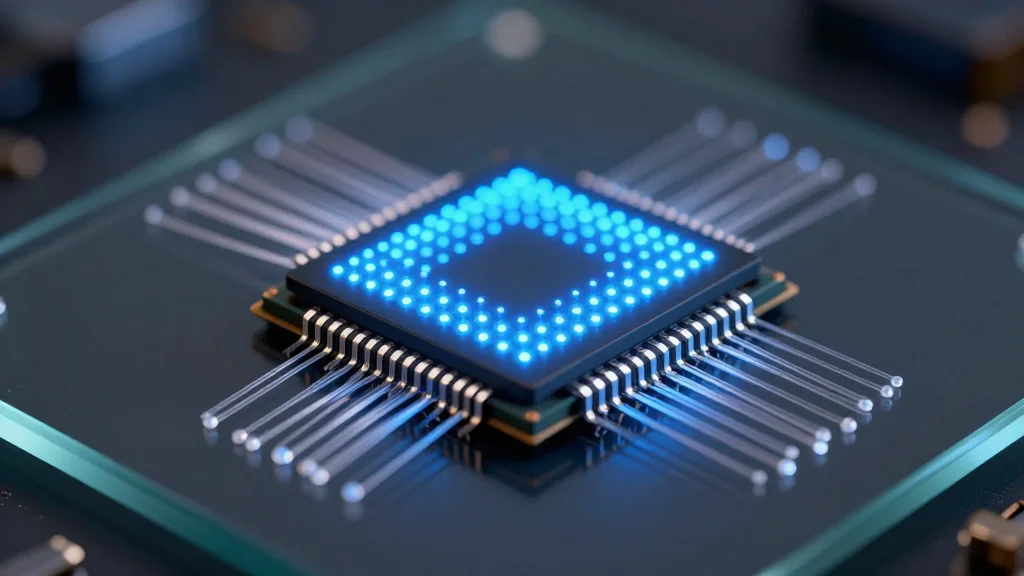
The emergence of MicroLED optical interconnects marks a pivotal shift in AI infrastructure, moving beyond traditional copper and laser‑based links that struggle with heat, signal degradation, and power draw at scale. Fabric.AI’s Neural I/O chip leverages Kopin’s programmable MicroLEDs to create bidirectional optical transceivers that transmit data at speeds previously unattainable in dense compute environments. This technology not only boosts raw bandwidth but also slashes energy consumption per bit, a crucial metric as data centers grapple with rising electricity costs and sustainability mandates.
Industry analysts see the $138 billion interconnect market as ripe for disruption, especially as AI models grow in size and inference workloads demand near‑real‑time data exchange. Optical solutions like Fabric.AI’s promise sub‑nanosecond latency, enabling tighter coupling of GPUs, TPUs, and custom ASICs within AI clusters. By reducing the physical distance and electrical constraints between nodes, firms can achieve higher utilization rates and lower total cost of ownership, accelerating the rollout of AI‑first services across cloud and edge platforms.
Beyond the immediate performance gains, Fabric.AI’s fabless model and partnership with Kopin position it to rapidly iterate on additional semiconductor components tailored for AI factories. The company’s roadmap includes expanding into power‑management chips and specialized memory interfaces, creating a vertically integrated stack that could become a de‑facto standard for next‑generation smart data centers. As hyperscale players explore tighter integration of compute and networking, Fabric.AI’s early‑stage technology may become a cornerstone of the AI infrastructure ecosystem.
Fabric.AI Targets AI Infrastructure Bottlenecks with MicroLED Optical Interconnects
Comments
Want to join the conversation?