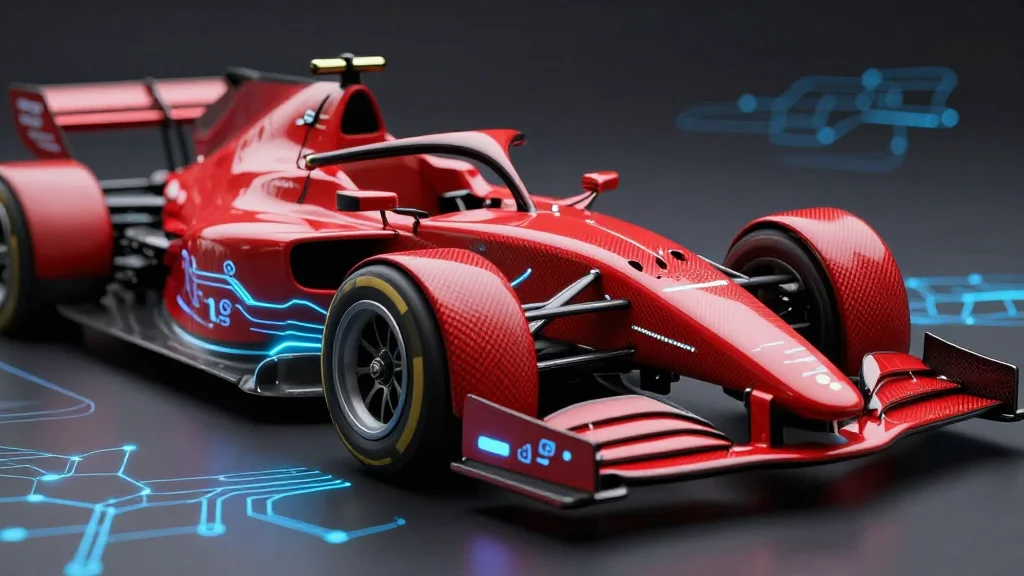
IBM and Dallara to Advance AI and Quantum-Powered Design for High-Performance Vehicles
Key Takeaways
- •AI model cut CFD simulation from hours to 10 seconds
- •Speedup could reduce weeks-long design cycles to minutes
- •Collaboration leverages IBM's GIST transformer and Dallara's race data
- •Quantum‑classical methods being evaluated for next‑generation vehicle design
- •Early results suggest 1‑2% drag reduction could improve fuel efficiency
Pulse Analysis
The IBM‑Dallara alliance marks a rare convergence of motorsport engineering and cutting‑edge artificial intelligence. By training domain‑specific foundation models on Dallara’s high‑fidelity aerodynamic data, IBM’s GIST transformer can infer flow characteristics directly from geometry, sidestepping the computationally intensive CFD pipeline. This approach not only preserves the underlying physics but also delivers results in seconds, a dramatic contrast to traditional simulations that can consume hours per configuration. For a racing‑car manufacturer, the ability to iterate rapidly translates into faster prototype validation and a competitive edge on the track.
In practical terms, the AI surrogate reduced the evaluation of multiple rear‑diffuser angles—from –2° to +4°—from a multi‑hour CFD sweep to a 10‑second inference, identifying the optimal design with comparable error margins. Scaling this speedup to hundreds of geometry variants could compress weeks of simulation work into minutes, freeing high‑performance computing resources for deeper, high‑resolution analyses. Engineers can now allocate compute power to final‑stage optimization rather than exhaustive early‑stage sweeps, accelerating the overall vehicle development timeline and lowering R&D costs.
Beyond immediate performance gains, the partnership is probing hybrid quantum‑classical techniques to further push the boundaries of simulation fidelity. Quantum algorithms may eventually handle complex turbulence or multi‑physics problems that strain classical solvers. If successful, the technology could cascade into broader transportation sectors, where even modest drag reductions—estimated at 1‑2%—yield significant fuel‑efficiency and emissions benefits at scale. IBM and Dallara’s joint research thus positions both firms at the forefront of a transformative wave reshaping automotive design, aerospace engineering, and high‑performance computing.
IBM and Dallara to Advance AI and Quantum-Powered Design for High-Performance Vehicles
Comments
Want to join the conversation?