
Key Takeaways
- •AI code tools demand continuous, granular intent input.
- •“Auteur managerialism” lets a single user control end‑to‑end development.
- •Traditional engineering managers must balance many stakeholders; AI reduces that friction.
- •“Chindogufication” describes hyper‑bespoke, often impractical AI creations.
- •Low AI costs enable flood of personalized, solipsistic digital artifacts.
Pulse Analysis
The rise of AI‑driven coding platforms forces developers to articulate intent at a level of detail previously reserved for day‑to‑day engineering decisions. High‑level objectives no longer suffice; each prompt, revision, and parameter tweak injects subjective taste, risk tolerance, and creative nuance into the codebase. This iterative dialogue blurs the line between planning and execution, making the development workflow a continuous feedback loop where the AI mirrors the author’s evolving vision.
In this environment, a new managerial archetype emerges: auteur managerialism. Unlike conventional engineering leaders who must coordinate cross‑functional teams, negotiate trade‑offs, and manage egos, the AI‑augmented auteur can dictate every design choice directly, leveraging the model’s patience for endless revisions. The result is a streamlined, end‑to‑end creative process that reduces the overhead of stakeholder alignment while preserving a high degree of artistic control. However, this model also demands relentless attention from the author, as the AI will faithfully execute even the most capricious specifications.
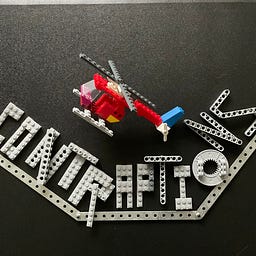
The low marginal cost of AI generation fuels what the author calls Chindogufication—the proliferation of hyper‑custom, often impractical digital artifacts. As developers experiment without financial constraints, we see a surge of niche applications, bespoke interfaces, and even physical objects designed through AI‑linked CAD tools. While this wave can spark innovation, it also risks creating a fragmented ecosystem of solipsistic solutions that rarely interoperate. Understanding these dynamics is crucial for businesses aiming to harness AI’s creative power without succumbing to wasteful bespoke excess.
Intentions have a surprising amount of detail
Comments
Want to join the conversation?