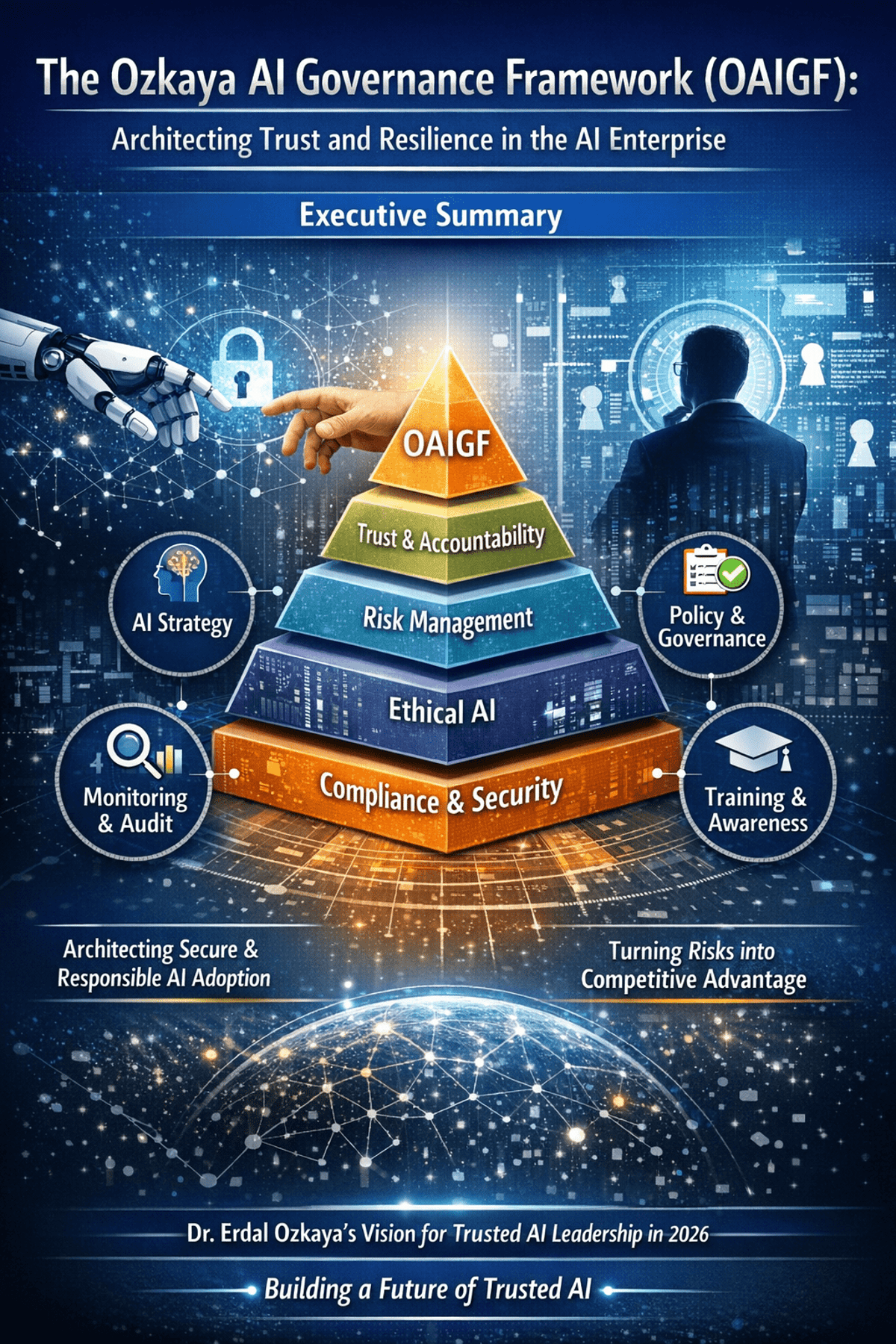
The Ozkaya AI Governance Framework (OAIGF): Architecting Trust and Resilience in the AI Enterprise
•March 1, 2026
0
Why It Matters
As AI becomes a foundational enterprise layer, CISOs face novel threats and regulatory scrutiny; OAIGF provides a structured, actionable path to ensure trustworthy AI and protect business continuity. Implementing the framework turns governance from a compliance checkbox into a competitive advantage.
Key Takeaways
- •Five immutable principles embed security, transparency, accountability, resilience, ethics.
- •Seven pillars cover risk, development, data, model, compliance, workforce, monitoring.
- •Aligns with NIST AI RMF and ISO/IEC 42001 standards.
- •Enables AI risk registers and AISOC for proactive threat response.
- •Turns AI governance into strategic competitive advantage.
Pulse Analysis
Enterprises are rapidly embedding artificial intelligence into core processes, but the speed of adoption has outpaced traditional security controls. CISOs now shoulder the dual mandate of protecting data integrity while ensuring AI decisions remain transparent and ethically sound. This shift has sparked a surge in AI‑specific attack vectors—data poisoning, model inversion, prompt injection—and a tightening regulatory landscape exemplified by the EU AI Act and emerging NIST guidelines. Organizations that ignore these dynamics risk operational disruption, legal penalties, and eroded stakeholder trust.
The Ozkaya AI Governance Framework addresses these challenges through a layered approach. Its five guiding principles—security‑by‑design, transparency, accountability, resilience, and ethical alignment—set the tone for governance, while the seven pillars translate principle into practice. From establishing an AI risk register and integrating threat intelligence, to enforcing secure MLOps pipelines, managing data provenance, and instituting model lifecycle controls, OAIGF provides concrete controls. The framework also mandates dedicated AI security operations (AISOC) and continuous monitoring, ensuring that adversarial attempts are detected and mitigated in real time.
Adopting OAIGF positions firms to not only meet compliance obligations but also to leverage AI governance as a market differentiator. By demonstrating robust, auditable AI practices, companies can build customer confidence, accelerate innovation, and avoid costly breaches. The framework’s alignment with recognized standards simplifies audit preparation and facilitates cross‑industry collaboration. As AI regulations evolve, organizations that embed OAIGF’s adaptive defenses will enjoy sustained resilience and a clear competitive edge in the AI‑driven economy.
The Ozkaya AI Governance Framework (OAIGF): Architecting Trust and Resilience in the AI Enterprise
0
Comments
Want to join the conversation?
Loading comments...