Key Takeaways
- •Claude Code can redirect API calls to local servers via ANTHROPIC_BASE_URL
- •Ollama, LM Studio, and llama.cpp now support Anthropic Messages API natively
- •GLM‑4.7‑Flash offers strong tool calling with 8 GB VRAM requirement
- •Local inference eliminates per‑token fees and rate‑limit interruptions
- •Switching back to Anthropic API only requires unsetting environment variables
Pulse Analysis
AI‑driven coding assistants have become indispensable, but their cloud‑centric models impose hidden costs that scale with usage. A single Claude Code session can consume tens of times more tokens than a regular chat, turning what appears to be a free tool into a pricey service when deployed at enterprise scale. Moreover, dependence on external endpoints introduces latency spikes and occasional downtime, which can stall development pipelines. By moving the inference layer in‑house, organizations gain predictable budgeting and full control over data residency, a critical factor for regulated industries.
The technical landscape now supports this shift. Ollama, LM Studio, and llama.cpp all expose native Anthropic‑compatible endpoints, allowing Claude Code to communicate without translation layers. Modern quantized models—GLM‑4.7‑Flash, Devstral‑Small, Qwen3‑Coder—run comfortably on machines with 8‑32 GB VRAM, delivering tool‑calling capabilities and large context windows that match cloud equivalents. Configuration hinges on three environment variables, making the transition as simple as setting a URL and model alias. For teams with GPU resources, llama.cpp offers fine‑grained control over quantization and cache settings, while Ollama provides a turnkey experience for rapid onboarding.
From a business perspective, local inference transforms AI coding assistants from a variable expense into a fixed‑cost asset. Companies eliminate per‑token fees, sidestep rate‑limit throttling, and protect proprietary code from leaving the premises. The ability to toggle between local and Anthropic APIs via lightweight scripts ensures flexibility during testing or when scaling back to the cloud for occasional heavy‑weight workloads. As model quality continues to improve, the cost‑performance gap narrows, positioning on‑premise AI as a sustainable, long‑term strategy for software development teams.
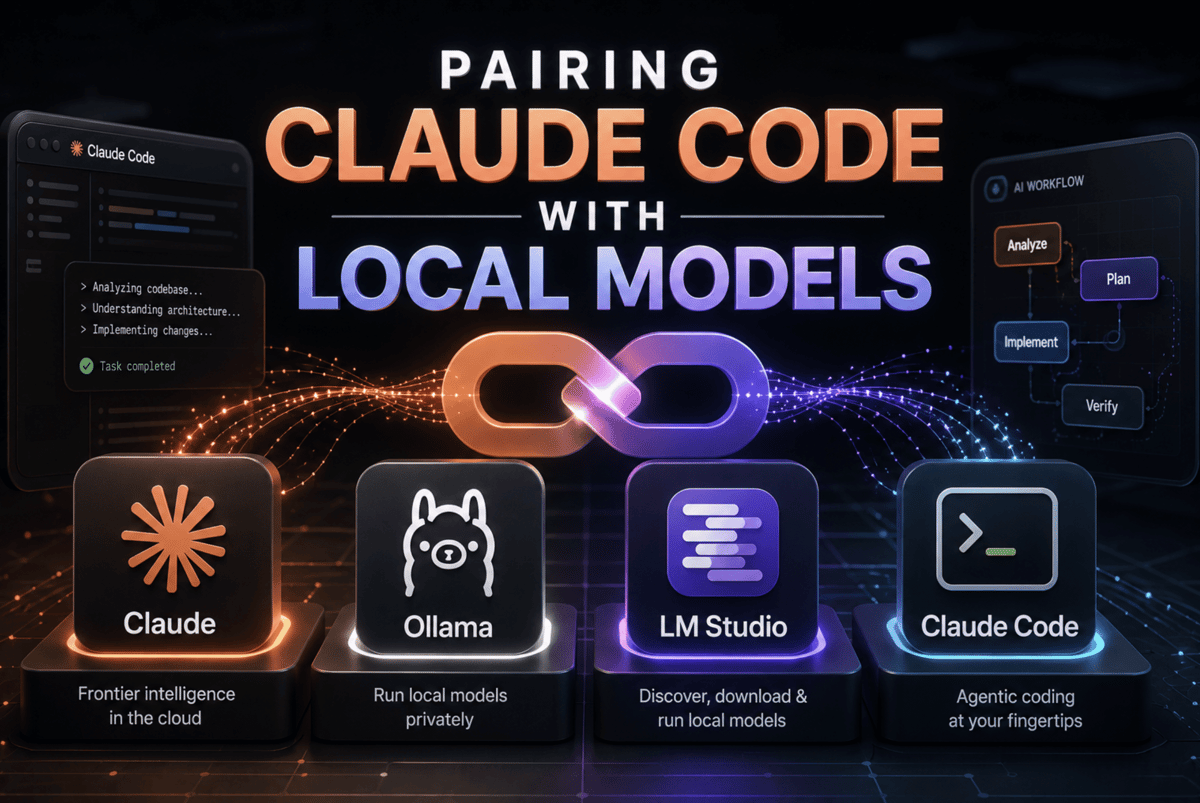
Pairing Claude Code with Local Models
Comments
Want to join the conversation?