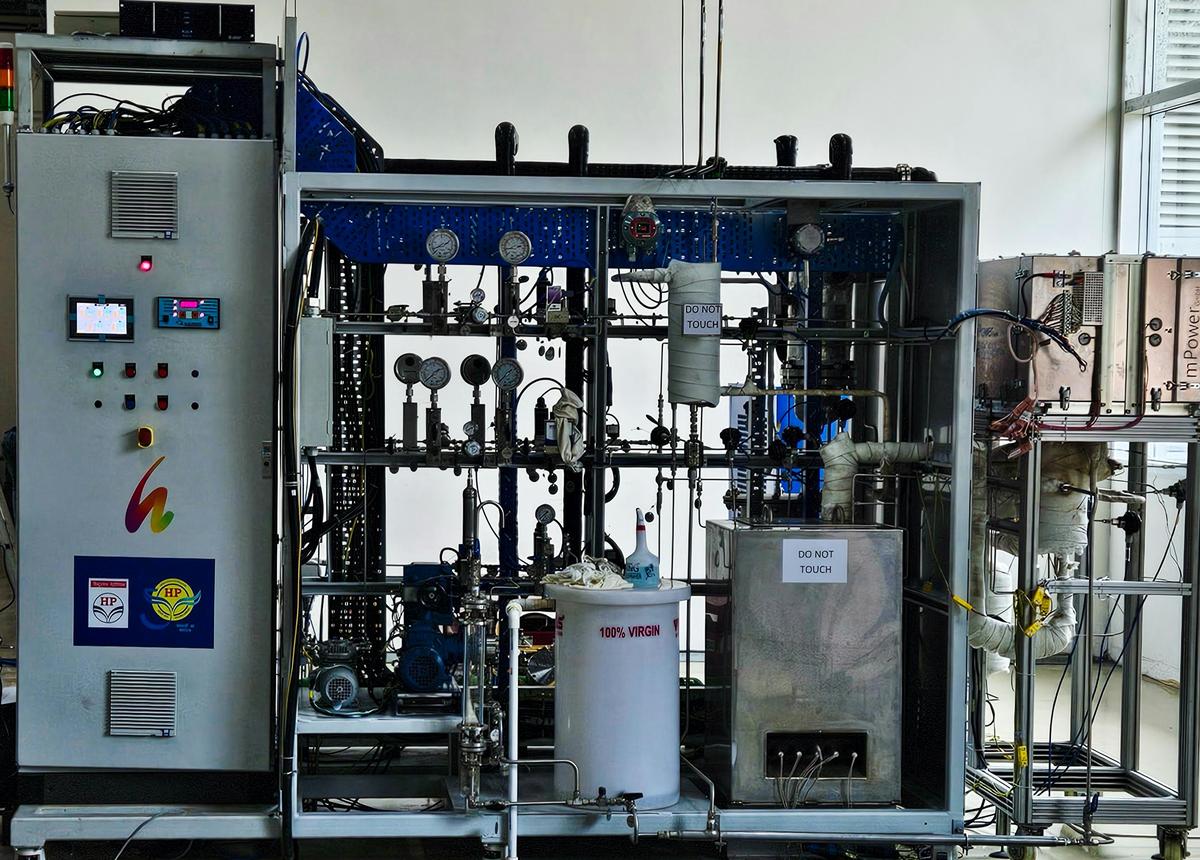
Schneider, Microsoft Show How AI Can Enable Green Hydrogen Production
Key Takeaways
- •AI-driven control cuts electrolyzer electricity use by 10%
- •Schneider’s EcoStruxure platform separates software from hardware
- •Microsoft Industrial Copilot halves automation engineering time
- •Hydrogen cost drops up to $545k annually for 10 MW plant
Pulse Analysis
Green hydrogen is poised to become a cornerstone of global decarbonization, yet its cost structure remains dominated by electricity consumption, which can account for more than 70% of total production expenses. By embedding AI-driven predictive controls into solid‑oxide electrolyzers, Schneider Electric and Microsoft demonstrate how real‑time optimization can shave up to 10% off power usage, directly translating into lower levelized costs. This breakthrough aligns with broader industry trends that favor software‑defined infrastructure, allowing legacy hardware to be retrofitted with advanced analytics without costly replacements.
The partnership hinges on Microsoft’s Azure cloud, edge computing, and the Industrial Copilot, which together automate traditionally manual engineering tasks such as control‑logic authoring and system configuration. Schneider’s EcoStruxure Automation Expert provides an open, hardware‑agnostic layer that decouples applications from specific equipment, enabling rapid deployment across multiple sites. In practice, the h2e Power pilot in India has logged more than 6,000 hours of continuous operation, delivering predictive maintenance alerts and dynamic thermal balancing that extend electrolyzer lifespan while cutting engineering lead times by roughly 50%.
Beyond the immediate hydrogen project, the collaboration signals a shift toward modular, AI‑enhanced industrial automation that can be replicated across sectors ranging from chemicals to steelmaking. Companies seeking to meet ESG targets now have a concrete pathway to modernize existing plants without abandoning prior capital investments. As open standards gain traction, the scalability of such solutions could accelerate the rollout of green hydrogen at gigawatt scale, reshaping energy markets and reinforcing the strategic value of cloud‑native AI in heavy industry.
Schneider, Microsoft show how AI can enable green hydrogen production
Comments
Want to join the conversation?