Key Takeaways
- •AI writes most code at Anthropic, but revenue unchanged
- •40% of firms see <10% AI cost savings (Bain 2026)
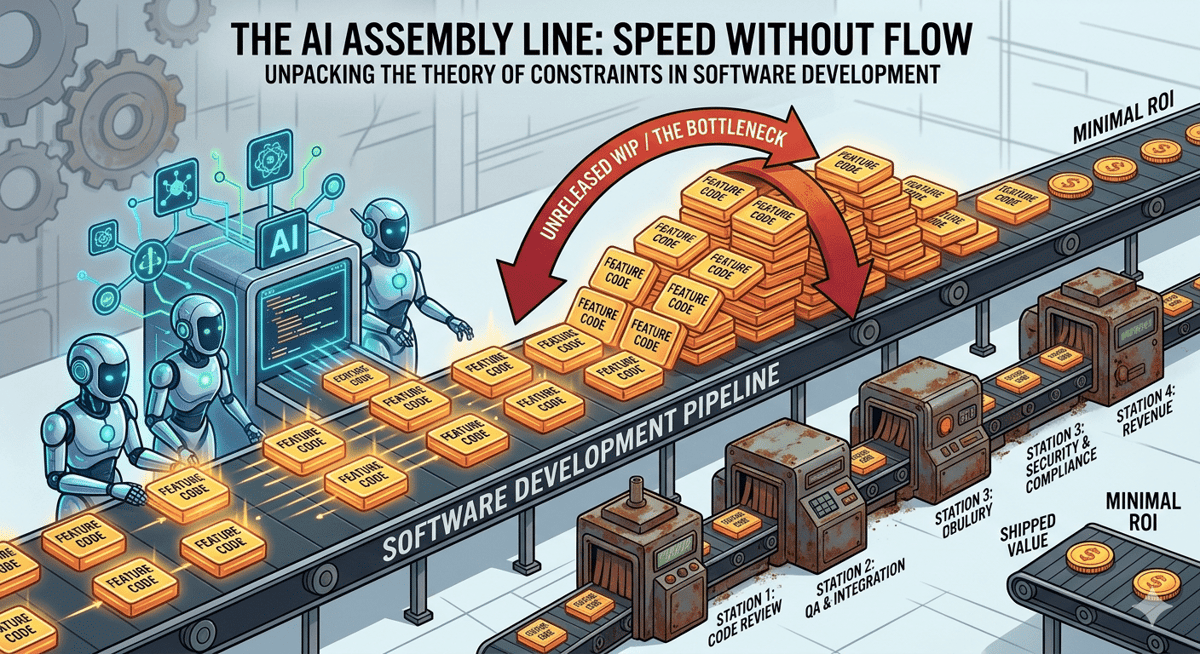
- •Faster code creates inventory; downstream bottlenecks limit value
- •Success requires CEO‑level pipeline redesign, not just tech spend
- •Theory of Constraints explains AI ROI gap
Pulse Analysis
The rise of AI‑assisted coding tools has reshaped how engineers produce software. Platforms like Anthropic’s Claude Code enable developers to generate, review, and merge code from a mobile device, slashing manual effort and boosting pull‑request velocity. This productivity surge has sparked optimism that AI will slash development costs and accelerate time‑to‑market. However, the raw speed gain is only one piece of the puzzle; enterprises must examine whether their downstream processes can absorb the increased output without creating new friction.
Data from Bain’s Automation and AI Pathfinder Survey 2026 underscores the disconnect. While 60% of respondents reported some cost reduction, nearly 40% fell short of a modest 10% savings target. The study likens the situation to a factory line where faster machining creates a backlog of unfinished parts awaiting inspection, packaging, and shipment. In software terms, AI‑generated code piles up in review queues, QA, security, and release cycles that have not been accelerated. This work‑in‑progress inventory inflates token consumption without delivering revenue, echoing the classic Theory of Constraints where the true bottleneck lies downstream.
Enterprises that have turned AI’s promise into profit treat the entire delivery pipeline as a strategic priority. They establish a center of excellence, align data governance, and redesign change‑approval workflows at the executive level, often synchronizing release cadences with AI‑driven development speeds. By tightening integration, automating testing, and shortening approval windows, these firms convert rapid code generation into shipped features that reach customers faster, achieving the 11‑20% ROI range cited by Bain. The lesson is clear: AI is a catalyst, but only a re‑engineered, end‑to‑end process can unlock its full financial impact.
The AI Assembly Line: Speed Without Flow
Comments
Want to join the conversation?