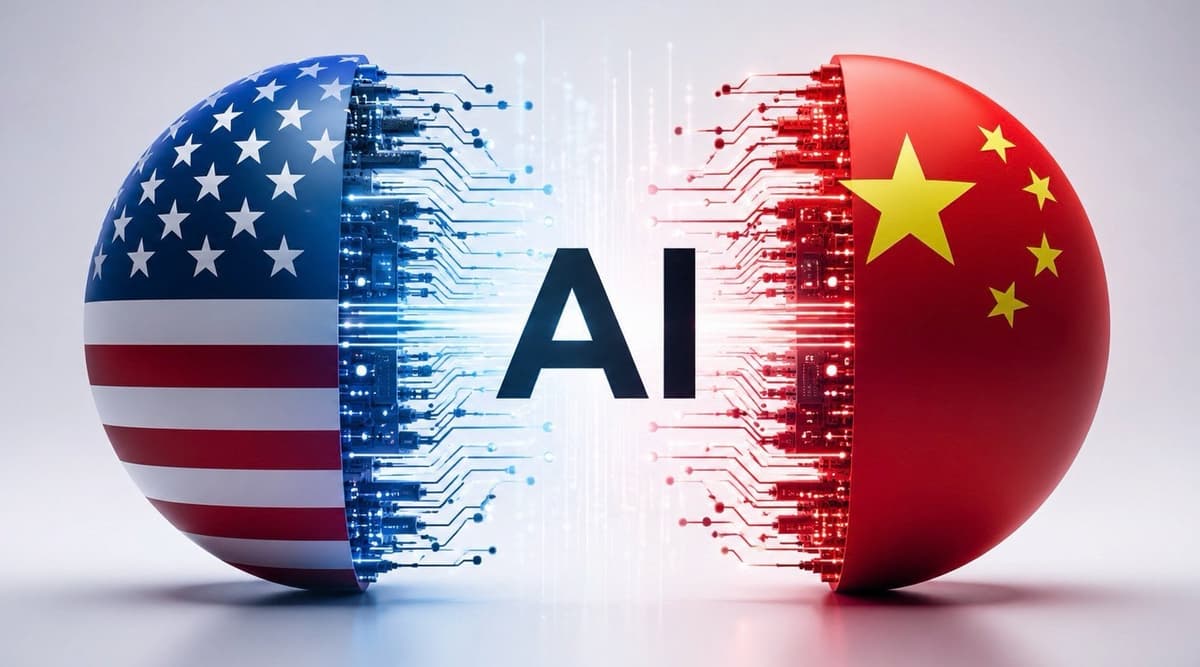
The Critical Warning Hidden in Anthropic’s US-China AI Stance
Key Takeaways
- •Anthropic outlines two AI futures: democratic U.S. lead or China‑centric dominance
- •By 2028, AI could become the primary lever of geopolitical influence
- •U.S. policy gaps risk ceding AI leadership to state‑controlled models
- •Democratic AI frameworks promote transparency, safety, and global collaboration
- •China’s AI push may tighten data control and limit open research
Pulse Analysis
The United States and China are locked in an accelerating AI arms race, a contest that extends beyond technology into the realm of global governance. Anthropic’s recent commentary highlights how divergent policy choices could produce two starkly different landscapes by 2028. If Washington maintains its edge, AI systems are likely to be built on open‑source principles, robust safety standards, and democratic oversight, fostering an ecosystem that encourages cross‑border collaboration and protects individual rights. Conversely, a shift toward Chinese dominance would embed AI within a state‑driven framework, prioritizing strategic control over transparency and potentially restricting the free flow of data and research.
Anthropic’s warning is rooted in the practical implications for businesses and innovators worldwide. Companies that rely on AI for product development, risk management, or customer insights must anticipate regulatory environments that could vary dramatically between the two scenarios. A democratic AI regime could streamline compliance with emerging privacy laws such as the EU’s AI Act and the U.S. Blueprint for an AI Bill of Rights, while a China‑centric model might impose stricter data localization and censorship requirements. Early alignment with democratic standards can future‑proof investments, reduce compliance costs, and attract talent drawn to open, ethical AI ecosystems.
For policymakers, the analysis underscores the urgency of crafting balanced AI strategies that preserve competitiveness without sacrificing core democratic values. Incentivizing research, establishing clear safety benchmarks, and fostering international standards bodies can help the U.S. retain leadership while mitigating the risk of a fragmented AI landscape. As AI becomes a cornerstone of economic growth and national security, the choices made today will echo through the next decade, shaping everything from supply‑chain resilience to the very fabric of societal trust.
The Critical Warning Hidden in Anthropic’s US-China AI Stance
Comments
Want to join the conversation?