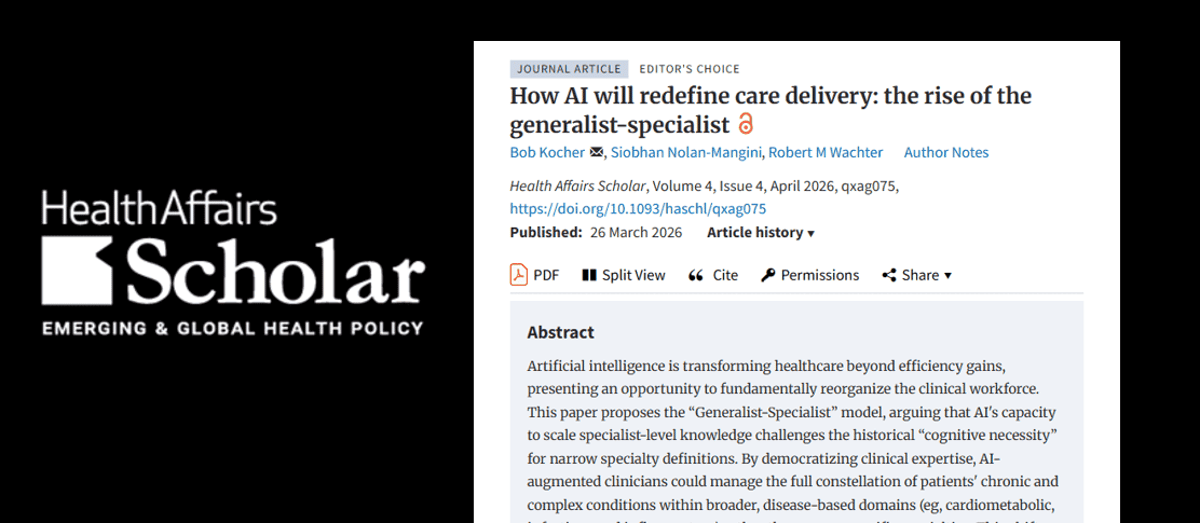
The Rise of the Generalist-Specialist
Key Takeaways
- •AI models now pass specialist board exams, scaling expertise
- •Generalist‑specialists merge cardiology, endocrinology, nephrology for cardiometabolic care
- •Reduced handoffs lower co‑pays and speed diagnoses
- •Medical training, licensing, and malpractice frameworks must be overhauled
Pulse Analysis
Artificial intelligence has crossed a critical threshold in medicine: large language models are now achieving scores comparable to human specialists on board examinations. This breakthrough erodes the long‑standing knowledge barrier that justified rigid specialty silos, allowing clinicians to access up‑to‑date, evidence‑based guidance at the point of care. As AI continues to ingest and synthesize billions of clinical data points, the distinction between a primary care physician and a subspecialist becomes increasingly porous, setting the stage for a new breed of "generalist‑specialist" who can navigate complex disease intersections with confidence.
The proposed generalist‑specialist framework reorganizes care around disease domains rather than organ systems. A cardiometabolic practitioner, for example, would integrate cardiology, endocrinology and nephrology insights to treat diabetes, hypertension and chronic kidney disease in a single, coordinated plan. This consolidation promises tangible benefits: fewer referrals reduce administrative friction, patients face lower co‑pay burdens, and diagnoses can be rendered more swiftly. From a health‑system perspective, concentrating routine chronic‑care management under fewer clinicians frees true subspecialists for high‑complexity cases, aligning with value‑based payment models that reward outcomes over volume. Yet, in a fee‑for‑service environment, the same efficiency could translate into higher billable encounters as fragmented care becomes a unified, reimbursable episode.
Turning the vision into reality demands more than sophisticated algorithms. Medical schools must redesign curricula to teach interdisciplinary diagnostics, while credentialing bodies need pathways that recognize hybrid expertise. Malpractice frameworks will have to evolve to address shared liability when AI‑augmented clinicians make cross‑specialty decisions. Moreover, specialist societies must either embrace a quasi‑primary‑care role or risk marginalization. Patient safety remains paramount; rigorous validation of AI recommendations is essential before widespread deployment. If these structural hurdles are cleared, the generalist‑specialist model could redefine the economics and quality of American healthcare, delivering smarter, more integrated care at scale.
The Rise of the Generalist-Specialist
Comments
Want to join the conversation?