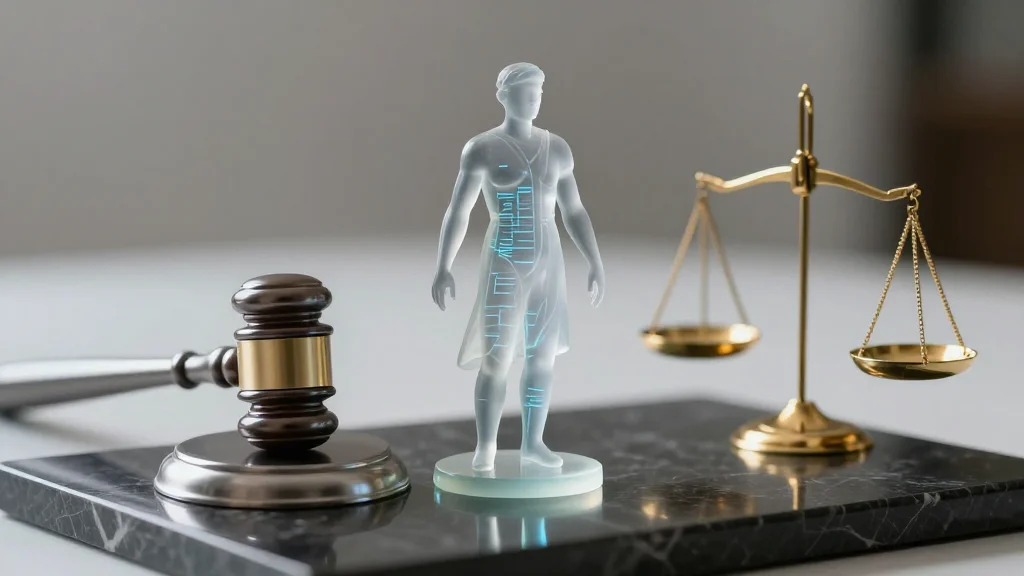
Who Owns My AI Twin? Data Ownership in a New World of Simulated Identities
Key Takeaways
- •AI twins replicate personal traits, memories, and preferences digitally.
- •Current law protects platform infrastructure more than individual data.
- •Ownership requires clear asset, exclusive control, and measurable value.
- •Self‑controlled data vaults enable users to claim AI twin property.
- •Human‑centric governance promotes private‑by‑default data stewardship.
Pulse Analysis
The rise of AI twins marks a turning point in how personal information is commodified. By aggregating behavioral cues, biometric signals, and historical interactions, these digital avatars can simulate decision‑making, provide hyper‑personalized services, and even act as proxies in virtual environments. Companies ranging from consumer apps to enterprise analytics platforms are already experimenting with twin technology to boost engagement and reduce friction. This rapid adoption underscores a market hungry for deeper personalization, but it also amplifies concerns about who truly controls the underlying data that fuels these replicas.
Existing legal frameworks, such as the GDPR and U.S. sector‑specific privacy statutes, were drafted before the concept of a fully fledged AI twin existed. Consequently, they tend to focus on data processors and the infrastructure that hosts the data, granting limited rights to the individuals whose information is being modeled. The authors argue that this imbalance leaves a regulatory vacuum where platforms retain de facto ownership of the most valuable asset—the personal data that defines a twin’s identity. By applying traditional property theory—requiring a defined asset, exclusive control, and demonstrable value—users who consolidate their data in personal vaults could claim legal ownership, compelling platforms to negotiate licensing or revenue‑sharing arrangements.
A human‑centric approach to data governance could reshape the industry. Private‑by‑default architectures would give individuals granular control over data extraction, sharing, and monetization, fostering trust and potentially unlocking new revenue streams through data marketplaces. For businesses, embracing this model may mean redesigning APIs, implementing verifiable consent mechanisms, and preparing for litigation risk if ownership claims arise. Regulators, meanwhile, could draft clearer statutes that recognize AI twins as extensions of personal data, ensuring that the social contract evolves alongside technology. The shift promises a more equitable ecosystem where individuals reap the economic benefits of their digital selves while maintaining autonomy over their identity.
Who owns my AI twin? Data ownership in a new world of simulated identities
Comments
Want to join the conversation?