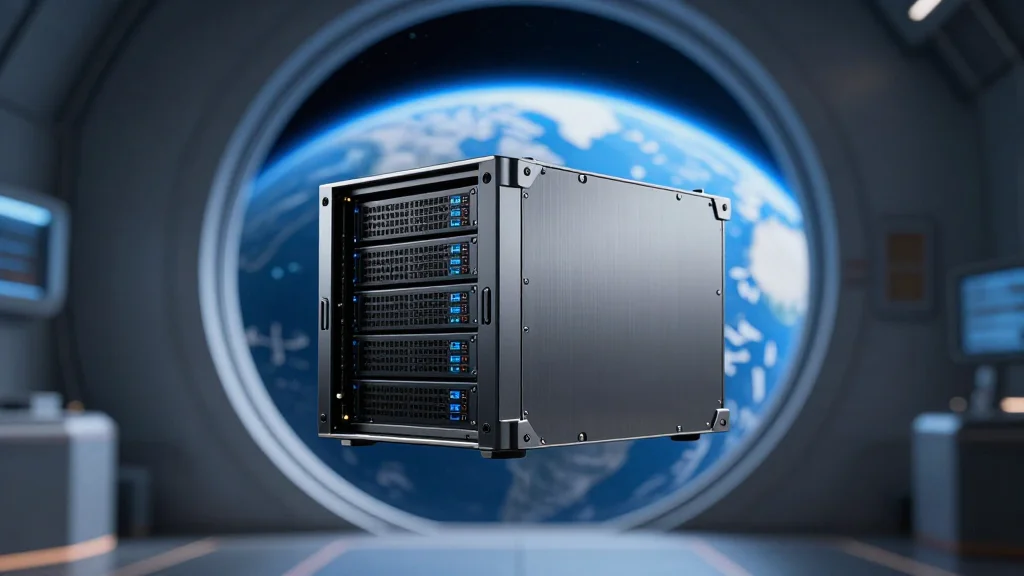
Will We Really Put Data Centers in Space?
Key Takeaways
- •Starship must hit ~$50/kg launch cost for orbital compute parity
- •Space solar panels generate 3‑5× more energy than terrestrial sites
- •Radiative cooling could cost less than Earth‑based cooling systems
- •Chip failure leads to ~40% extra hardware over a satellite’s life
- •ODCs likely remain <10% of AI compute until after 2030
Pulse Analysis
The surge in AI model size has exposed a growing power crunch on Earth, where grid interconnection queues and gas‑turbine backlogs can add years to data‑center rollouts. Companies such as Google, SpaceX, and Blue Origin are therefore exploring off‑grid alternatives, with orbital data centers emerging as the most audacious option. By placing compute in sun‑synchronous orbit, developers can tap near‑continuous solar irradiance, delivering three to five times the energy per panel compared with the best terrestrial sites. This advantage, however, only translates into cost savings if launch expenses drop dramatically, a threshold tied to SpaceX’s Starship achieving full‑reuse economics comparable to Falcon rockets.
Technical hurdles that once seemed prohibitive are being re‑examined. Recent advances in carbon‑fiber radiators and selective‑emissivity coatings suggest that passive radiative cooling could consume as little as 2‑5% of total ODC cost, potentially undercutting Earth‑based cooling budgets. Yet the inability to service hardware in orbit introduces a hidden expense: chip failures cannot be swapped out, forcing operators to over‑provision power and cooling by roughly 38% to maintain compute throughput over a five‑year lifespan. This hardware bleed, combined with launch‑cost sensitivity, defines the economic break‑even point for ODCs.
Strategically, the timeline matters as much as the technology. Forecasts indicate that ODCs will remain a niche, contributing less than 10% of global AI compute before 2030, but could become cost‑competitive by the mid‑2020s if Starship’s launch price falls to $50‑$100 per kilogram. A shift to space‑based compute would also raise governance questions, as orbital assets sit outside traditional national jurisdictions and could concentrate power in the hands of a single launch provider. Stakeholders must therefore weigh the potential performance gains against regulatory uncertainty and the risk of market concentration as the industry eyes the final frontier.
Will we really put data centers in space?
Comments
Want to join the conversation?