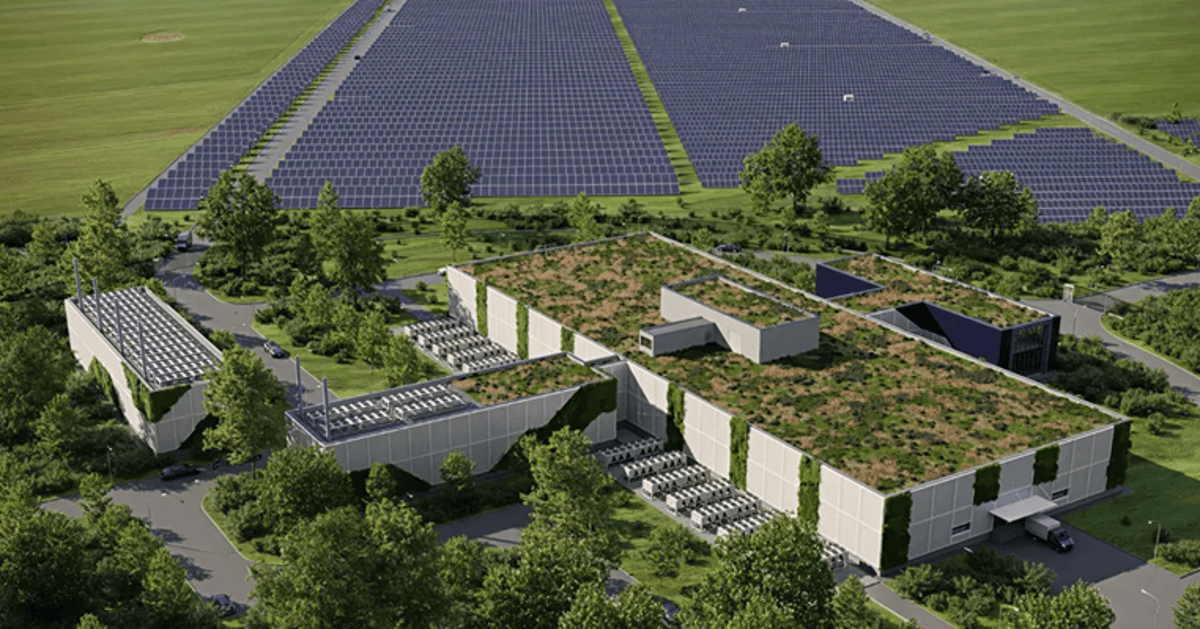
Polarise to Acquire Former Wertachtal Transmitter Site for New AI Data Centre
•March 10, 2026
•Mar 10, 2026
0
Participants
Why It Matters
The centre bolsters Germany’s AI infrastructure while proving that high‑performance computing can be sustainably powered, positioning the country as a competitive AI hub in Europe.
Key Takeaways
- •30 MW AI data centre slated for Amberg by 2027
- •Site can scale to 120 MW capacity
- •Powered by 70 MW solar, wind, battery storage
- •Polarise backed by SWI Stoneweg Icona majority stake
- •Enhances Germany’s AI competitiveness and sustainability goals
Pulse Analysis
Europe’s demand for AI‑ready compute is accelerating, and Germany is racing to close the capacity gap. By repurposing the historic Wertachtal transmission complex, Polarise not only taps an existing infrastructure footprint but also benefits from proximity to Munich’s tech ecosystem and robust fiber networks. The mid‑2027 launch aligns with a broader continental push for sovereign AI clouds, where data residency, latency, and regulatory compliance are paramount. Investors are keen on projects that combine scale with sustainability, and Polarise’s partnership with local utility stakeholders ensures a reliable renewable power mix that meets the energy‑intensive needs of GPU workloads.
Renewable integration is a differentiator for modern data centres. The 70 MW photovoltaic installation, complemented by wind turbines and a battery‑storage system, is designed to supply the majority of the facility’s power, reducing reliance on fossil‑fuel grids and lowering operational carbon intensity. This approach mirrors a growing trend where operators co‑locate generation assets to achieve near‑zero‑emission footprints, appealing to environmentally conscious enterprises and meeting tightening EU climate directives. Moreover, on‑site generation mitigates exposure to volatile electricity prices, enhancing cost predictability for customers running AI training and inference workloads.
Financial backing underscores confidence in Polarise’s growth trajectory. The recent acquisition of a majority stake by SWI Stoneweg Icona Group, coupled with Macquarie’s financing, provides the capital needed to expand capacity to 120 MW and replicate the model in other German regions. As the firm scales its AI factories in Munich, Frankfurt and Oslo, it positions itself as a key enabler for enterprises seeking private‑cloud GPU services without the environmental trade‑offs traditionally associated with large‑scale compute. This blend of strategic location, renewable energy, and strong investor support signals a maturing European AI infrastructure market poised for rapid expansion.
Deal Summary
German cloud and data‑center firm Polarise announced it will acquire the former Wertachtal short‑wave transmission building and adjacent land from a consortium of local utility Stadtwerke Bad Vilbel and a citizens’ foundation. The site will be converted into a 30 MW AI data centre outside Munich, with launch planned for mid‑2027; terms of the sale were not disclosed.
0
Comments
Want to join the conversation?
Loading comments...