Undisclosed
Teradar Raises $150M in Funding as It Emerges From Stealth
•March 10, 2026
•Mar 10, 2026
1
Participants
Why It Matters
By bridging the performance gap between LiDAR and radar, Teradar could make high‑precision autonomous sensing affordable for mainstream vehicles, accelerating industry-wide deployment and enhancing safety in adverse weather.
Key Takeaways
- •Teradar raised $150M to develop THz sensors
- •THz sensors blend LiDAR resolution with radar robustness
- •Modular chips enable hidden, solid‑state vehicle integration
- •Proven performance in rain, snow, fog conditions
- •Targeting mass‑market pricing via Tier‑1 partnerships
Pulse Analysis
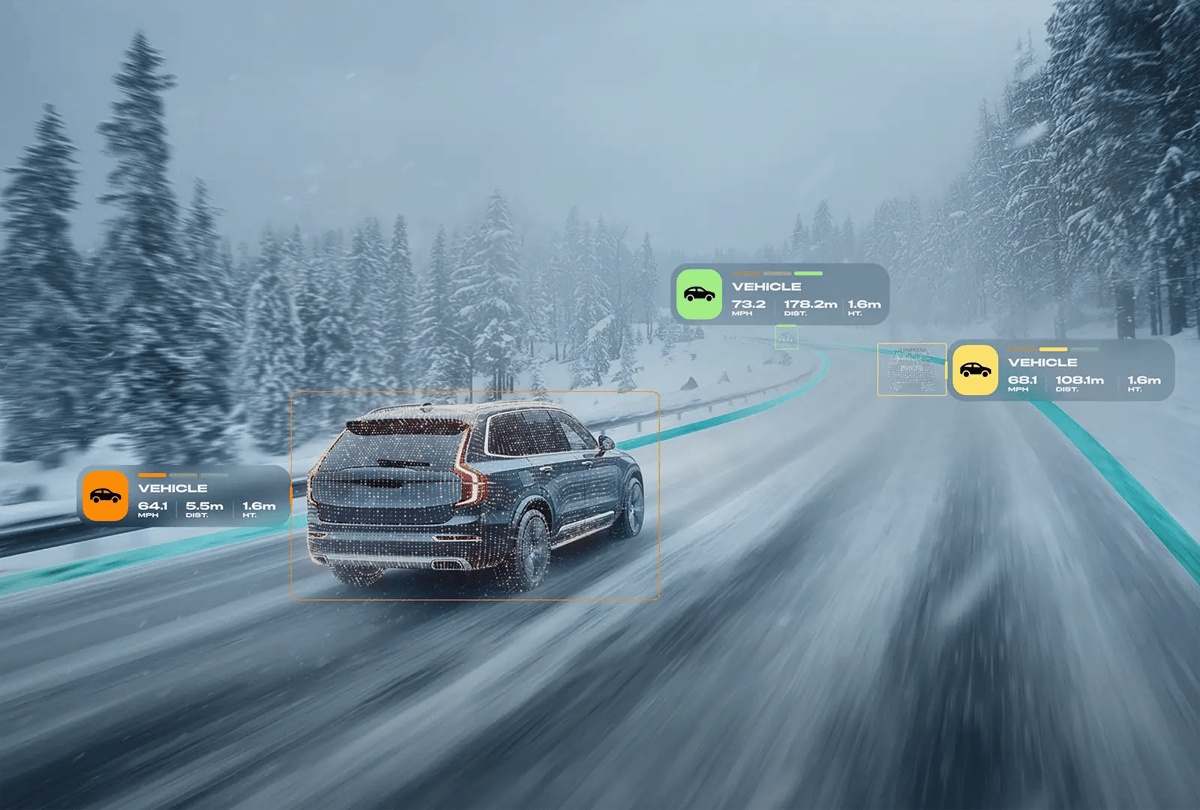
The autonomous‑driving ecosystem has long been constrained by a trade‑off: LiDAR offers detailed 3‑D mapping but falters in rain, snow or dust, while radar survives harsh conditions but provides coarse spatial data. Teradar’s terahertz detection and ranging (Rad‑AR) technology occupies the spectral sweet spot between these two, delivering centimeter‑level point clouds with Doppler velocity insight. By leveraging longer wavelengths that diffract around particulates, the THz sensor maintains signal integrity where traditional optical systems lose fidelity, positioning it as a compelling middle ground for next‑generation perception stacks.
Real‑world validation is critical, and Teradar’s Boston trials underscore the sensor’s resilience. In simulated “weather casino” scenarios—intense precipitation, heavy snowfall, and dense fog—the THz unit consistently generated reliable point clouds, outperforming conventional LiDAR and vision setups. A parallel defense application demonstrates the sensor’s low‑observable nature; its emissions are naturally attenuated beyond intended ranges, reducing electromagnetic signature and preventing interference with other platforms. These capabilities suggest a versatile platform that can serve both civilian autonomous vehicles and military situational‑awareness systems without compromising stealth or safety.
Commercially, the technology’s modular, Lego‑like architecture simplifies integration and reduces bill‑of‑materials costs. Teradar’s strategy to partner with Tier‑1 suppliers rather than pursue vertical integration aims to scale production to millions of units, driving unit prices down from thousands to a few hundred dollars. If successful, this cost compression could democratize high‑performance sensing, prompting OEMs across the price spectrum—from luxury sedans to compact cars—to adopt advanced perception suites. The ripple effect may accelerate regulatory approvals, boost consumer confidence, and ultimately reshape the competitive landscape of autonomous mobility.
Deal Summary
Teradar, a terahertz sensor startup, announced it has secured $150 million in funding as it emerges from stealth. The capital will support scaling its LiDAR‑radar hybrid technology for autonomous vehicles and defense applications.
1
Comments
Want to join the conversation?
Loading comments...