Key Takeaways
- •OpenClaw enables AI-driven finance bots delivering real‑time market alerts.
- •Developers control remote coding tasks via chat apps and agents.
- •Scheduled briefings automate daily news, reminders, and system alerts.
- •Personal memory agents consolidate notes, ideas, and context into a second brain.
- •Multi‑agent pipelines split planning, execution, and reporting for complex workflows.
Pulse Analysis
Open‑source agent frameworks like OpenClaw are reshaping how organizations leverage large language models. Unlike traditional chatbots that stop at answering questions, OpenClaw stitches together messaging platforms, APIs, and persistent memory, creating a unified control layer. This architecture lets developers embed LLMs directly into tools that teams already use, cutting the need for bespoke integrations and accelerating time‑to‑value. As AI models become more capable, the demand for orchestration layers that can translate intent into action is exploding across the tech stack.
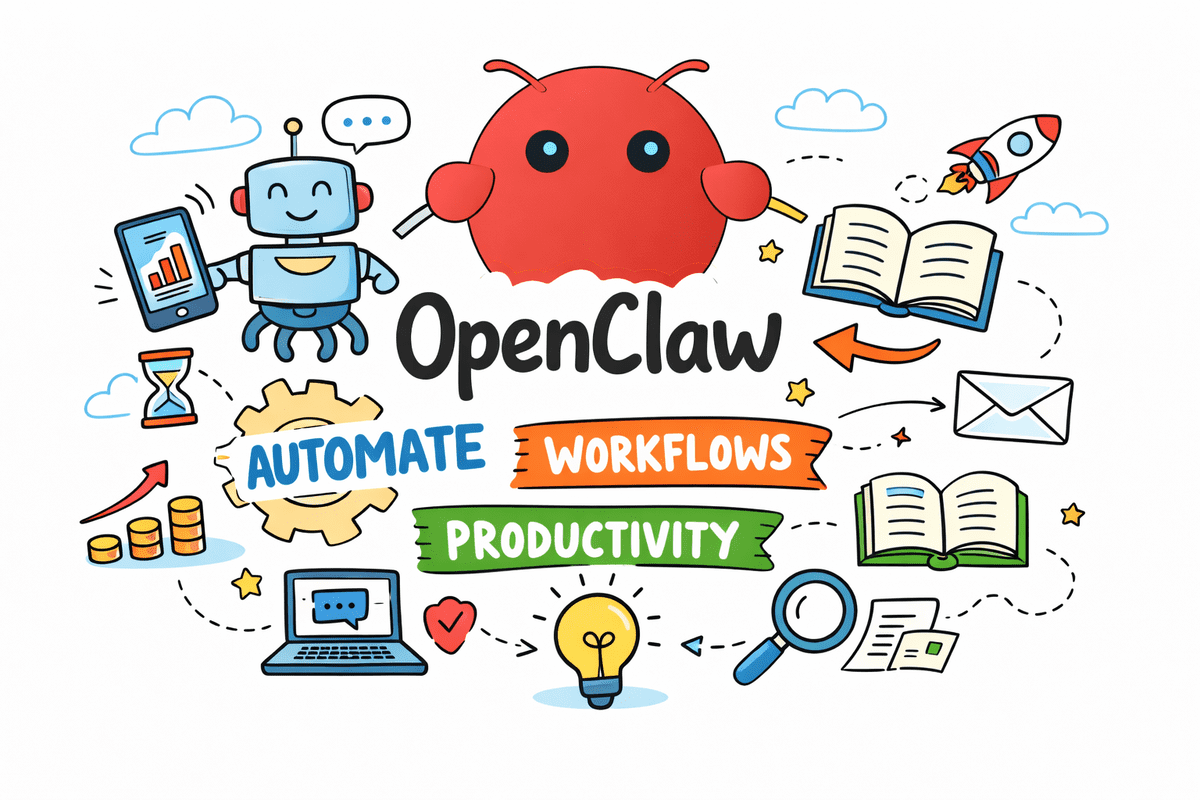
The practical impact is evident in the seven use cases highlighted by the community. Finance professionals deploy OpenClaw‑powered bots to monitor news, synthesize sentiment, and push alerts straight to mobile devices, trimming hours of manual research. Remote developers run code, edit files, and troubleshoot via Slack or Discord, turning a phone into a lightweight IDE. Automated daily briefings, personal second‑brain repositories, and research pipelines consolidate scattered information, freeing cognitive bandwidth for higher‑order tasks. Multi‑agent configurations further amplify efficiency by assigning specialized roles—planning, execution, validation—to distinct AI agents, mirroring human team structures. Small businesses also reap benefits by automating lead management, CRM updates, and meeting summaries, reducing repetitive work and improving response times.
Looking ahead, OpenClaw’s open‑source model positions it as a catalyst for broader enterprise adoption of AI agents. Companies can customize workflows without vendor lock‑in, experiment with novel agent hierarchies, and scale solutions as needs evolve. Challenges remain around security, data privacy, and model hallucinations, but the community’s rapid iteration and shared best practices mitigate risk. For firms seeking measurable ROI from AI, integrating OpenClaw offers a pragmatic path: lower development costs, faster deployment, and a flexible foundation that can grow alongside emerging LLM capabilities.
7 Practical OpenClaw Use Cases You Should Know
Comments
Want to join the conversation?